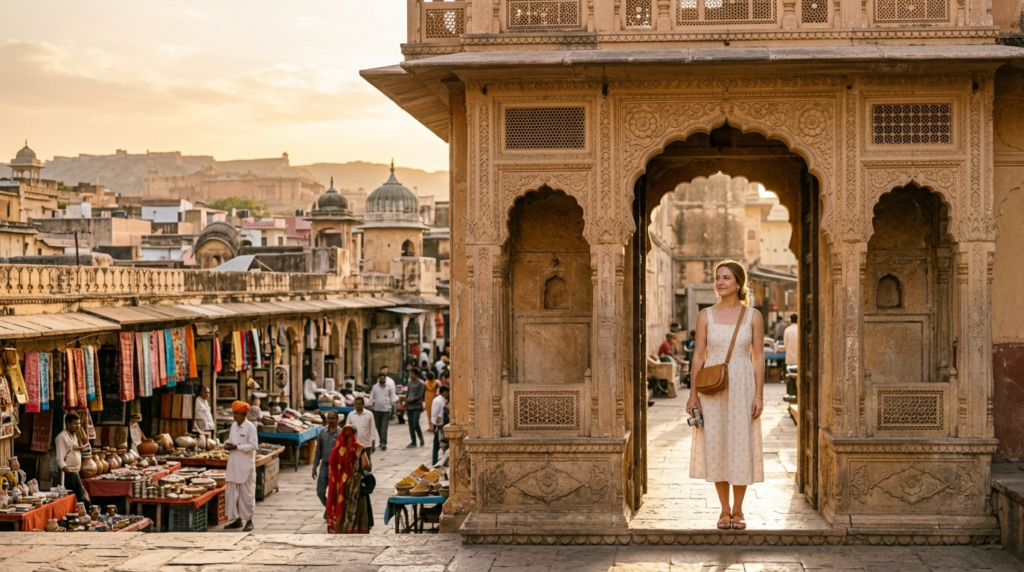
The best tours to India from America for women combine safety-vetted local guides, private accommodation with verified security, and itineraries built around the way women actually travel. That means space to rest, the freedom to explore at your own pace, and experiences that go deeper than the standard sightseeing circuit. American women typically fly into Delhi or Mumbai on trips ranging from 10 to 21 days, with all-inclusive guided tours landing between $2,800 and $7,500 depending on duration and accommodation level. This guide covers the top routes, realistic budgets, what women need to know about safety in each region, and how to tell a good operator from a genuinely great one.
Last updated: May 2026. All prices in USD, excluding international flights.
Why American Women Are Choosing India Now
India is having a moment. International arrivals from North America crossed 1.5 million in 2024, a 22% increase over 2022, driven largely by women traveling independently or in small groups. TripAdvisor reviews from female solo travelers in India have grown faster than any other traveler segment over the past three years.
The shift is not accidental. A new generation of operators has stopped treating women’s safety as a footnote and started building entire trip architectures around it. India is no longer the destination women choose in spite of their concerns. For a growing number of American women, it is the destination they choose because of what a well-run women’s tour can unlock.
“I’d been putting India off for fifteen years. Too overwhelming. Too unsafe. I finally went with a women’s operator and it was the most alive I’ve felt on any trip. I’d go back next year if I could.” Melissa D., Boston, 2024 Rajasthan journey
What Makes a Good India Tour for Women from America
Not all India tours are equal for women, and marketing language can make a mediocre package sound indistinguishable from a genuinely thoughtful one. Here is what to actually look for before you book.
Safety Infrastructure, Not Just Safety Language
Any operator can say your safety is their priority. The question is what that looks like on the ground. When you are evaluating a tour company, ask these questions directly:
- Police-verified drivers: Do drivers carry government registration and a current police clearance certificate? Do you receive the driver’s name, photo, and vehicle registration before each transfer?
- Accommodation screening: Are hotels and guesthouses vetted for lock quality, solo-female room placement, and 24-hour reception?
- In-country emergency contact: Is there a direct WhatsApp line to a real human, reachable at 3am if something goes wrong?
- Female guides as standard: Can you request a female guide for any day of your trip? Is this included, not an upgrade?
- A clear incident protocol: What actually happens if you feel unsafe? Ask for the specific steps, not a reassurance.
RoamRani was built around these standards from day one. Every driver holds a police clearance certificate we keep on file. Every journey comes with a direct emergency WhatsApp line. Female guides are the default. If you want the full picture on how we approach safety, our India safety guide for women covers it in detail.
Guide Quality
The guide is what separates a tourist circuit from a real experience of India. Look for Ministry of Tourism licensed guides, guides who understand what accompanying solo women actually requires, and guides with genuine depth in specific regions rather than generalists who skim every destination at the same surface level.
Itinerary Pacing
India is intense. The best tours build in buffer: a slow morning, an open afternoon, a day with nothing mandatory. If a tour schedule looks exhausting on paper, it will feel significantly worse on the ground. This is especially true for travelers coming from US time zones, where jet lag alone takes three to four days to clear.
Group Size
Two formats work best for American women. Private custom journeys give you a fully private guide and vehicle with complete control over the itinerary. Small-group departures of six to ten women offer a pre-set schedule, shared cost, and a ready-made community, which is ideal for solo travelers who want other women around without arranging everything themselves. Large coach tours of forty-plus rarely work well in India. The logistics are difficult, the pace is set by whoever needs the most time, and the experience becomes a blur of bus, monument, bus.
The 5 Best India Tour Routes for Women from America
| Route | Duration | Best For | Approx. Land Cost |
|---|---|---|---|
| Golden Triangle — Delhi, Agra, Jaipur | 10–12 days | First-time India visitors, history lovers | $2,800–$4,200 |
| Rajasthan Deep Dive — Jaipur, Jodhpur, Udaipur, Jaisalmer | 14–16 days | Culture, color, craft, desert landscapes | $3,800–$5,800 |
| Kerala Wellness and Backwaters — Kochi, Munnar, Alleppey | 10–12 days | Relaxation, Ayurveda, food, nature | $3,200–$5,000 |
| Spiritual India — Varanasi, Rishikesh, Amritsar | 12–14 days | Yoga, meditation, Hindu sacred sites | $2,900–$4,500 |
| South India — Tamil Nadu temples, Kerala coast | 16–18 days | Off the beaten path, temple architecture | $4,200–$6,500 |
Land cost covers private guide, private vehicle, accommodation, and domestic transfers. International flights from the US add $900 to $1,600 depending on departure city and season.
Route 1: The Golden Triangle (Best for First-Timers)
Delhi, Agra, and Jaipur form India’s most traveled circuit, and for good reason. Together they cover Mughal history, the Taj Mahal, Rajput fort architecture, and the organised chaos of one of Asia’s great old cities. A well-run ten-day Golden Triangle from America looks like this: two days in Delhi to adjust and explore, two days in Agra for the Taj and Fatehpur Sikri, five days in Jaipur with a day trip to Amber Fort, and a final Delhi day before your flight home.
For women from America, this is the easiest first India trip. Infrastructure is solid, English is widely spoken, and the hotel network is mature. It is the route we recommend if you have never been to South Asia before.
Route 2: Rajasthan Deep Dive (Best for Cultural Immersion)
Rajasthan is where most women who love India fall in love with it. The color, the scale, the desert light, the craft traditions: it turns people into photographers who never thought of themselves that way. A proper Rajasthan circuit covers Jaipur for its palaces and markets, Jodhpur and Mehrangarh Fort rising blue above the city, Udaipur for its lake palaces and havelis, and Jaisalmer for sand dunes, camel safaris, and a night in a desert camp under extraordinary skies. Fourteen days is the minimum to feel it rather than rush it.
Route 3: Kerala Wellness and Backwaters (Best for Restoration)
If Rajasthan is stimulation, Kerala is decompression. The south’s green hills, houseboat backwaters, Ayurvedic treatment centres, and coastal towns move at a completely different pace. For American women who want India without the sensory overload of the north, Kerala is the answer. A few days in Kochi (Fort Kochi’s colonial quarter is one of the most walkable areas in India for a woman alone), a houseboat night on the Alleppey backwaters, time in Munnar’s tea-covered hills, and three days on the Varkala or Kovalam coast gives you a complete and genuinely restoring trip.
Route 4: Spiritual India
Varanasi is unlike anywhere else on earth. Dawn boat rides on the Ganga, the evening Aarti ceremony, the ancient lanes of the old city moving at a rhythm that has not changed in centuries. Rishikesh gives you yoga in the foothills of the Himalayas, with ashrams, the Ganges flowing green and fast, and a town that takes wellness seriously. Amritsar and the Golden Temple is one of the most moving experiences in India regardless of your background. This route attracts women who want India to change them, not just entertain them.
Route 5: South India Deep Dive
For travelers returning to India, or those who specifically want to avoid the tourist trail: Tamil Nadu’s great temple towns (Madurai, Thanjavur, Mahabalipuram) followed by dropping south into Kerala. Less established infrastructure means a slightly more demanding trip, but the reward is an India with almost no other Western tourists around you. Combine this route with time in Kochi and the backwaters at the end for the most complete south India experience.
Is India Safe for Women Travelers from America?
The direct answer: India is safe for women from America when you travel with verified support, stay in screened accommodation, and use vetted transport. The risk profile varies enormously by region, city, and neighbourhood, and most media coverage conflates incidents from very different contexts into a single misleading picture. With the right infrastructure in place, the overwhelming majority of women who travel to India describe it as one of the best experiences of their lives. Our women’s safety page covers the specifics in full if you want to go deeper before you decide.
Here is an honest breakdown by destination.
Delhi
Delhi is the most complex city for solo women and requires the most preparation. Central Delhi and South Delhi neighborhoods like Connaught Place, Lodhi Colony, and Hauz Khas are well-traveled and manageable. Old Delhi is best visited with a guide, not because it is dangerous but because it is genuinely disorienting and dense. With a vetted driver and guide, Delhi is very accessible and worth every minute. Avoid Paharganj alone after dark.
Jaipur, Jodhpur, and Udaipur
These Rajasthan cities are generally easier for solo women than Delhi. There is strong tourist infrastructure, police presence near major monuments, and plenty of women-run guesthouses and cafes. The old city areas of Jaipur, Jodhpur, and Udaipur are all walkable during daylight hours. After dark, use app-based taxis rather than walking alone in unfamiliar lanes.
Kerala
Kerala is widely considered the easiest state in India for solo female travelers. Literacy is high, harassment is significantly lower than in the north, and Fort Kochi is genuinely relaxed and walkable at any hour. The beach towns of Varkala and Kovalam are well-accustomed to solo Western women.
Varanasi
Varanasi is intense but very manageable with a guide. The ghats are safe during the day and extraordinary at dawn. The old city lanes are best navigated with someone who knows them. Do not walk the old city alone after dark.
Rishikesh and Amritsar
Both are among the safest cities in India for solo women. Rishikesh is a yoga town with a deeply international community and a calm, purposeful atmosphere. Amritsar is centered around the Golden Temple, which runs its own strong security and draws pilgrims from across the world. Both are straightforward to navigate independently.
The Practical Steps That Make the Biggest Difference
- Dress: Loose clothes covering shoulders and knees removes most of the attention that makes solo travel feel uncomfortable. A dupatta (long scarf) does most of the work and weighs nothing.
- Transport: Pre-booked drivers over street taxis, especially in the evenings. Share your route with someone you trust before you get in.
- Accommodation: Hotels with 24-hour reception only. Ask for a room that is not at street level if you are traveling solo.
- Technology: Download Ola for taxis, Maps.me for offline navigation, and save your operator’s WhatsApp number before you land, not after.
- Doorstop alarm: Lightweight, cheap, and genuinely useful in mid-range properties where door locks are variable.
Practical Logistics for American Women Going to India
Visa: The Indian e-Visa
American passport holders apply for an Indian e-Tourist Visa online at indianvisaonline.gov.in, the official government portal. Use only this site. Third-party visa services charge significant premiums for no additional service and occasionally make errors that delay your trip.
- Cost: $80 for a double-entry 30-day visa or a multiple-entry 1-year visa
- Processing time: 3 to 5 business days. Apply at least two weeks before you travel.
- What you need: Valid US passport, passport-size photo, return flight details, and a first-night accommodation confirmation
Flights from the US
- New York to Delhi: Air India operates a direct flight of around 14 hours. Emirates via Dubai and Qatar Airways via Doha are the most common one-stop options.
- Los Angeles to Mumbai or Delhi: Typically 18 to 20 hours with one stop. Singapore Airlines via Singapore is a strong West Coast option.
- Chicago to Delhi: Usually via Europe (Lufthansa, British Airways) or the Gulf (Emirates, Qatar).
Book three to four months ahead for peak season. East Coast return fares typically run $900 to $1,200. West Coast runs $1,100 to $1,500.
Best Time to Travel from America
| Season | Months | What to Expect | Verdict |
|---|---|---|---|
| Peak Season | October to February | Mild temperatures, dry skies, manageable crowds | Best for most first-time visitors. Book early. |
| Shoulder Season | March and September | Warm but comfortable, significantly fewer tourists | Excellent value. Underrated by most travelers. |
| Hot Season | April to May | 40°C+ across the plains. Cool in the mountains. | Good for Kashmir and Ladakh only. |
| Monsoon | June to September | Heavy rain across most of India. Kerala is lush and beautiful. | Ideal for Kerala or the northeast. Avoid Rajasthan. |
For first-time visitors from America, October through December is the sweet spot: post-monsoon freshness, mild temperatures across the country, and Diwali if you time it right.
Health Prep
See a travel medicine clinic six to eight weeks before you go. Standard recommendations for India include Hepatitis A and Typhoid. Hepatitis B, Japanese Encephalitis, and Rabies depend on your itinerary and length of stay. Your doctor will advise. For your stomach: bottled or filtered water only, including for teeth brushing. Pack electrolytes and Imodium. Some adjustment in the first few days is normal even when you are careful.
What to Pack
- Clothing: Lightweight cotton or linen covering shoulders and knees. Three or four loose trousers or long skirts, light-colored tops, one smarter outfit for nicer restaurants.
- Scarves: Two or three. They work as temple coverings, sun protection, and a layer for cold evenings.
- Footwear: Walking sandals that slip on and off easily (you remove shoes at every temple) and one pair of closed-toe shoes for dusty fort sites.
- Day bag: Crossbody with a zip closure, worn across the front in busy markets.
- Security: Doorstop wedge alarm. Copies of your passport, visa, and insurance kept separately from the originals.
- Health: Your prescription medications plus a few extra days supply, a stomach kit, and SPF 50 sunscreen. Good sunscreen brands are genuinely hard to find in India.
How to Choose the Right Operator for Your India Tour
The India tour market is crowded and unregulated enough that the questions you ask before booking matter more than the brochure. Here is what to ask directly.
- “What is your process for vetting drivers?” A vague answer is an answer.
- “Can I request a female guide?” A pause or an upcharge tells you everything about how seriously they take women’s travel.
- “What is your emergency protocol if I feel unsafe?” There should be a specific escalation path, not a reassurance.
- “Can I speak to a past female client who traveled solo?” Any legitimate operator can provide this immediately.
- “Are you licensed by India’s Ministry of Tourism?” Ask for the registration number and verify it.
RoamRani is the women’s travel brand of Taj Travel Services, a government-registered tour operator with a 5.0 rating across 450+ TripAdvisor reviews. Every journey includes female guides by default, police-verified drivers, 24/7 WhatsApp support, and an Indian SIM card waiting for you on arrival.
What American Women Say About Traveling India with RoamRani
“I was nervous about India as a solo traveler. Within an hour of landing in Delhi I knew I’d made the right choice. My guide met me at baggage claim with a sign and a working SIM card. That level of detail told me everything.” Jennifer K., San Francisco, Rajasthan and Kerala 2024
“The Varanasi dawn boat was worth the entire trip. I couldn’t have navigated that alone, not because it was dangerous, but because my guide knew exactly where to go and what was happening. India makes more sense with someone who actually knows it.” Rachel M., New York, Spiritual India 2024
“I’ve done solo travel in Southeast Asia, South America, Morocco. India felt different before I went. I wasn’t sure I could manage it. RoamRani made it the most rewarding trip I’ve taken.” Diane T., Chicago, Golden Triangle 2025
Free 30-Minute Call
Not sure which route is right for you?
Let’s figure it out together.
Tell us a little about what you’re looking for and we’ll send you initial thoughts within 24 hours. If it helps, we’ll schedule a free call to talk through your options. No pressure, no sales pitch.
Personal reply within 24 hours
No automated responses
Free consultation call available
Frequently Asked Questions
How much does an India tour from America cost?
A guided India tour from America typically costs $2,800 to $7,500 for the land portion, excluding international flights. Flights add $900 to $1,600 depending on your departure city and the time of year. A 10-day private Golden Triangle tour for one person runs approximately $3,200 to $4,000 in land cost.
How long should my first India trip be?
A minimum of 10 days, with 14 as the better target. Jet lag from the US takes three to four days to clear. A 14-day trip gives you 10 real days of travel after you have adjusted. Rushing India into a week produces an exhausting highlight reel rather than an experience.
Can I travel India solo as a woman from America?
Yes. Thousands of American women travel India solo every year. The key is preparation: a vetted operator for accommodation and transport, a guide for complex cities and historic sites, and clear communication lines for anything unexpected. Solo female travel in India is very different from arriving without support. The infrastructure you set up in advance determines the experience you have.
Should I book a women-only tour or a mixed group?
Women-only tours offer a specific kind of comfort. You travel with people who share similar considerations about pace, safety, and what makes a trip meaningful. Mixed tours work well for many women too. The more important question is group size and operator quality. Small groups of six to ten people outperform large coach tours in India regardless of gender mix.
What is the best India destination for someone who has never traveled to Asia?
The Golden Triangle is the standard recommendation for good reason: the best-developed tourist infrastructure in India, widely spoken English, short road distances between cities, and the country’s most iconic sites. Kerala is a strong alternative for travelers who want a gentler entry: slower pace, less sensory intensity, easier to navigate independently.
Is Indian food vegetarian-friendly?
India is arguably the best country in the world for vegetarian food. Most Indian cuisine is vegetarian by default, and every destination on the main tourist circuit has extensive options at every price point. Vegan requests are manageable with advance communication. Meat-eaters are equally well-served, particularly seafood in Kerala and lamb in Rajasthan.
Do I need travel insurance for India?
Yes, and this is non-negotiable for us. We require proof of comprehensive travel insurance that includes medical evacuation before any journey begins. India’s hospital quality varies significantly by location. Evacuation coverage matters outside major cities. Budget $80 to $200 for a comprehensive two-week policy. World Nomads, Allianz, and IMG are commonly used by travelers to India.
How far in advance should I book an India tour?
For peak season (October through March), book eight to twelve weeks in advance. For high-demand months like October, November, and February in Rajasthan, book earlier. Quality operators and preferred properties fill quickly. If you are planning around Diwali or Holi, four to six months ahead is not too early.
What is the etiquette for visiting temples in India?
Remove your shoes before entering temple premises. Cover your head with a scarf in Sikh gurdwaras. Dress modestly at Hindu and Jain temples, with shoulders and knees covered. Photography restrictions vary by site, so follow posted signs or ask your guide. At active prayer ceremonies, follow the lead of the worshippers around you.