North India · Travel Guide
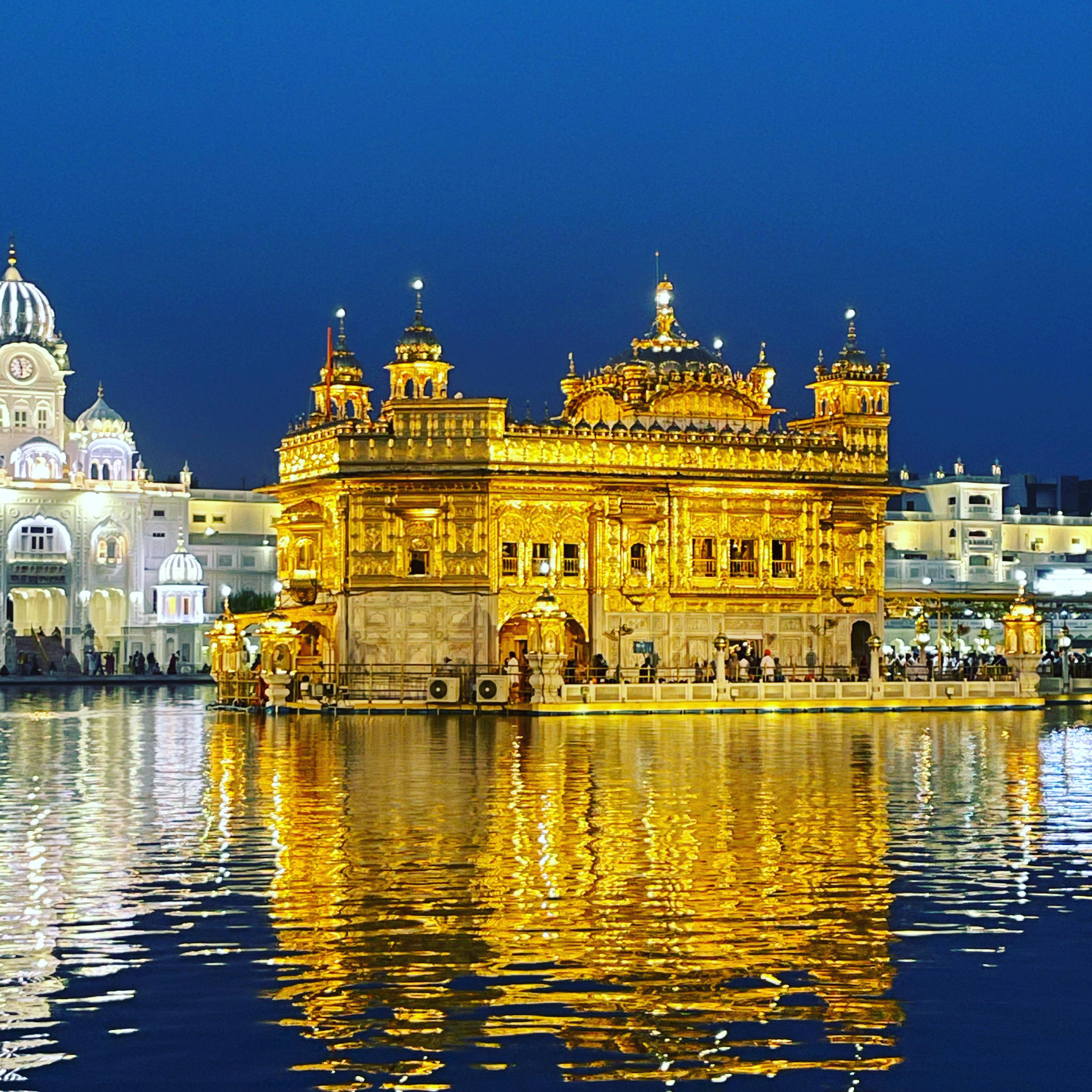
The Golden Temple at 4am — lit from within, perfectly reflected in the Amrit Sarovar — is one of the most affecting places on earth regardless of your faith. Add the world's largest free kitchen, the Wagah Border ceremony, and Punjab's most indulgent food.
Places to Visit
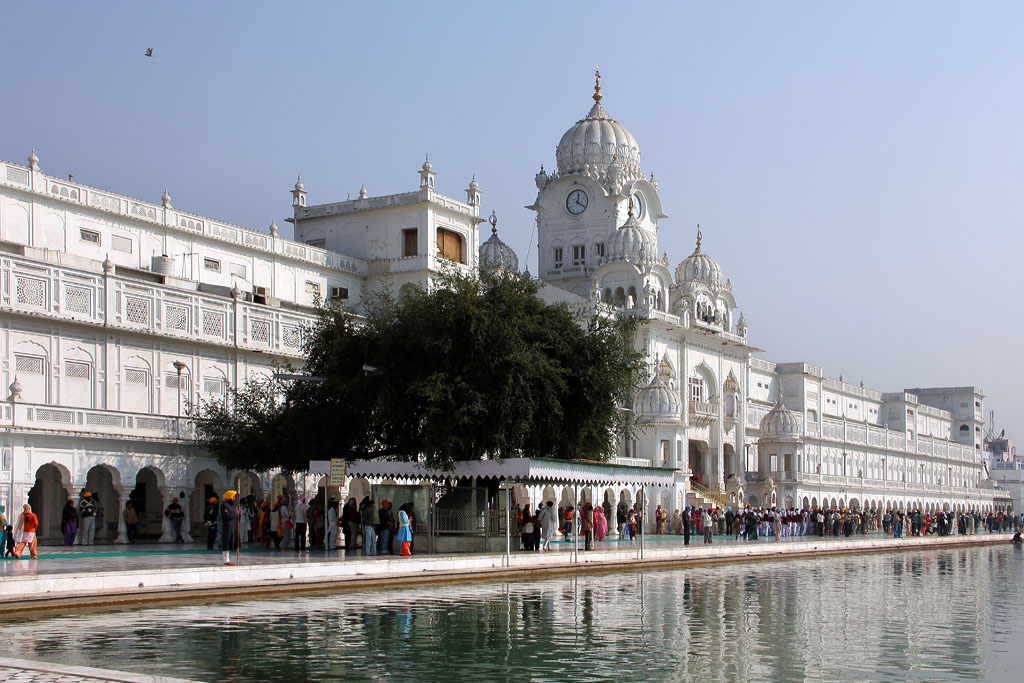
The holiest site in Sikhism — a marble and gold structure in the centre of the Amrit Sarovar (Pool of Nectar), reached by a marble causeway. Kirtan plays continuously, 24 hours a day. The atmosphere at 4am, in near silence, is unlike anything else found in India.
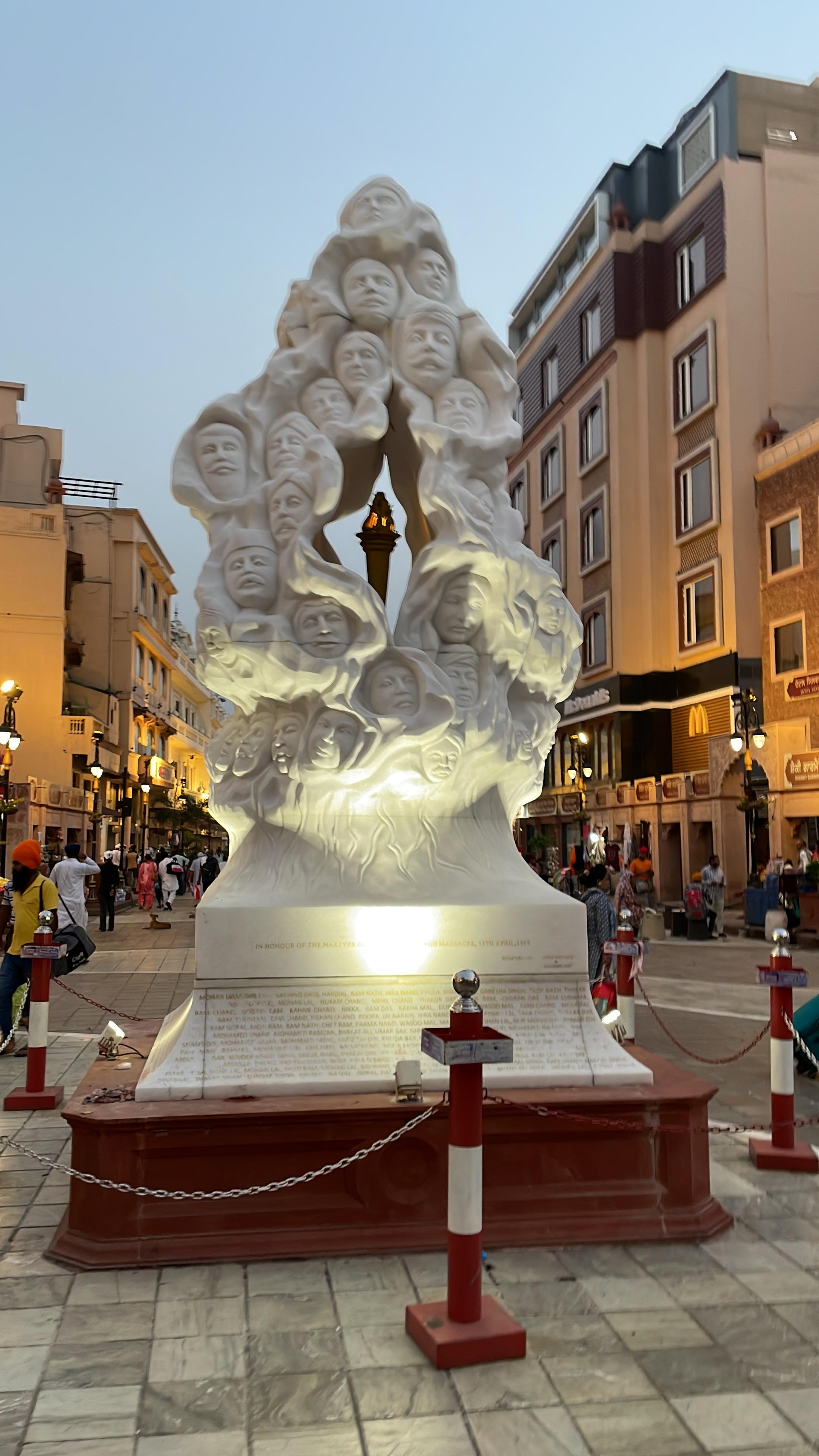
The garden where British troops fired on a peaceful gathering in 1919, killing at least 379 people. The bullet holes remain in the walls. A memorial that is not a tourist attraction — the full weight of it is felt almost immediately.
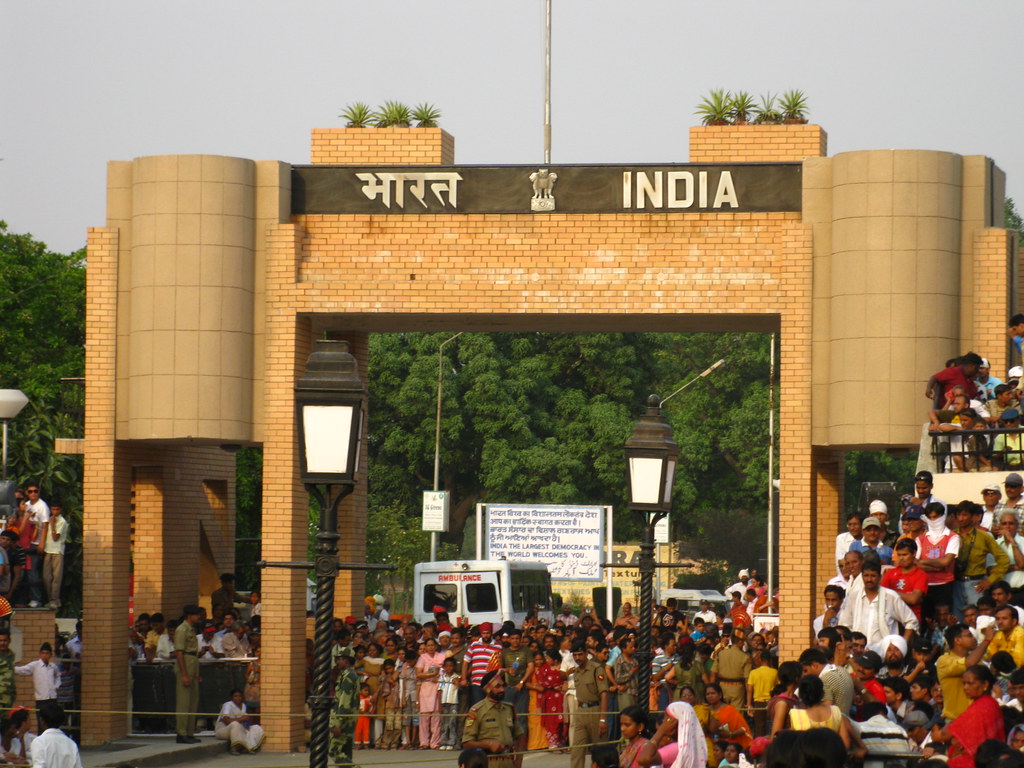
30 kilometres from Amritsar: the India-Pakistan border, where the elaborate flag-lowering ceremony at sunset draws thousands of spectators on both sides to a moment of theatrical, deeply felt patriotic nationalism.
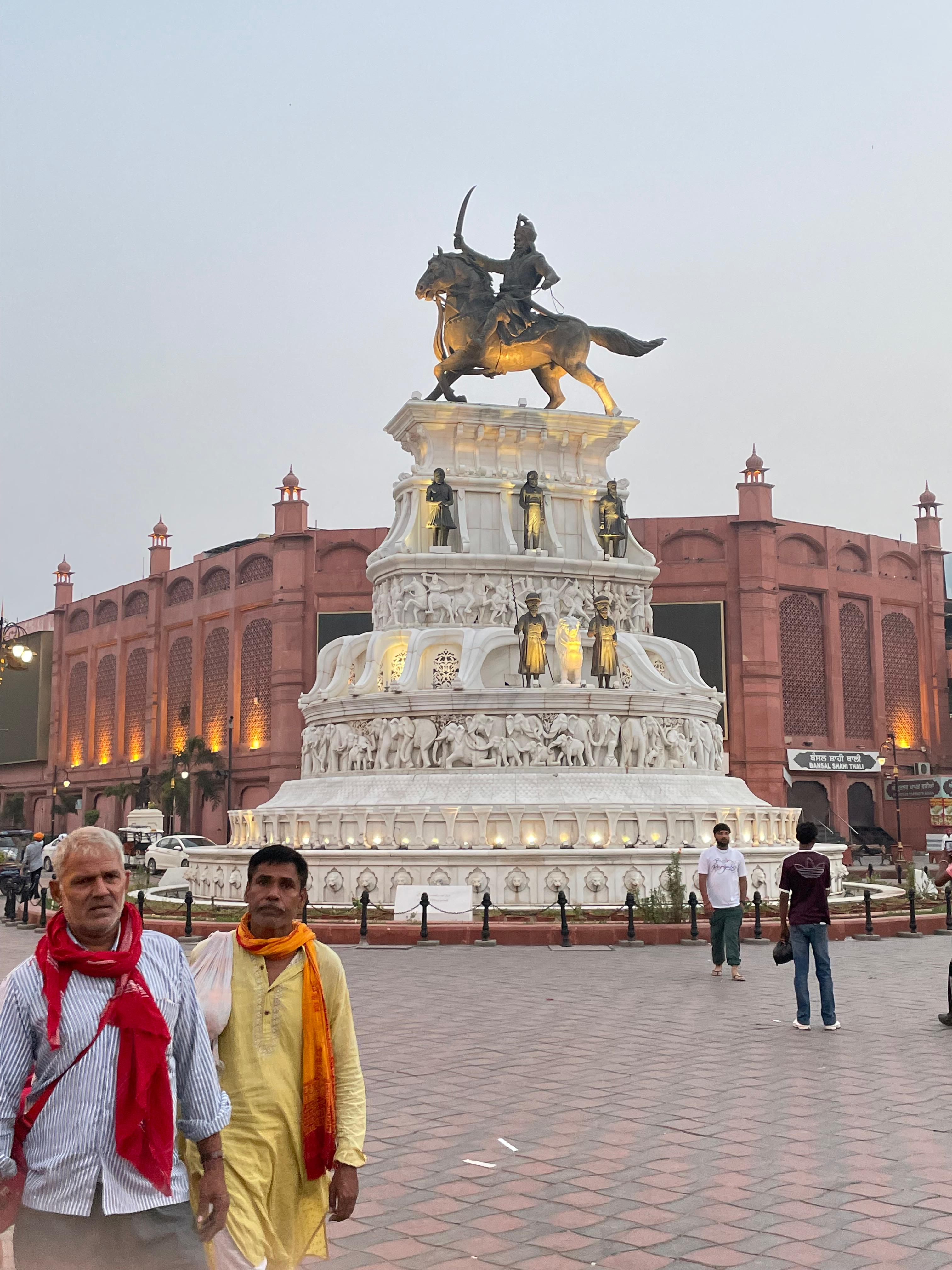
A Sikh-era fort in the heart of Amritsar that operated as a British and then Indian military base until 2017 — now open as a heritage site with a museum on Punjabi history and the original Ranjit Singh-era palace structures intact.
The world's first museum dedicated to the 1947 Partition of India — personal testimonies, photographs, and objects that document the largest mass migration in human history. One of India's most important and most profoundly moving museums.
The Golden Temple complex is open all night and never closes. A visit between 11pm and 3am — when the crowds thin and the Amrit Sarovar reflects the lit gold of the temple in complete stillness — is an entirely different experience from the daytime. The kirtan continues; the effect of the building reflected on water at night is more powerful than any photograph.
Things to Do
The temple never closes. Arriving before dawn gives you the building in artificial light, reflected in still water, with only pilgrims and no tour groups. The kirtan at this hour carries a different quality — slower, more deeply meditative.
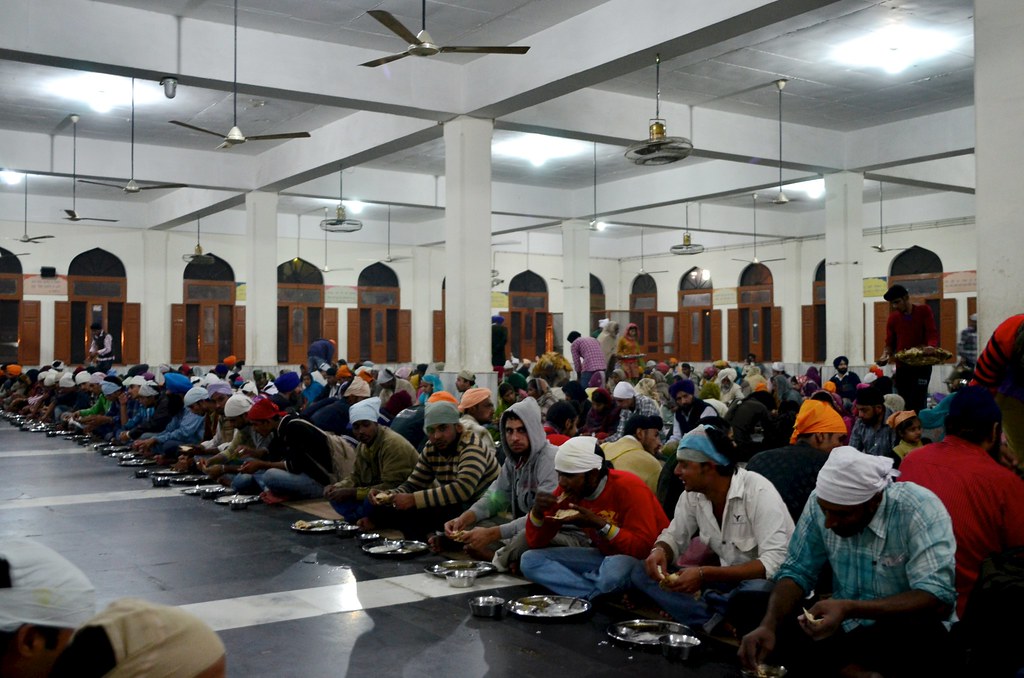
The Golden Temple's community kitchen feeds 100,000 people every day — every caste, every religion, without distinction. Volunteers help wash dishes, roll roti, or serve food. An hour here is unexpectedly moving for almost every visitor.
Arrive 2 hours early for a seat in the bleachers. The ceremony — soldiers in elaborate uniforms performing choreographed marching with absolute precision on both sides of the border — is theatrical, fiercely patriotic, and genuinely unlike anything else in India.
The lanes around the Golden Temple contain havelis, historic gurudwaras, and the Guru Bazar — a market that supplied the temple complex for centuries. A guide who knows the local families here opens doors that are closed to casual walk-ins.
Allow two hours. The oral testimonies — recorded with survivors — are the most powerful part. The museum does not dramatise; it documents, which is precisely why it is so effective.
The palki sahib (palanquin) ceremony at dawn carries the Guru Granth Sahib from its night chamber to the Harmandir Sahib — an event that happens at 4am in winter and earlier in summer, attended by thousands of Sikhs. Witnessing it as the first light touches the gold dome is among the most profound and publicly accessible rituals in India.
Food to Try
Stuffed bread baked in a tandoor and served with chole (spiced chickpeas) and white butter — the defining Amritsar meal, best at Kesar Da Dhaba or the morning stalls near Hall Bazaar.
Cornmeal flatbread with mustard greens — the Punjabi winter dish, deeply satisfying, served with a knob of white butter and jaggery. Available October through March when the mustard crop is in season.
Firm white fish (typically sole or bhetki) in a spiced chickpea batter, deep fried and served with mint chutney — a Punjab cooking tradition that makes freshwater fish more interesting than most coastal preparations.
The free community meal at the temple — dal, roti, khichdi, and sometimes sweet rice — served in a vast hall to thousands simultaneously. Sitting cross-legged on the floor alongside strangers is entirely the point.
Lawrence Road near the Golden Temple has shops serving lassi in heavy clay pots — thicker than Delhi lassi, topped with cream, and accompanied by a katori of white butter. The length of the morning queue is the quality indicator.
A dense Punjab winter sweet made from wheat flour, ghee, sugar, and dry fruits — historically prepared for new mothers in confinement and now eaten throughout the cold months as an energy-rich confection. The pinni at the older sweet shops near Hall Bazaar uses pure desi ghee and is sold by weight; a single piece is more than enough.
Places to Stay
A 250-year-old haveli in a residential Amritsar neighbourhood, restored with meticulous care — 12 rooms, a pool in the courtyard, and a restaurant serving Punjabi cuisine in the evening garden. The most beautiful hotel in Amritsar, and one of the finest heritage stays in Punjab.
Contemporary luxury, 10 minutes from the Golden Temple, with a strong food operation (the Punjabi thaali at the restaurant is genuinely excellent). The right choice for those who want modern hotel reliability alongside Golden Temple access.
A colonial-era guesthouse in the cantonment area — the kind of Raj-era property where the garden is impeccable, the rooms are old-fashioned in the best sense, and breakfast is served on the lawn. Beloved by heritage travellers and writers who return to Amritsar regularly.
Despite the unfortunate name, one of Amritsar's most honest and reliable mid-range hotels — well-maintained, very central, friendly staff, and within walking distance of the Golden Temple. Consistently good value.
A reliable business-class hotel near the city centre with a good pool and comfortable rooms. The right mid-range choice for travellers who want consistent standards without the personality of a heritage property.
A contemporary luxury hotel near the airport and Heritage Street — the most consistent five-star option in Amritsar, with a large pool, a well-regarded food operation, and the reliability of international hotel management. Good for first-time visitors who want Golden Temple access with no infrastructure surprises.
Solo Female Travel
Amritsar has a strong tradition of hospitality rooted in Sikh values of seva (service) and equality. The Golden Temple actively welcomes women of all backgrounds. Solo female travellers consistently rate Amritsar as one of India's most comfortable cities.
The complex requires a head covering (scarves provided at the entrance), covered shoulders, and no shoes. This is genuine religious practice, not tourist protocol — observe it with the same seriousness as you would at any house of worship.
The Old City — the Golden Temple, Jallianwala Bagh, the bazaars — is all within walking distance. A good pair of shoes and a basic map (or guide) allows most of the key sites to be reached on foot.
Plan Your Trip
We know the timing, the back routes to the temple, the langar kitchen volunteer protocol, and the best kulcha stalls that open at 7am. Small details that make the difference between seeing Amritsar and feeling it.
Start PlanningFree consultation · No obligation · Reply within 24 hours
Free Resource
Download The Essential Women's Guide to India — our free, no-fluff resource covering what to pack, what to expect, and what no travel blog will tell you. Trusted by 2,000+ women.
Prefer to speak directly? hello@roamrani.com