Rajasthan · Travel Guide
A living fort in golden sandstone that turns amber at sunset, camel treks to Sam Sand Dunes as the light dies, and nights under a sky so full of stars it rewires your sense of scale. Jaisalmer is one of those places you spend the rest of your life trying to describe.
Places to Visit
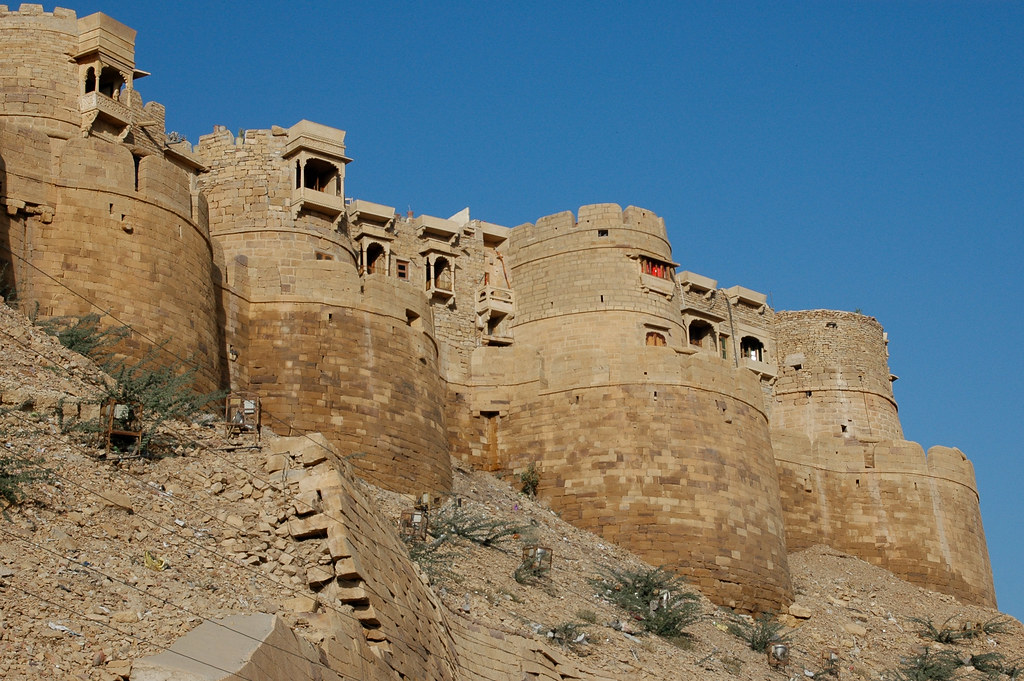
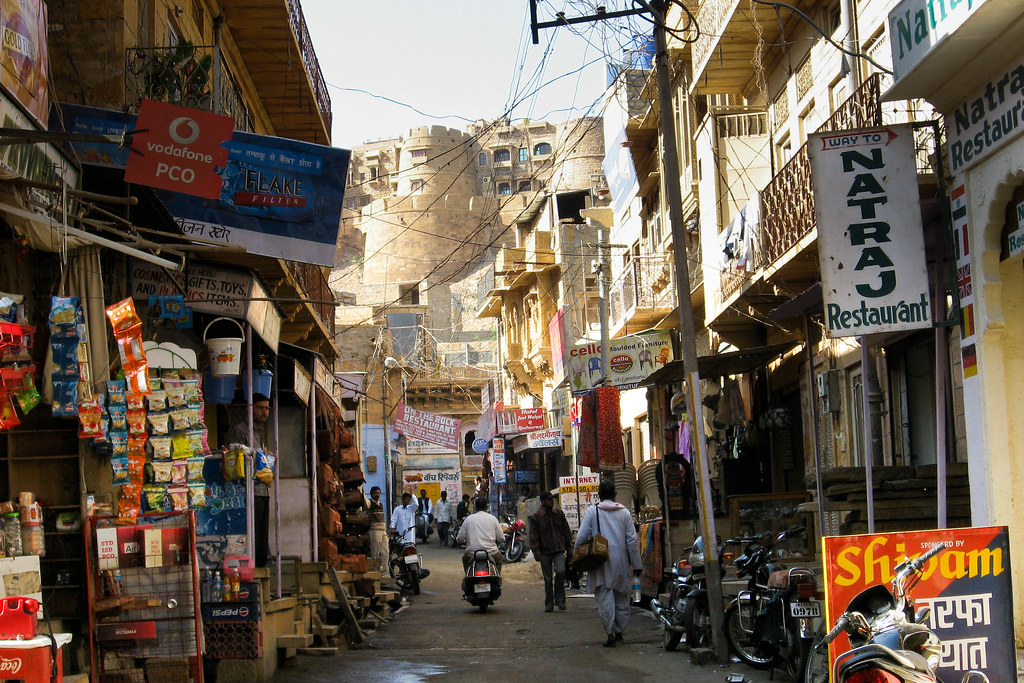
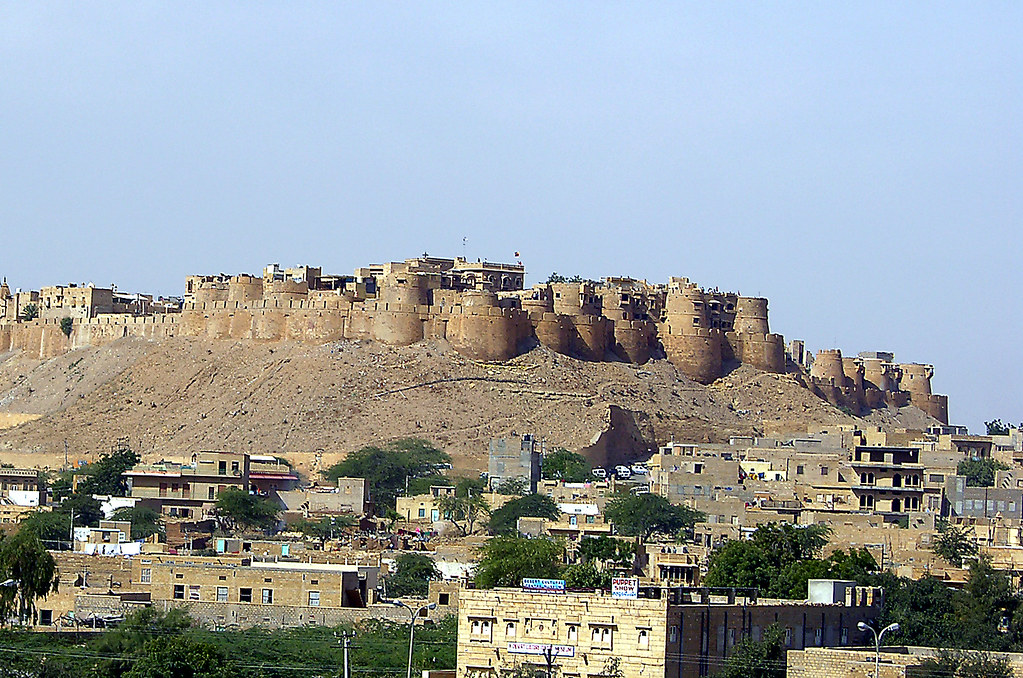
One of the world's few living forts — 3,000 people still live inside it, running guesthouses, restaurants, and shops within its medieval walls. Built in 1156 from yellow sandstone, it changes colour from honey to deep amber as the sun moves.
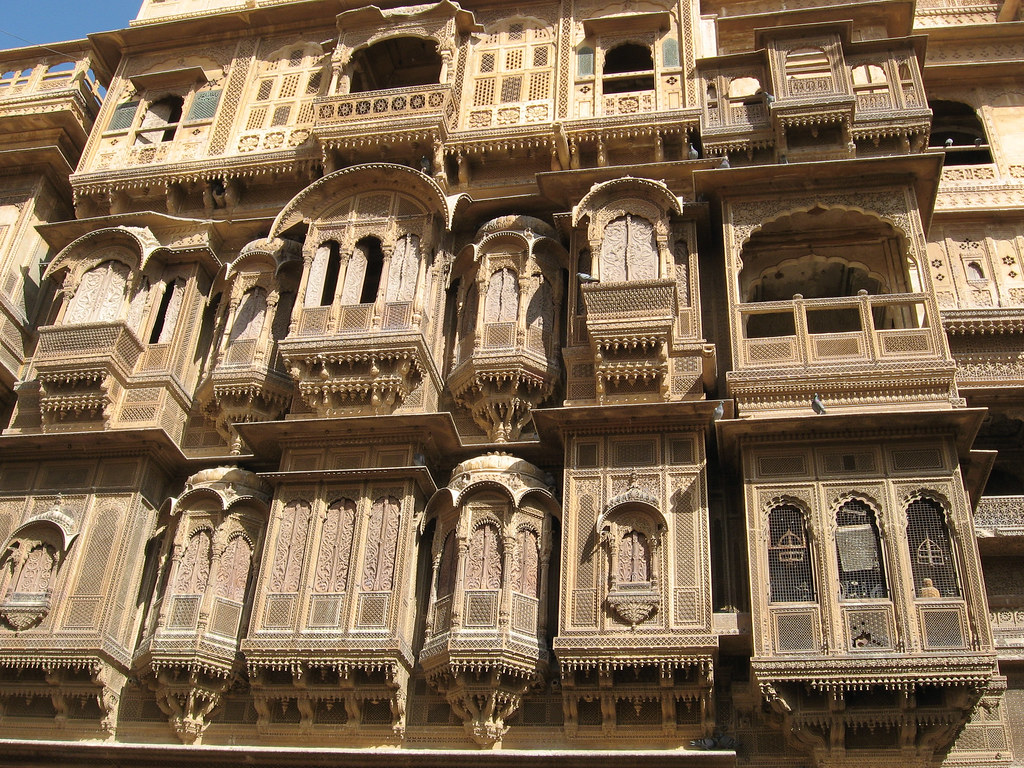
Five interconnected mansions built between 1800 and 1860 by a wealthy merchant family — the most ornately carved haveli complex in Jaisalmer, each storey competing with the one below in the intricacy of its stonework.
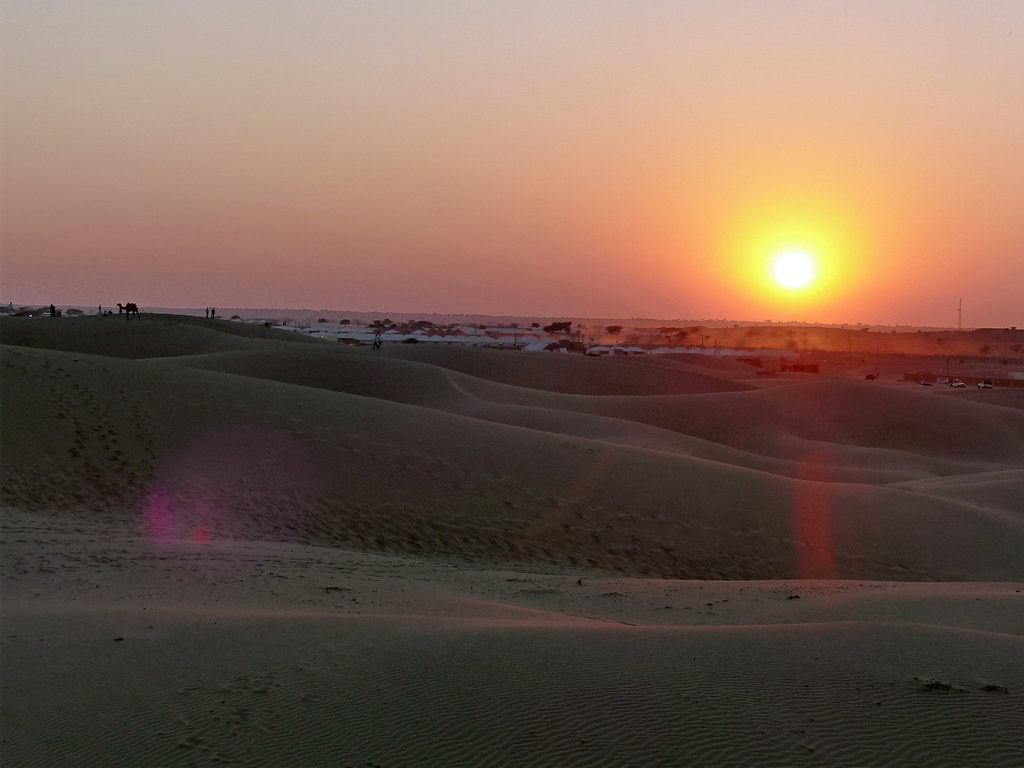
45 kilometres from Jaisalmer: the classic Thar Desert landscape — great rolling dunes of pure sand, with no roads or structures visible in any direction. Best at sunset or sunrise; the hour after sunset, when the stars become visible, is extraordinary.
A 14th-century artificial lake with temples and ghats around its perimeter — in the early morning, migratory birds settle on the surface and the golden light of the city reflects in the still water. A quiet, overlooked counterpoint to the busy fort.
Built by two brothers who worked simultaneously from opposite ends — the result is almost, but not quite, symmetrical. One of Jaisalmer's most fascinating architectural stories, told in stone.
18 kilometres west of Jaisalmer — an entire village of 84 settlements abandoned overnight in 1825 by the Paliwal Brahmin community, the circumstances still disputed. The stone houses stand largely intact: doorways, courtyards, and granaries emptied of everything except silence. A genuinely strange and undervisited site.
Seven interconnected temples inside the fort, built between the 12th and 15th centuries by the Jain merchants who financed much of medieval Jaisalmer. The carvings — ceiling medallions, doorway columns, a thousand small figures in local yellow sandstone — reach a density that makes the eye stop at every surface. Arrive before 8am, before the tour groups, and the priests will unlock the inner chambers for you.
Things to Do
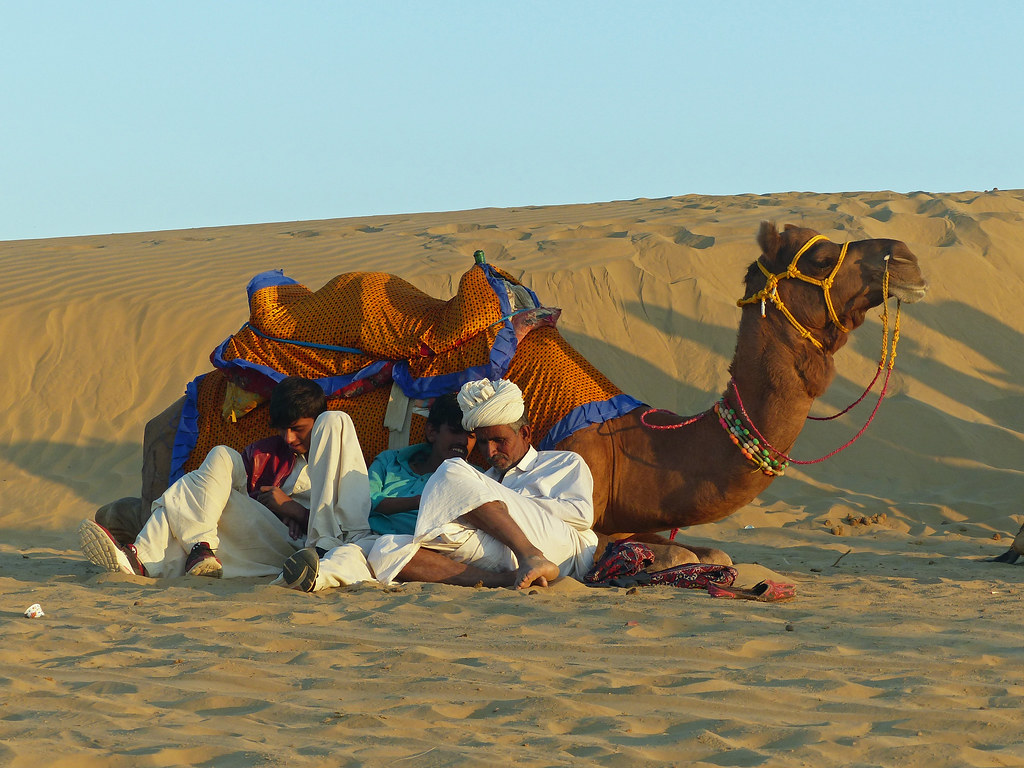
A one-hour camel trek leaving at 4pm — arriving at the dunes as the sun sets, the landscape emptying of colour until there is nothing but horizon and the particular silence of a place that has looked the same for a thousand unbroken years.
A camp in the dunes — not the large tourist camps on the main road, but a private site further into the desert — with a fire, dinner cooked in the sand, and a sky undiluted by any light pollution. The Milky Way is structural at this altitude.
Patwon ki Haveli, Salim Singh ki Haveli, and Nathmal ki Haveli can be seen in a half-day walk with a guide who understands the merchant culture that built them. Without context, they are simply carved stone; with it, they are family portraits.
Langas and Manganiyars are the hereditary musician communities of the Thar Desert — their music has been performed at royal courts for centuries. Evening performances inside the fort guesthouses are the most fitting setting.
An annual three-day festival of camel races, folk dance, turban-tying competitions, and desert crafts — held on the Sam Sand Dunes in February. One of Rajasthan's most atmospheric festivals.
17 kilometres from Jaisalmer: a protected site where 180-million-year-old fossilised tree trunks lie scattered across the desert — remnants of a time when the Thar was a subtropical forest at the edge of the Tethys Sea. The scale of the trunks (some over 13 metres long) is astonishing; the site is almost never crowded.
120 kilometres from Jaisalmer, at the edge of the Pakistani border — a BSF-managed temple where the goddess is credited with protecting Indian forces during the 1965 and 1971 wars. Pakistani bombs fell on the courtyard and did not detonate; they are displayed in a small museum beside the temple. Pair it with the Longewala War Memorial nearby — where 120 Indian soldiers held off a Pakistani armoured column of 2,000 through the night in 1971, captured tanks still standing where they stopped. The drive through the empty Thar at sunrise, the border visible in the distance, is unlike anything else in Rajasthan.
Food to Try
The Rajasthani staple at its most authentic — baati baked in a wood-fired pit, dal with five lentils and a full spice box, churma made with jaggery. The desert context makes the dish make sense: dense, calorie-rich, designed for heat.
A desert preparation of dried berries (ker) and beans (sangri) that survive without refrigeration in extreme heat — tangy, spiced, intensely flavoured. The dish that defines Thar Desert cuisine.
Spiced minced mutton cooked with tomatoes and whole spices — available at the non-vegetarian stalls inside the fort. The Rajput royal families of the desert ate mutton; the local preparation reflects that history.
Tea on a fort-top café terrace — the desert spreading in every direction below, the sandstone walls catching the afternoon light — is not just a drink. It is the correct way to understand what Jaisalmer actually means.
A dense sweet ball made from gram flour, ghee, and sugar — the Jaisalmer version has a slightly different spicing than the standard Rajasthani ladoo. Bought at sweet shops inside the fort.
Pearl millet cooked with ghee, cumin, and whole spices into a thick, warming porridge — the desert staple that sustained the Bhati Rajputs through Thar winters. Available at traditional Rajasthani thali restaurants in the city; eaten in the cold of a November desert morning with a knob of white butter on top, it makes complete sense.
Places to Stay
A contemporary fortress-style luxury hotel 6 kilometres outside Jaisalmer, built in the architectural language of the desert fort. 62 rooms, a spa, a pool, and desert views from every terrace. One of Rajasthan's finest purpose-built luxury hotels — designed to feel like a living haveli, not a generic resort.
A grand heritage-style hotel at the edge of the old city with views up to the Sonar Qila (Golden Fort). Rajasthani architecture, courtyard pool, and the kind of scale that allows restaurants, bars, and a full event programme. Good choice for those who want the fort atmosphere without sleeping inside its ancient lanes.
A luxury tented camp in the Sam Sand Dunes, 60 kilometres from Jaisalmer — the most acclaimed glamping property in the Thar Desert. Canvas suites with private outdoor showers, a pool, and dune walks at sunset. Combines with a night or two in Jaisalmer itself.
A 300-year-old merchant haveli in the walled city, below the fort ramparts — boutique heritage hotel with hand-carved sandstone interiors, rooftop restaurant, and 12 individually designed rooms. One of the best heritage stays inside the old city.
A reliable mid-range desert camp at Sam Dunes with Swiss tents, attached bathrooms, and camel safari access — for those who want the dune experience without the Serai price point. Good value and honest service.
A family-run guesthouse and small farm on the outskirts of Jaisalmer — simple rooms in a traditional haveli, a garden, home-cooked Rajasthani meals, and the genuine hospitality of a family that has been hosting travellers for decades. The right budget-to-mid option for those who want Jaisalmer with local warmth rather than resort distance.
Solo Female Travel
The large group tourist camps on the main Sam road are not the right choice for solo women. Private arrangements — a camp further into the dunes, organised by a trusted operator — give you the desert experience without the group dynamic.
Staying inside the fort walls means you can walk to the sunrise viewpoints without transport, navigate the lanes at your own pace, and are known to the guesthouse staff. Family-run properties are strongly preferred over chains.
Camel trek operators vary significantly in quality and the nature of the experience they provide. Ask for a recommendation from your guesthouse or let RoamRani arrange it. A good operator knows the quiet dunes away from the tourist crowds.
Plan Your Trip
We arrange private desert camps away from the tourist circuit, camel treks with operators we trust, and fort guesthouse stays with families who have been here for generations.
Start PlanningFree consultation · No obligation · Reply within 24 hours
Free Resource
Download The Essential Women's Guide to India — our free, no-fluff resource covering what to pack, what to expect, and what no travel blog will tell you. Trusted by 2,000+ women.
Prefer to speak directly? hello@roamrani.com