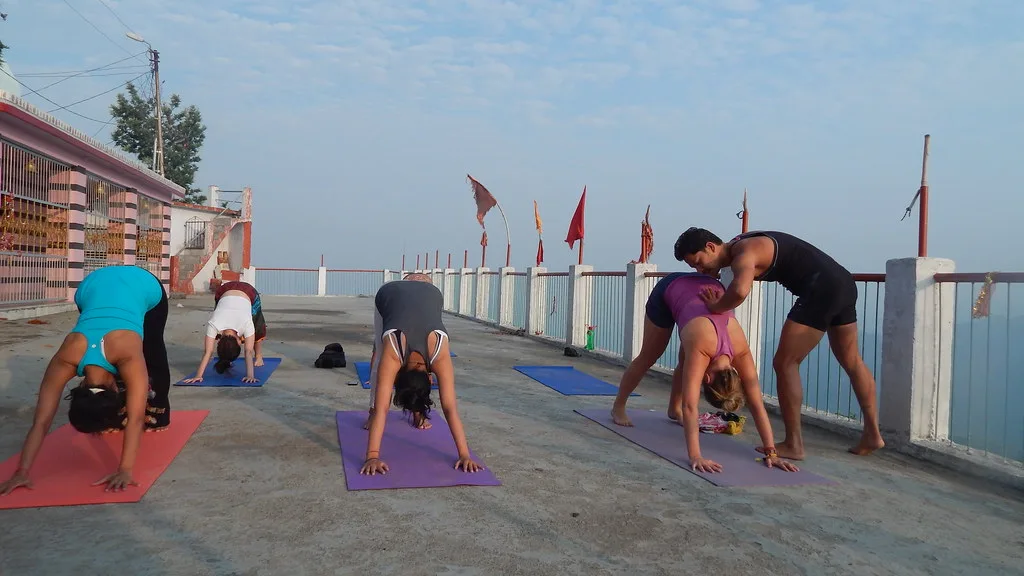
A Rishikesh yoga retreat is a residential stay in the yoga capital of the world where you practise yoga daily, eat sattvic vegetarian food, and often add Ayurveda or Panchakarma therapies. For women travelling alone it is one of the safest, most rewarding trips in India: pick a small, vetted retreat with a private room and you will be fine.
The first time I helped a guest book a yoga retreat in Rishikesh, she called me two days before her flight, close to cancelling. She had been reading forums at midnight: stories about pushy “gurus,” dirty shared dorms, men following women along the river. She was travelling alone for the first time in her life and she was scared. She went anyway, and she came back calmer than I had ever heard her.
I do this as part of RoamRani, a travel brand built around planning trips for women travelling to India. So this is not theory. It is what we at RoamRani watch happen to real guests, and it is why we can tell you where the scary version of Rishikesh online is wrong, and where it is worth listening to. Here is the honest, complete version: what a retreat actually involves day to day, how long to stay, who each kind suits, and how to pick a place that will not let you down.
One guest booked through us stayed a full month, doing yoga in the mornings alongside Ayurvedic therapies and a Panchakarma programme that the centre’s resident doctor tailored to her specifically after actually sitting down to understand her body. What she said afterward stayed with me: it took the better part of that month to genuinely slow down, put the phone away, and reconnect with herself. The food was sattvic, fresh and simple. The staff, she said, looked after her like family, so it stopped feeling like a booking and started feeling like a home away from home. That is the real ceiling of what a Rishikesh retreat can do, and it is a long way from the forum horror stories.
What actually happens on a yoga retreat in Rishikesh?
A retreat is a structured daily rhythm, not a hotel stay with a yoga class attached. The shape is remarkably consistent across good centres, whether you book three days or a month. A typical day looks like this:
- Early morning: guided meditation or silent sitting, followed by pranayama (breathing practice) as the sun comes up.
- Morning: the main asana session, usually traditional Hatha, sometimes Ashtanga, taught with real attention to alignment for your body.
- Breakfast: a sattvic, freshly cooked vegetarian meal, then free time to journal, walk, rest or take a therapy.
- Midday: a yoga philosophy talk, an alignment workshop, or a mindfulness session. This is the part beginners underestimate and later love.
- Afternoon: a gentler restorative or yin session, or an Ayurvedic treatment such as an Abhyanga oil massage or herbal steam.
- Evening: group meditation, sometimes kirtan (chanting), and the option to walk down for the Ganga Aarti. Dinner is early, the town goes quiet, and you sleep.
Held for even a few days, that rhythm is the whole point. It is what resets a nervous system that has been running on notifications for years. Rishikesh has been a yoga destination for over half a century, hosts the International Yoga Festival every March since 1999, and became globally famous after the Beatles stayed at what is now the “Beatles Ashram” in 1968. You are stepping into a place that has been doing this longer than almost anywhere on earth.
Which kind of yoga in Rishikesh retreat suits you: ashram or wellness retreat?
This is the decision that matters most, and almost nobody explains it before you book. Picking the wrong type is the single biggest reason people come home disappointed. Here is the honest comparison:
| Traditional ashram | Comfortable wellness retreat | |
|---|---|---|
| Rooms | Simple, sometimes shared | Private room, attached bathroom, hot water |
| Schedule | Strict and fixed, often seva (service) and silence | Structured but gentler, more free time |
| Yoga style | Traditional, disciplined, assumes some commitment | Hatha and restorative, beginner-friendly |
| Food | Sattvic, no onion or garlic, minimal | Sattvic, fresh, usually more variety |
| Extras | Few by design | Ayurveda, Panchakarma, massage, sound healing |
| Best for | Experienced or spiritually committed | First-timers, solo women, anyone wanting comfort |
A real ashram is a spiritual residence. If you are ready to surrender to a routine and live simply, it is deeply rewarding. If you are hoping for a spa with yoga attached, you will feel trapped by day two. The comfortable wellness retreat keeps the substance, a real teacher, a daily practice, healthy food, but gives you a private room and a gentler pace. For most of the women I work with, especially first-timers and anyone travelling solo, that second option is the right call.
The honest warning on both: a yoga ashram in Rishikesh will often market its “credentials” hard. Certificates and lineage claims are marketing. What matters is whether the teacher and the Ayurveda doctor actually take the time to understand your body before they prescribe a practice or a treatment. That is exactly the kind of thing worth vetting before you pay.
How many days should a Rishikesh yoga retreat be?
The honest answer: at least a week if you can, because the reset does not really begin until day three or four, once the emails stop echoing in your head. Here is how the common lengths compare:
| Length | What it gives you | Best for |
|---|---|---|
| 3 to 5 days | A taste of the practice and a genuine pause | A long weekend or an add-on to a bigger India trip |
| 7 to 10 days | A real reset: sleep, digestion and mood noticeably shift | The sweet spot for most first-timers |
| 14 days | Habits start to stick, the practice deepens, digital detox holds | Anyone recovering from burnout |
| 21 to 28 days | Deep, therapeutic change, room for a full Panchakarma cycle | A true transformation, health reset |
Our month-long guest is proof of the far end: flexibility and strength improve, posture opens up, sleep gets deep, the nervous system calms, and by the second week the phone genuinely loses its grip. You do not need a month to feel it. But you do need more than a weekend.
Why Rishikesh is one of the easiest places in India to arrive alone as a woman
Rishikesh is not a normal Indian city, and that works in your favour. It has drawn female yogis and backpackers for over fifty years, so a woman travelling solo is not a novelty here the way she might be elsewhere. Nobody stares, because everyone has seen it before.
As a holy city, Rishikesh is officially alcohol-free and vegetarian, which changes the entire feel of the streets at night. There is no drunk crowd, no bar culture spilling out at 1am. The evening Ganga Aarti keeps the riverfront well-lit and busy with families and pilgrims until around 8pm, and after that the ashram culture keeps things genuinely quiet. It is one of the few places in India where I am comfortable telling a nervous first-timer she can walk back to her room after dinner without a knot in her stomach.
That does not mean you switch your brain off. The same instincts that keep you safe anywhere in India apply here too, and if you want the full playbook, our honest guide to solo female travel in India covers it properly. But as a place to land alone and exhale, Rishikesh is about as gentle as India gets. It is also the gateway to the Himalayas, so many women build a retreat into a longer spiritual India journey.
Is the food really clean, and can you get a private room?
The food is a common worry, so let me be direct. Retreat and ashram kitchens serve sattvic vegetarian meals, usually without onion or garlic, cooked fresh and in-house. At a vetted place this is some of the cleanest, safest food you will eat in India, precisely because it is simple, cooked to order, and made for guests who are there to heal. The place to be careful is the street cafes and lassi stalls around the bridges, which are fun but a different risk profile. Inside a good retreat, hygiene is genuinely not the thing to worry about.
On rooms: yes, you can absolutely have a private room with your own attached bathroom. Shared dorms exist at the backpacker and strict-ashram end, but the comfortable retreats are built around private rooms, and that is what RoamRani books for solo women by default unless they ask otherwise. You do not have to choose between an authentic practice and your own bathroom. That is a false trade-off.
Getting there, and getting around once you arrive
Almost everyone starts in Delhi. From there you have three sensible ways to reach Rishikesh, which is roughly six hours away by road. The easiest for a solo woman is a private car arranged through a trusted operator, door to door, no changes. The cheapest is the train to Haridwar followed by a short taxi. The fastest is a quick flight to Dehradun airport, then about an hour by car to Rishikesh.
Whichever you choose, the golden rule is the same one from our safe arrival guide for women: never take a random cab off the street for a long intercity leg. Book the car through your retreat or a proper tour operator like RoamRani, so the driver is known and accountable. A lot of women pre-book this transfer precisely so they do not have to negotiate a fare at midnight after a long flight. It is worth it.
And yes, you get to explore. A well-planned retreat is not a lockdown. The schedule leaves the middle of the day open, so you can walk the Lakshman Jhula and Ram Jhula suspension bridges, sit through the Ganga Aarti, visit the Beatles Ashram, or take a short trip to a Himalayan viewpoint or waterfall. If you are on a longer trip, white-water rafting on the Ganga runs from October to April. The good retreats help you arrange these, or RoamRani builds the free days into your plan so the yoga and the exploring do not fight each other.
When to go, and the one season to avoid
Rishikesh works almost year-round, but there is one clear rule: avoid the monsoon. From roughly July through August the river runs high and brown, rafting shuts down, the humidity is heavy, and landslides can disrupt the mountain roads. It is not dangerous so much as miserable and limiting for a first retreat.
The sweet spots are the cool, clear months. Late September through November is beautiful, and February through April is the other classic window, warm days and comfortable practice. Winter is quieter and colder but has its own stillness if you do not mind bundling up for the sunrise session. If flexibility of activities matters to you, aim for the October to April band.
How RoamRani helps women book the right Rishikesh retreat
Here is where I am honest about what RoamRani does and does not do. RoamRani does not run its own ashram. What we do is plan and book Rishikesh retreats for women travelling to India, using places we have relationships with and have vetted, so you are not gambling on a listing you found at 2am. The centres RoamRani works with are small, often on the banks of the Ganga, with a resident Ayurveda doctor who actually tailors the Panchakarma and therapies to the individual rather than running everyone through the same package. We match the kind of retreat to who you actually are, arrange the private room, sort the Delhi transfer, and build in the free time so the trip has room to breathe.
The reason this matters is trust. Traveling solo in India is a skill, and you do not develop it in one day. Having a real team that has placed women in these retreats, and heard back from them, standing behind your booking is the difference between anxiously refreshing forums and actually sleeping the night before your flight. That is the same philosophy behind everything from RoamRani’s local women guides to our women-only group tours: solo, but never alone.
If you want more of the ground rules before you go, our post on the things no one tells women before travelling to India is worth ten minutes, and you can grab RoamRani’s free Essential Women’s Guide to India to keep on your phone. You can also follow real guest stories on Instagram at @roamrani.india.
Frequently asked questions
Is a yoga retreat in Rishikesh safe for a woman travelling alone?
Yes. Rishikesh is one of India’s most solo-female-friendly towns: a holy city that is officially alcohol-free, quiet at night, and long accustomed to women yogis and backpackers. The evening riverfront stays well-lit and busy until around 8pm. Choose a small, vetted retreat with a private room and normal travel sense, and you will be comfortable on your own.
What is the food like at a Rishikesh retreat, and is it clean?
Retreats serve fresh, in-house sattvic vegetarian meals, usually without onion or garlic. At a vetted place it is some of the cleanest food you will eat in India, because it is simple and cooked to order for guests who came to heal. Be more cautious with the street cafes and lassi stalls around the bridges than with the retreat kitchen itself.
Can I get a private room with my own bathroom at a yoga ashram in Rishikesh?
Yes. Shared dorms exist at strict traditional ashrams and backpacker spots, but most comfortable wellness retreats are built around private rooms with attached bathrooms and hot water. You do not have to choose between an authentic yoga practice and your own bathroom. RoamRani books private rooms for solo women by default.
How do I get from Delhi to Rishikesh?
Rishikesh is about six hours from Delhi. The simplest option for a solo woman is a pre-booked private car, door to door. The cheapest is a train to Haridwar plus a short taxi, and the fastest is a flight to Dehradun then about an hour by road. Always book the intercity car through a trusted operator, never a random street cab.
Will I be able to explore Rishikesh during the retreat?
Yes. A good retreat schedules yoga at sunrise and in the evening, leaving the middle of the day free. You can walk the Lakshman Jhula and Ram Jhula bridges, see the Ganga Aarti, visit the Beatles Ashram, or add rafting between October and April. RoamRani builds free days into the plan so the yoga and the sightseeing do not compete.
How many days should a Rishikesh yoga retreat be?
Stay at least a week if you can. The real reset does not begin until day three or four, once your mind stops racing. Seven to ten days is the sweet spot for most first-timers, fourteen days lets the habits stick, and three to four weeks allows a deep, therapeutic change with a full Panchakarma cycle. A weekend is a taste, not a reset.
If you are thinking about a Rishikesh retreat, the easiest next step is to tell RoamRani what you are looking for. Start with our Rishikesh planning page to see what the town offers, then get in touch and we will match you to the right retreat, sort your private room and your Delhi transfer, and build the free days around your practice. No obligation, and we reply within 24 hours. Solo, but never alone.