Rajasthan · Travel Guide
A sacred lake town built around the world's only Brahma temple, with 52 ghats where pilgrims offer flowers at sunrise and sunset. Pushkar offers a slower, more contemplative counterpoint to Rajasthan's forts and palaces.
Places to Visit
The only temple in the world dedicated to Brahma, the creator in the Hindu trinity — there is precisely one, and it is here in Pushkar. Active worship, not a heritage site: priests perform rituals throughout the day and the temple fills with pilgrims at both dawn and dusk.
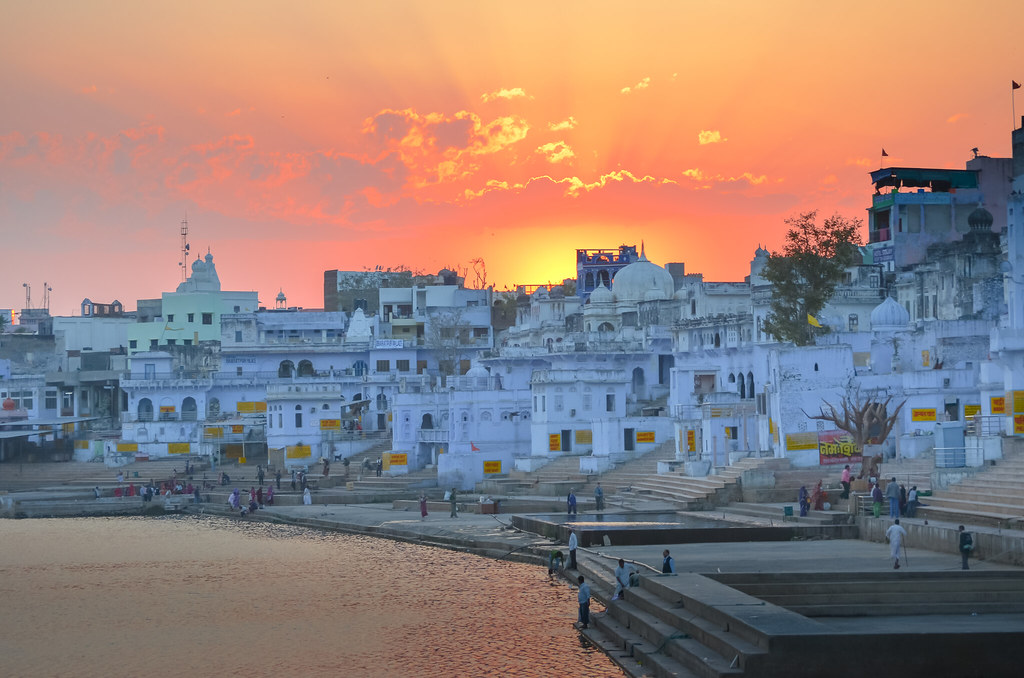
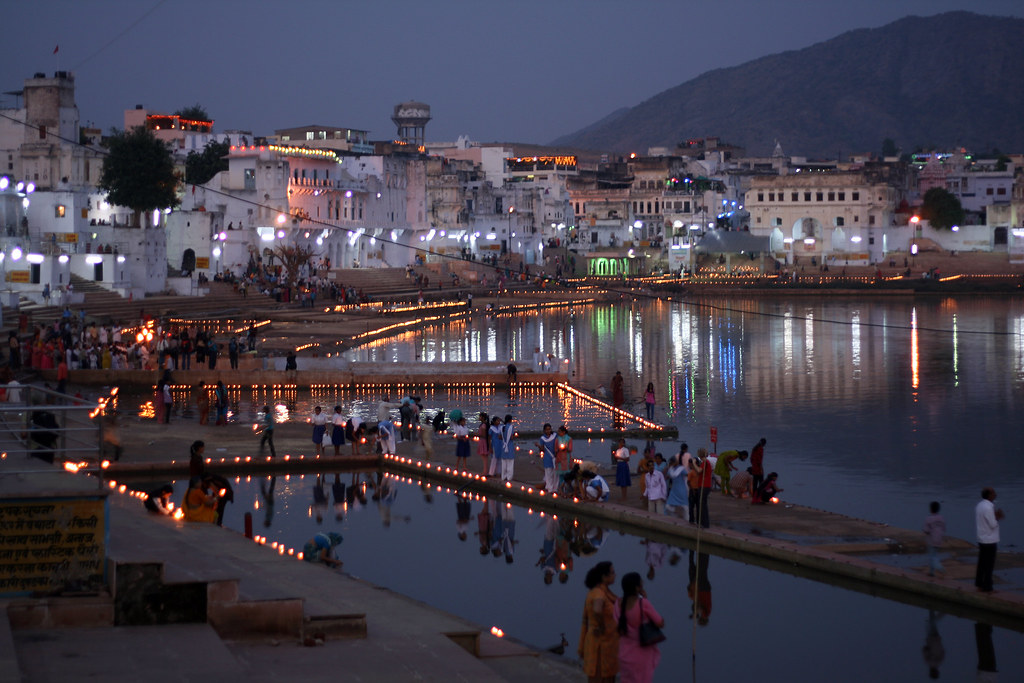
The sacred lake formed, according to legend, where Brahma's lotus petals fell to earth. 52 ghats surround it — each with its own name, history, and pilgrims. Sunrise and sunset at the water's edge, with flower offerings floating on the lake, is the defining Pushkar experience.
A temple to Brahma's wife on the hilltop above Pushkar — reached by a 30-minute climb or a ropeway. The views over the lake, the town, and the Aravalli hills stretching to the horizon are extraordinary at sunrise.
Pushkar supplies much of India's rose water and attar (rose oil) production — the fields of roses that bloom in February and March surround the town. Visiting a distillery in season reveals the full process from petal to perfume.
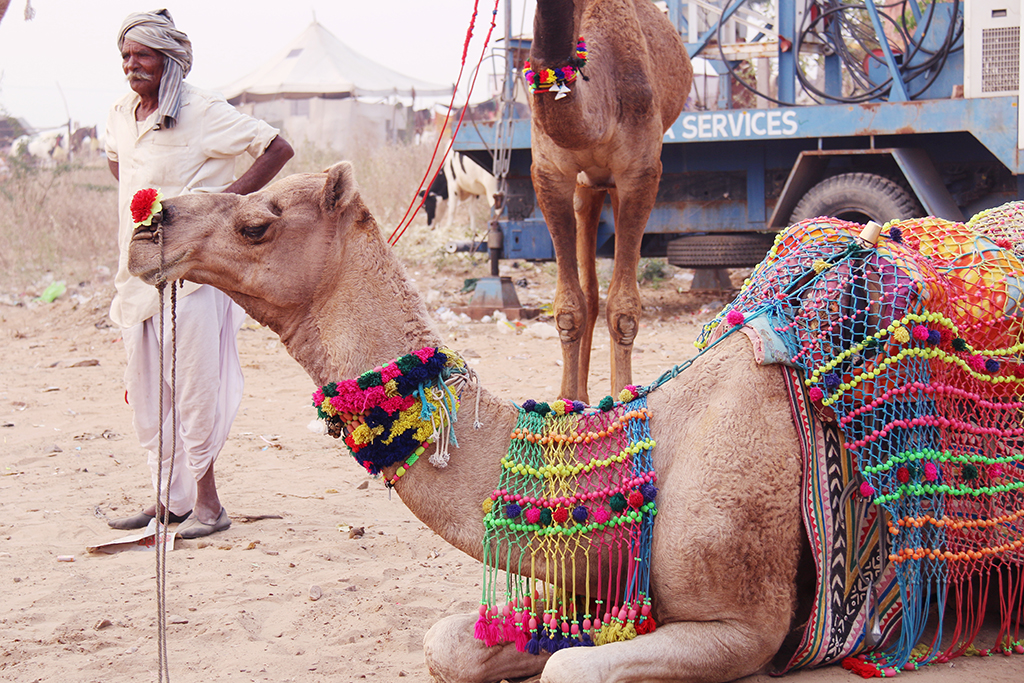
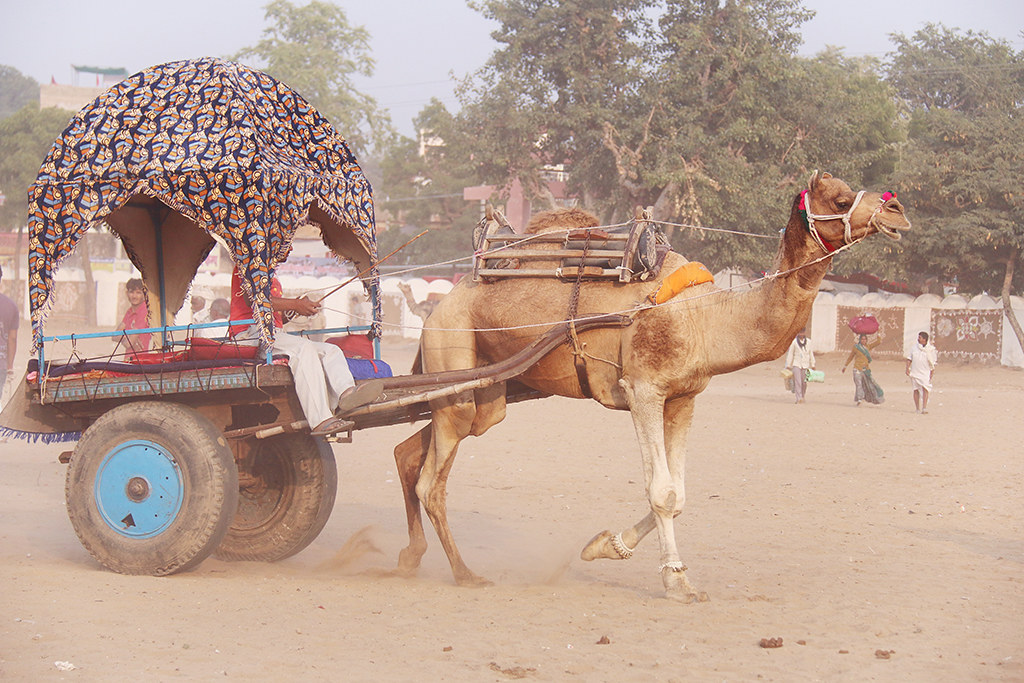
Outside the city: where the annual fair (November, Kartik Purnima) brings 50,000 camels, horses, and cattle to a trade fair that has operated for centuries. In November, the grounds are extraordinary; the rest of the year they are simply interesting.
The ropeway to the hilltop Savitri Mata Temple runs until dusk — arriving at the top with an hour before dark gives you time to circle the temple, read the mythology, and be in position as the Aravalli hills turn from gold to purple behind Pushkar lake. The most expansive view available from any point within a day's visit.
Things to Do
The most important hour in Pushkar — pilgrims already in the water, flower sellers arranging their baskets at the ghat steps, the lake perfectly still. The town is still asleep; the ghats are at their most sincere and unhurried.
Several guesthouses around the lake offer morning yoga on their rooftops — overlooking the ghats, the Brahma Temple spire, and the Savitri hills. A genuinely peaceful practice setting.
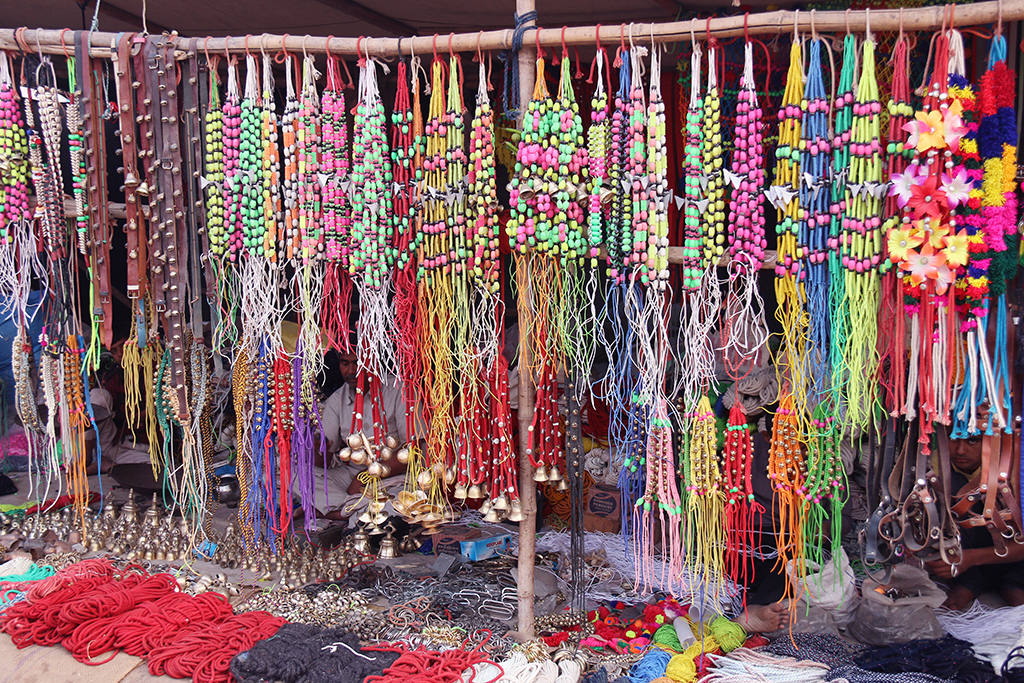
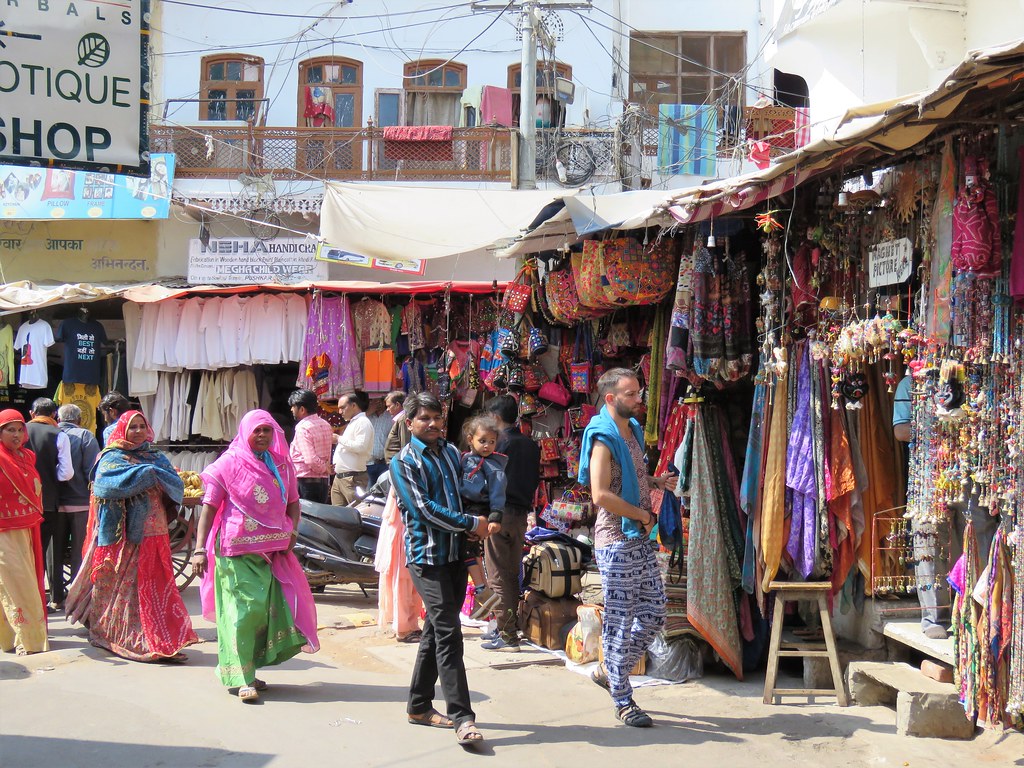
The bazaar between the lake and the bus stand sells silver jewellery, hand-block printed textiles, and Rajasthani handicrafts in a relaxed atmosphere — vendors here are less aggressive than in Jaipur or Jodhpur.
Five days around Kartik Purnima when the largest camel and livestock fair in Asia takes over the grounds outside town. Camel beauty contests, folk performances, and an atmosphere of genuine spectacle that has not been staged for tourists — it simply is.
14 kilometres away: the Dargah Sharif of Moinuddin Chishti, the most important Sufi shrine in South Asia, where pilgrims of all faiths come on Thursday evenings for qawwali. A powerful complement to Pushkar's Hindu spirituality.
The ruined fort on the Nag Pahar ridge above the town — a 45-minute uphill walk from the bazaar through scrubland — gives the same panoramic lake view as the Savitri ropeway without the crowds. The fort walls are mostly intact; the silence on the ridge is absolute. The path is best walked in the early morning when the light is low and the temperature is manageable.
Food to Try
The Pushkar sweet kachori — pastry filled with sweetened khoya and fried — is the breakfast of the main bazaar. The version here has a slightly different spicing than Jodhpur's, and is served warm from the pan.
Pushkar is a holy town — alcohol and meat are prohibited within its limits. The vegetarian thalis (dal, sabzi, roti, rice, pickle, sweet) at the old city restaurants are some of Rajasthan's finest vegetarian cooking.
Flattened rice with mustard seeds, curry leaves, and green chilli — a simple, clean breakfast available at the chai stalls near the lake at dawn. The correct first meal before the sunrise ghats.
Pushkar's lassi culture is strong — thick yoghurt drinks in clay cups, sometimes topped with cream. The stalls near the main ghat have operated for decades.
The backpacker café culture around Pushkar lake — a legacy of the traveller circuit of the 1970s — produces Israeli, Italian, and Indian food for a genuinely international clientele. Unpretentious and usually quite good.
A Pushkar speciality and festival sweet — deep-fried wheat pancakes soaked in sugar syrup, served with cold thickened milk (rabdi) flavoured with saffron and cardamom. Available at the traditional sweets shops near the Brahma temple, particularly during Holi and Kartik Purnima; the combination of the hot, syrup-saturated pancake and the cold cream is a textural contrast specific to this town.
Places to Stay
A restored haveli in the old city lanes, 200 metres from the Brahma Temple. Rooftop restaurant with lake views, hand-painted walls, and a thoughtful restoration that keeps the haveli's original architecture intact. Consistently one of Pushkar's best-reviewed boutique stays.
A heritage hotel directly overlooking Pushkar Lake — the most central lakefront location in town. The rooftop has one of the finest views in Rajasthan: ghats, lake, Aravalli hills, and Brahma Temple from a single vantage point. Built in the 18th century and still family-managed.
A contemporary luxury property set in the Aravalli hills 4 kilometres from the town — a working wellness resort with an Ayurveda centre, large pool, and views across the desert landscape. The right choice for travellers who want Pushkar's spiritual geography without sleeping inside its dense old city lanes.
International standard luxury 3 kilometres from town, with a large pool and full-service spa. Good for families or those who want Pushkar proximity with the reliability of an internationally operated hotel.
A good budget option directly near the lake ghats — clean rooms, honest prices, and a rooftop that gets you lake views at a fraction of the lakefront hotel rates. One of the better-value finds in a town that swings between overpriced and genuinely cheap.
A heritage guesthouse in a converted royal residence near the Brahma Temple — small, family-managed, with rooftop views of the lake and the ghats. Simple rooms, genuine warmth, and the right price for travellers who want Pushkar's atmosphere without the boutique hotel bill.
Solo Female Travel
Pushkar has hosted solo female travellers for decades — the backpacker circuit brought women here from the 1970s and the town is accustomed to them. The lake area and bazaar are both navigable alone.
Leather and eggs are not permitted in the sacred area around the lake. Dress modestly at the ghats. Priests (pandas) at the lake offer blessings — you can accept or decline politely; there is no obligation.
Pushkar is small — the main bazaar is one street, the lake is a five-minute walk from anywhere, and the atmosphere is genuinely unhurried. This makes it one of the easiest places in Rajasthan to navigate independently.
Plan Your Trip
Pushkar combines well with Jaipur or Ajmer for a short Rajasthan circuit. We plan the right pace — enough time at the ghats, a rooftop yoga session, and the main bazaar before the day heats up.
Start PlanningFree consultation · No obligation · Reply within 24 hours
Free Resource
Download The Essential Women's Guide to India — our free, no-fluff resource covering what to pack, what to expect, and what no travel blog will tell you. Trusted by 2,000+ women.
Prefer to speak directly? hello@roamrani.com