South India · Travel Guide
Intact 18th-century French colonial architecture, the Sri Aurobindo Ashram's meditation spaces, and a beachfront café culture serving French-Tamil fusion you won't find anywhere else in India. A town that rewards slow, independent exploration.
Places to Visit
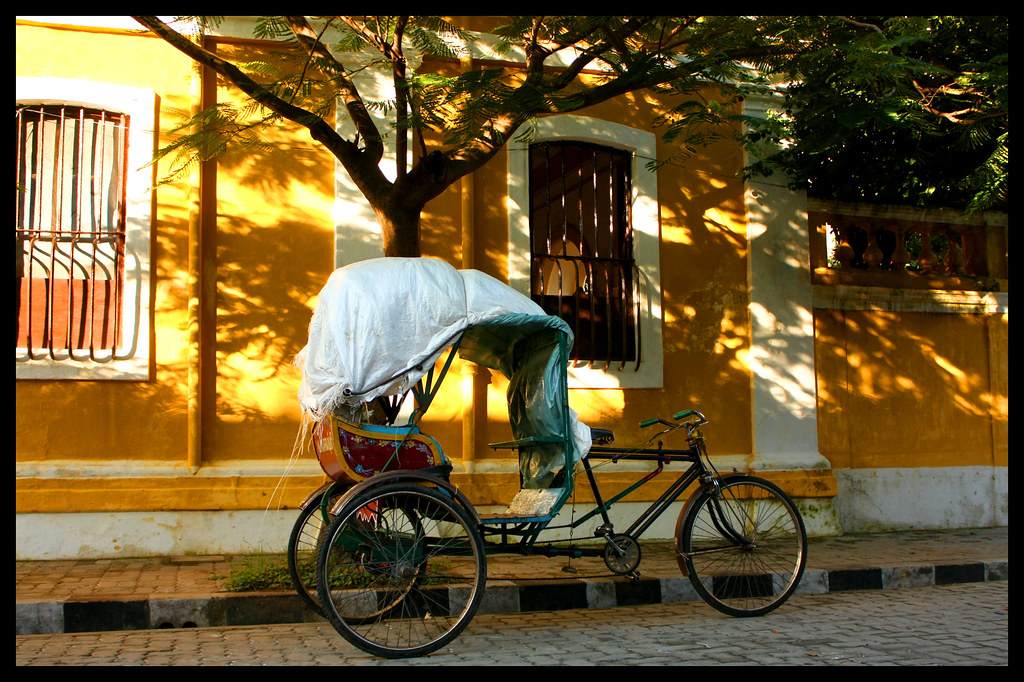
The historic French quarter — wide boulevards, painted facades in yellow and white, bougainvillea over courtyard walls, and a seafront promenade where the French tricolour still flies at the Alliance Française. The architecture is intact and the atmosphere is genuinely different from any other Indian town.
Founded in 1926 by Sri Aurobindo and the Mother — one of India's most serious and long-established spiritual communities, still operating on the philosophy of integral yoga. The main ashram building and samadhi (memorial) in the courtyard are open to visitors; the bookshop is excellent.
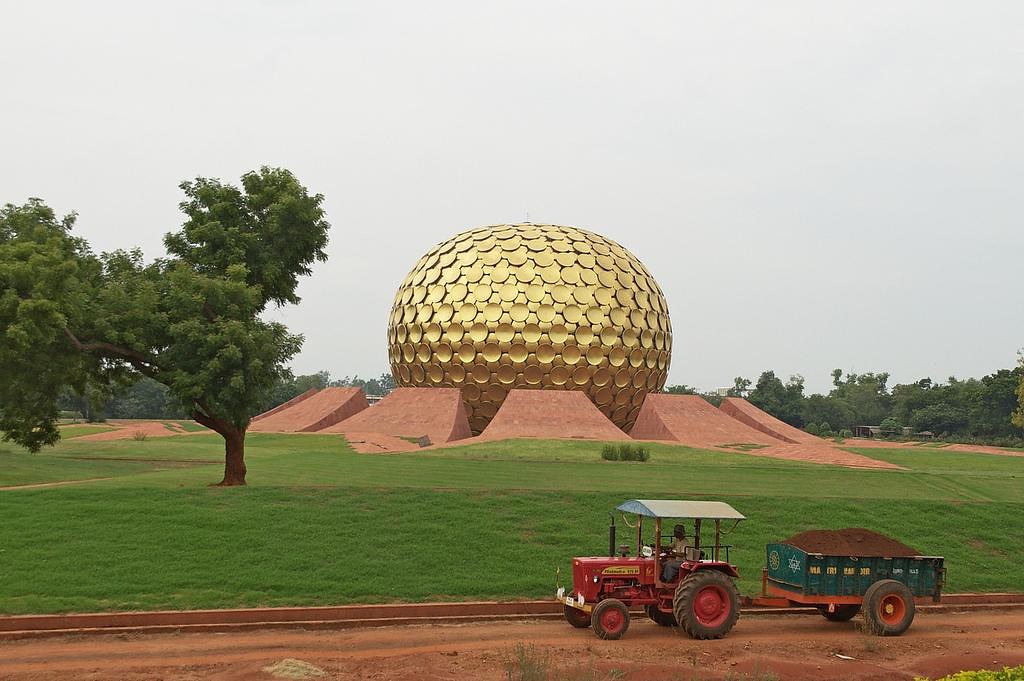
12 kilometres north of Pondicherry — an international township founded in 1968, built around the Matrimandir, a golden globe meditation centre at its centre. Currently home to 3,000 residents from 60 countries. Visitor entry to the Matrimandir requires advance registration.
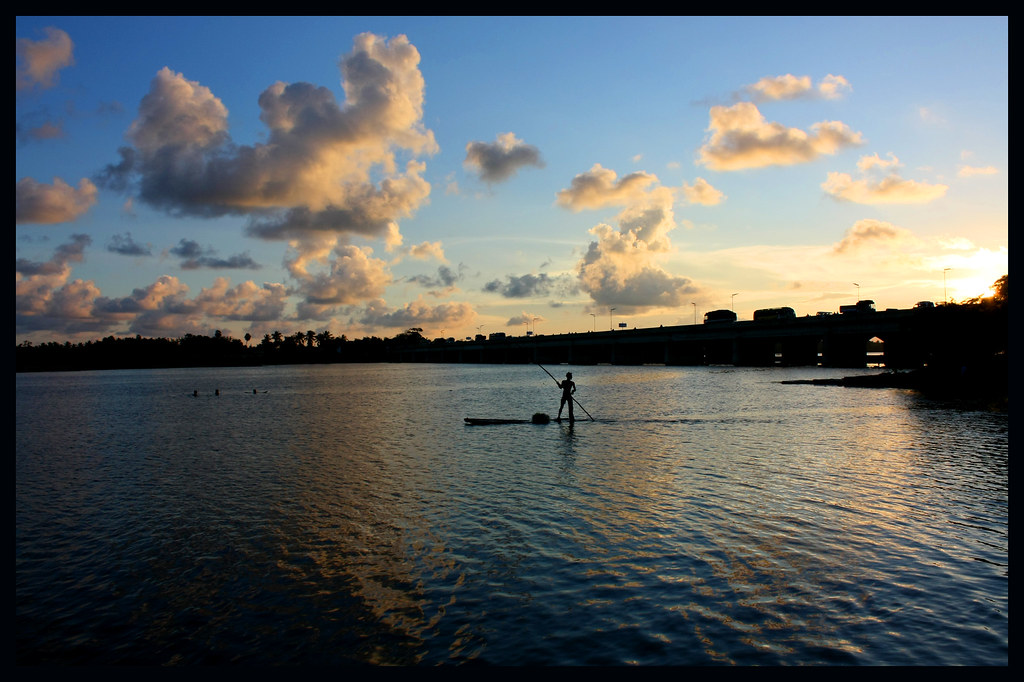
Goubert Avenue is Pondicherry's French-era seafront — a pedestrian-only boulevard running along Rock Beach, facing the Bay of Bengal. Best at 5:30am: fishermen returning to stone-edged shore, the colonial buildings still dark behind you, the light going from red to gold. The Gandhi statue at the north end marks the invisible line between the French and Tamil halves of the town.
East of the French Quarter, the Tamil neighbourhood has Dravidian architecture, temple gopurams, and the daily life of a South Indian town that continues on the other side of a cultural boundary that is invisible on any map.
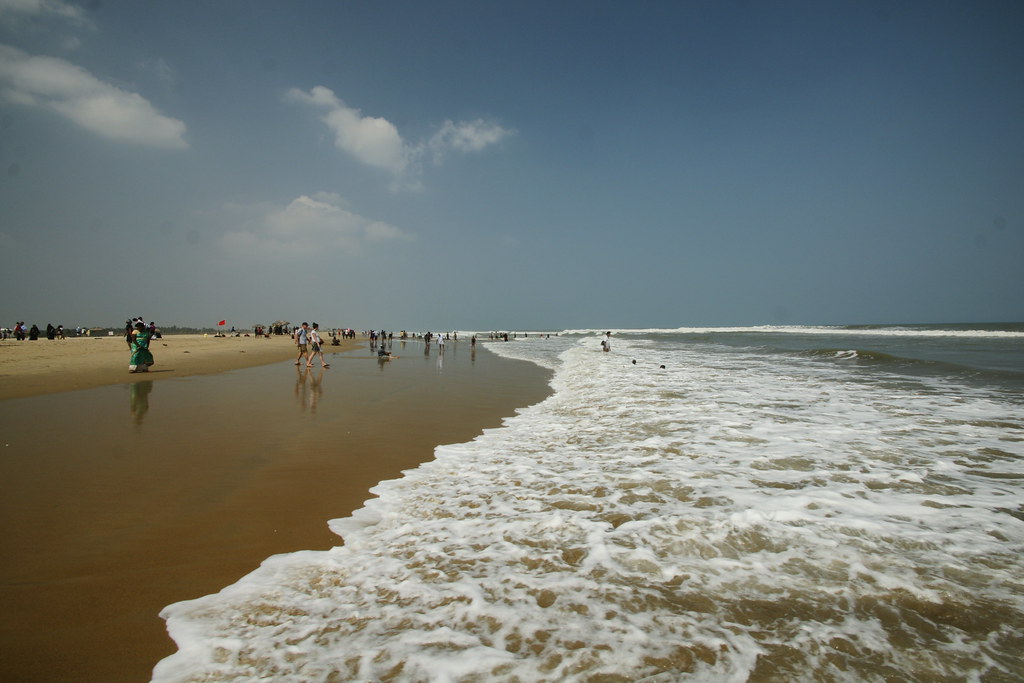
7 kilometres north of the town centre — a wide, undeveloped beach with strong surf and the most active surfing community in South India. The Kallialay Surf School has operated here since 2005; lessons for complete beginners are offered year-round, with the best conditions between October and February when the northeast swell arrives off the Bay of Bengal.
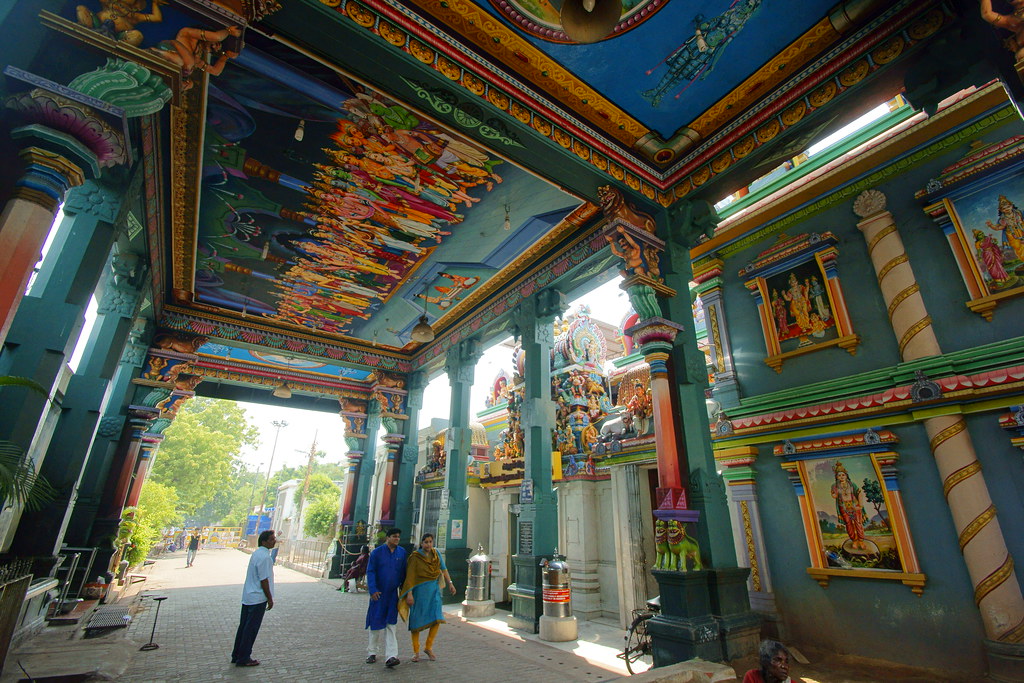
One of Pondicherry's oldest and most-visited temples, dedicated to Lord Vinayagar (Ganesha). The gopuram is covered with 40 distinct forms of Ganesha, and the mandapa interior — painted pillars, vivid ceiling murals — is among the most striking in Tamil Nadu. A resident elephant blesses devotees at the entrance daily. Unusually positioned inside the French Quarter grid, its presence is itself part of Pondicherry's layered history.
Accessible only by boat from Chunnambar Boat House, 8 kilometres south of town — a quiet, undeveloped stretch of sand separated from the mainland by a backwater estuary. The 20-minute boat crossing through mangrove-lined channels is half the experience. No facilities, no crowds on weekdays; the contrast with the busy town waterfront is total.
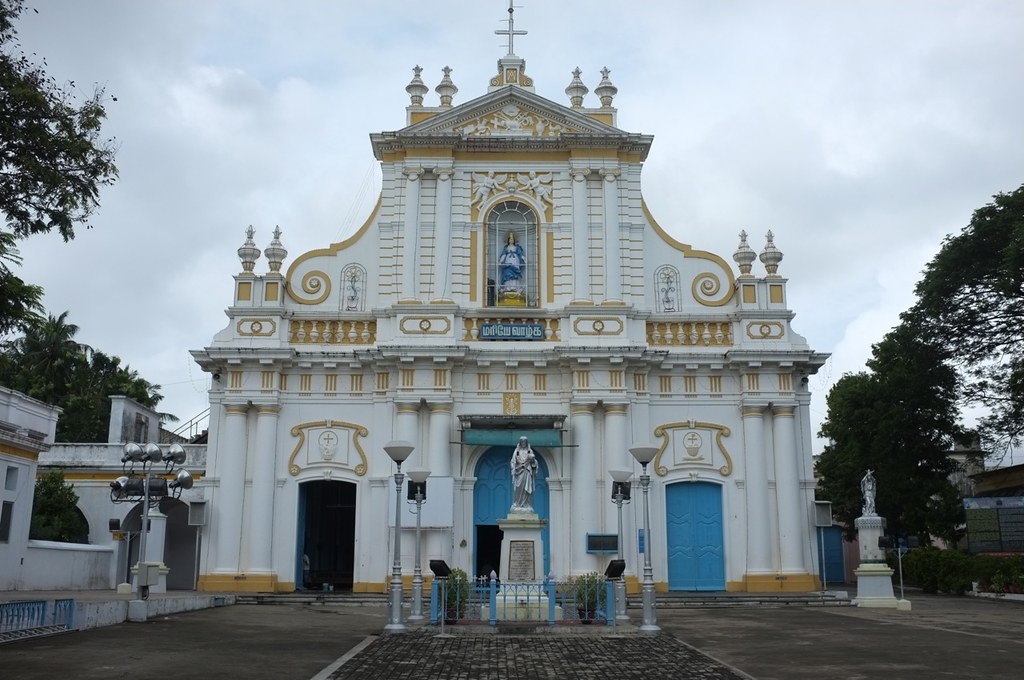
Built in 1791 by French missionaries, this white-and-yellow Baroque church on Rue Joseph François Dupleix is one of the best-preserved colonial churches in India. The twin-pilastered facade with blue doors and the statue of the Virgin Mary above the entrance make it the most recognisable building in the French Quarter after the seafront itself.
A 1855 French Roman Catholic church on the seafront road, built in Italianate style with a pale yellow and white exterior. The oil painting inside — Our Lady of Angels, with a blue Madonna — was painted using seawater mixed into the pigment, a detail specific to this church. Open for Sunday mass and to visitors outside services; quieter and less known than the Cathedral, which makes it easier to appreciate.
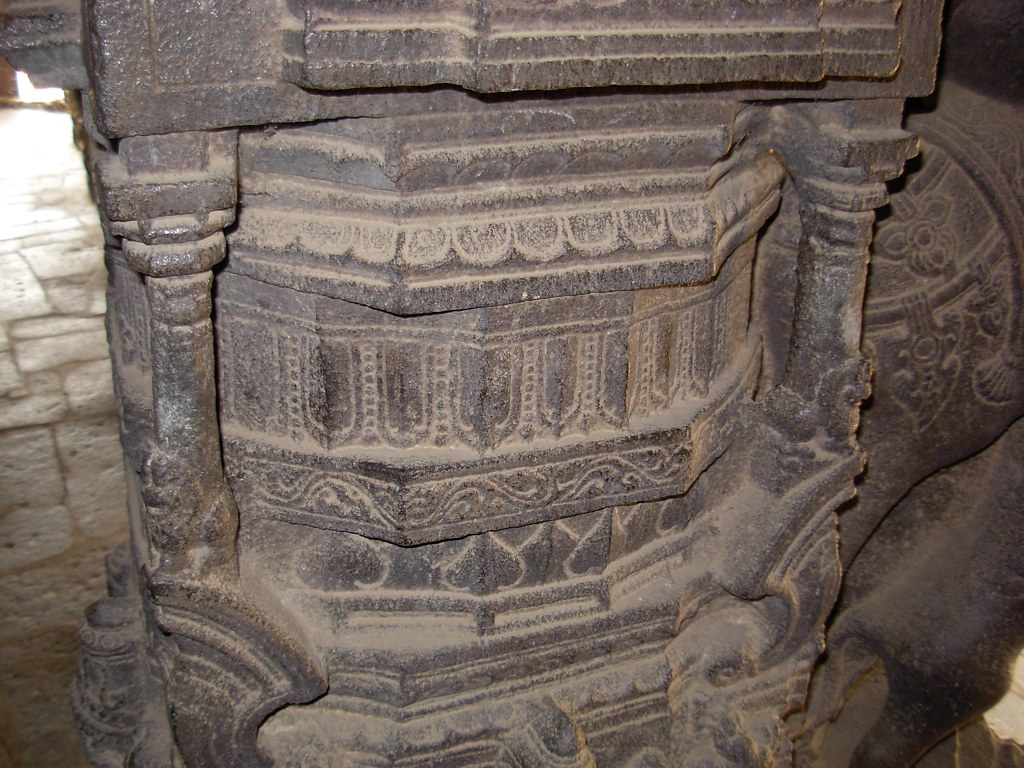
A significant Vaishnavite temple in the Tamil Quarter, with Dravidian gopuram and some of the finest ancient stone carvings in Pondicherry. The mandapa columns, carved with mythological scenes, date to the 16th century. Walking here from the French Quarter streets — less than a kilometre — crosses a cultural boundary that no map marks. The shift from colonial boulevards to temple lanes is one of Pondicherry's defining contrasts.
A Gothic-style basilica completed in 1908, with an Indo-Gothic aesthetic distinct from the French colonial churches nearby. The stained-glass panels depict the life of Christ in a Tamil visual idiom — saints with South Indian features, local flora in the borders. Less visited than the Cathedral, architecturally the more ambitious of Pondicherry's churches, and worth the short walk into the Tamil Quarter to find it.
Things to Do
The French Quarter streets are wide, relatively quiet in the mornings, and ideal for cycling — boutique hotels in old mansions, bougainvillea-draped courtyards, and painted colonial buildings at every corner. Bicycles available from most guesthouses.
The Matrimandir requires advance registration (done online) and a timed entry. The interior — a silent, golden-lit sphere for meditation — is one of the most unusual architectural experiences in India. Allow a half-day for the complete Auroville visit.
The ashram is open to visitors for meditation in the main hall (early morning and late afternoon). No particular belief is required; the silence is the point. The Mother's Room — her actual working quarters — is open at specific announced times.
The Promenade at 5:30am — fishermen returning to shore, the light going from deep red to gold, the French colonial buildings still dark behind the seafront. One of South India's finest early morning experiences.
Several Pondicherry families offer cooking classes in the French-Tamil fusion style — a cuisine that does not exist outside this town, combining Tamil vegetables and spicing with French techniques. One of the more unusual culinary experiences available in India.
A 22-acre formal garden established in 1826 — the oldest in Tamil Nadu, with a collection of 1,500 tree species, a small fossil tree section, and a Japanese garden within the grounds. On a weekday morning, before the school groups arrive, it is one of the most peaceful places in the city and an entirely overlooked part of Pondicherry's colonial heritage.
Food to Try
Baker Street and the Alliance Française area have French bakeries producing croissants, baguettes, and éclairs — genuinely made with French technique. The Boulangerie run by the Sri Aurobindo Ashram has the longest queue and the most consistent quality.
Restaurants in the French Quarter serve dishes that exist nowhere else — Tamil spiced sauces on French preparations, crêpes filled with coconut and curry leaf, French desserts made with local ingredients. Le Café on the Promenade is the classic destination.
The Tamil side of Pondicherry serves Chettinad-influenced cooking — the spiciest and most complex of Tamil cuisines, using kalpasi (stone flower), marathi mokku (dried flower pods), and freshly ground masalas. Available at the no-frills restaurants on Nehru Street.
Pondicherry faces the Bay of Bengal directly — the fish market behind the promenade supplies the morning catch to restaurants that cook it the same day. Grilled or curried; always ask what was brought in fresh that morning.
The Sri Aurobindo Ashram runs several cafés in the French Quarter — simple, clean, serving South Indian coffee and simple meals at fixed prices. The most peaceful breakfast in Pondicherry.
The Auroville community produces sourdough loaves, seed crackers, and whole-grain breads at Soleil Farm — sold at the Auroville visitors' centre and at several White Town cafés. Made with organic grain from the Auroville farms and fermented for 24 hours; the bread here is unlike anything available in the Tamil Nadu town markets, and worth buying a full loaf for the guesthouse.
Places to Stay
An 18th-century French colonial mansion restored as a boutique hotel — 12 rooms around a central courtyard, a small pool, and a location in the heart of the French Quarter within walking distance of the promenade. One of the most elegant small hotels in South India.
A restored 1940s heritage building in the French Quarter — 16 rooms, a courtyard garden, and a restaurant that is one of Pondicherry's most consistently good. Calm, characterful, and more intimate than the larger properties.
A colonial hotel directly on the seafront promenade — the most prominent address in Pondicherry, with sea-facing rooms, a pool, and a rooftop bar that becomes the best sunset viewing point in town. Larger and more formal than the French Quarter boutiques, but the location is irreplaceable.
A contemporary boutique hotel in a restored French Quarter building — small pool, thoughtful interiors, and a quieter atmosphere than the promenade hotels. Good mid-range choice for those who want French Quarter character at a reasonable price.
A heritage homestay in a 200-year-old French colonial house in the White Town — 6 rooms, a garden, and hosts who know Pondicherry from the inside. The right choice for travellers who want a personal stay rather than a hotel experience, and who will appreciate being pointed to the parts of the French Quarter that guidebooks miss.
A 300-year-old Creole-style mansion in the White Town — 16 rooms with period furniture, a courtyard garden, and a restaurant that has been one of Pondicherry's most consistent for French-Tamil cuisine. One of the original French Quarter heritage hotels: genuinely atmospheric without the boutique price inflation that newer properties carry.
Solo Female Travel
The ashram culture, the French Quarter's café atmosphere, and the Tamil Nadu culture of relatively public and active streetscapes make Pondicherry one of the most relaxed cities in South India for independent women travellers.
The White Town area is compact, flat, and easily navigated on foot or bicycle. Most accommodation, restaurants, and key sites are within a 15-minute walk of each other. This is the correct neighbourhood to stay in.
The Matrimandir requires online pre-registration for its meditation sessions. Do this before you arrive — the walk-in visitor centre gives you a film and the exterior only. The interior experience requires the registration.
Plan Your Trip
We know the ashram meditation schedule, the bakery that opens earliest, and how to combine Pondicherry with Auroville and Mahabalipuram for a complete Tamil Nadu coast circuit.
Start PlanningFree consultation · No obligation · Reply within 24 hours
Free Resource
Download The Essential Women's Guide to India — our free, no-fluff resource covering what to pack, what to expect, and what no travel blog will tell you. Trusted by 2,000+ women.
Prefer to speak directly? hello@roamrani.com