East India · Travel Guide
The City of Joy is India's most culturally layered metropolis — the birthplace of Tagore, the scene of Durga Puja on a scale that stops the city for five days, and a street food culture that rivals any in the country. A city that rewards slow, curious exploration.
Places to Visit
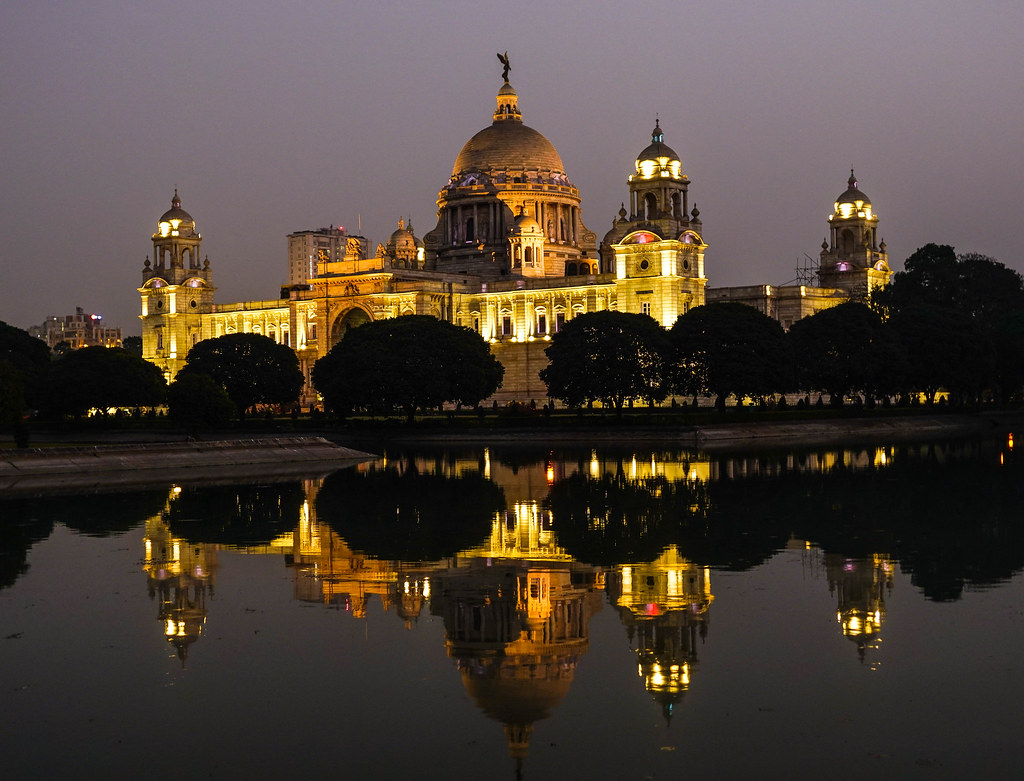
A white marble monument to Queen Victoria, built between 1906 and 1921 — now a museum of the British colonial period in India with surprisingly candid exhibits. The gardens surrounding it are among the finest in any Indian city.
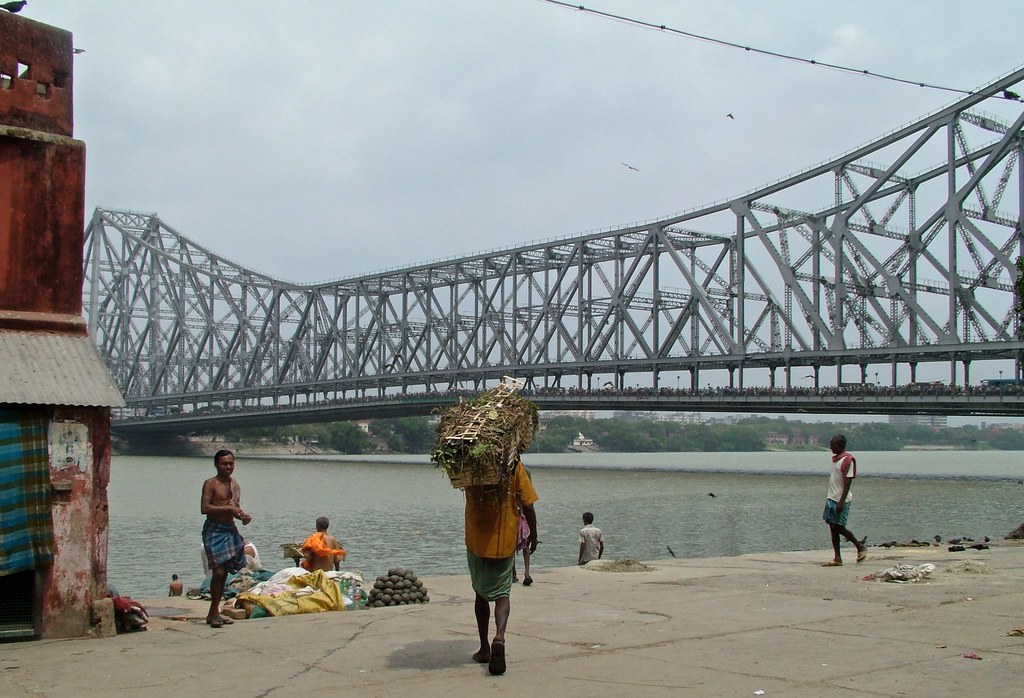
The 1943 cantilever bridge over the Hooghly — 100,000 vehicles cross it daily, one of the busiest in the world. Best seen from a ferry below, or from the flower market on the Howrah bank at dawn.
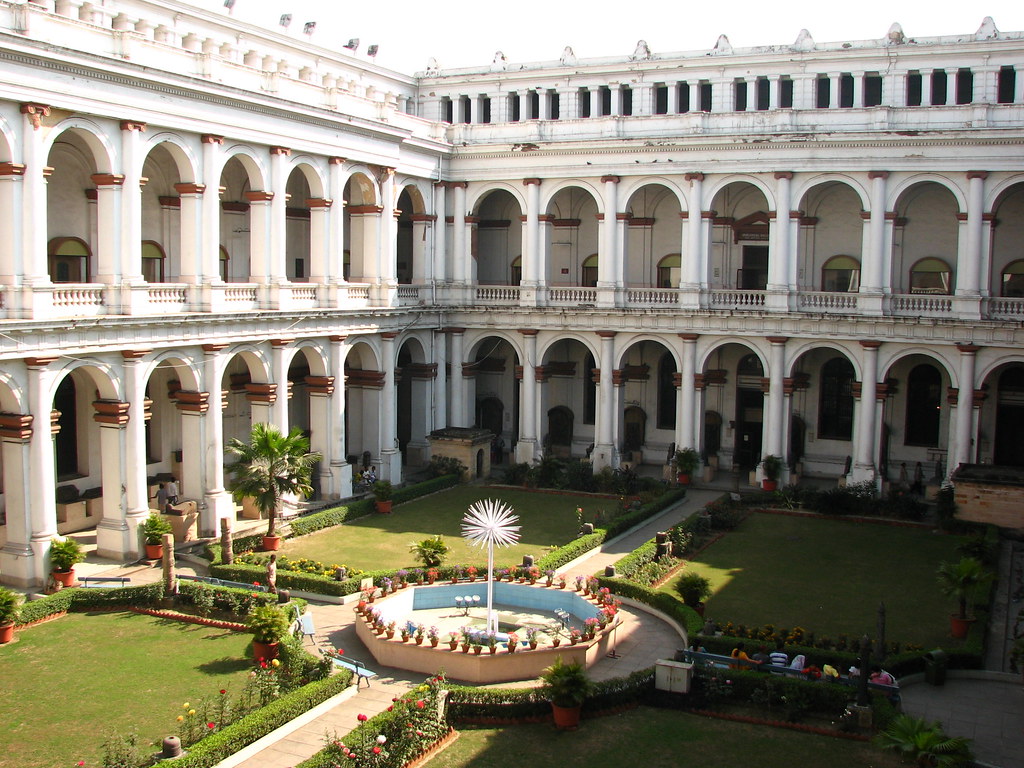
The oldest and largest museum in India, founded in 1814 — with galleries covering natural history, geology, art, anthropology, and the Indus Valley civilisation. Largely undervisited and genuinely extraordinary.
The riverside temple complex where Ramakrishna had his visions of the goddess — a significant site in 19th-century Bengal Renaissance spirituality and still an active place of worship with a distinctive pink terracotta style.
The book market that stretches for kilometres — new books, second-hand books, textbooks, rare editions — and the coffee houses where Tagore, Bose, and Satyajit Ray once sat. The intellectual atmosphere is not performed; it is residual.
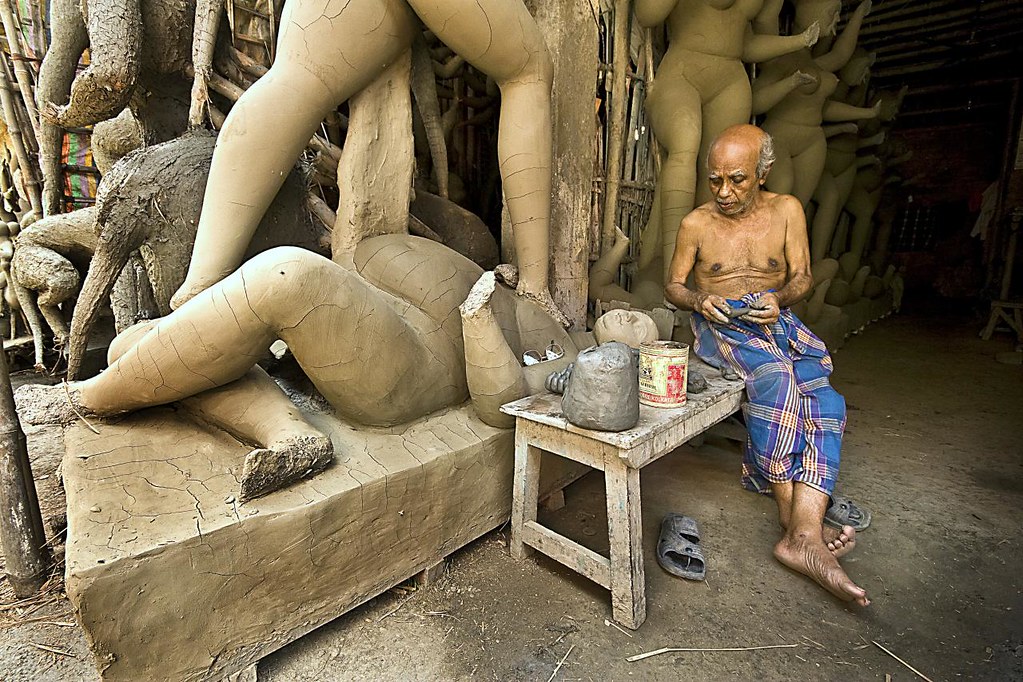
The potters' quarter of Kolkata, where artisans make the giant clay idols of Durga, Saraswati, and other deities for the festival season. Visiting the workshops outside festival time gives you direct access to the craft itself.
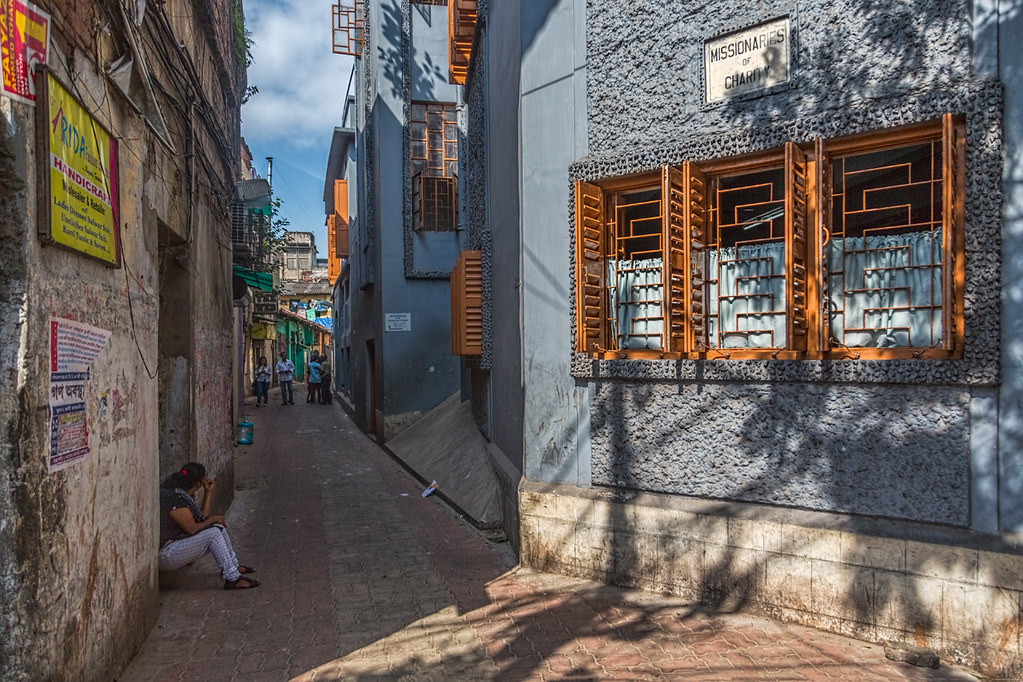
The headquarters of the Missionaries of Charity, founded by Mother Teresa in 1950 — and the site of her tomb, in a quiet white room that draws pilgrims and visitors from every country. A place of extraordinary stillness in one of the world's loudest cities.
Completed in 1847, the first cathedral built by the Church of England outside the British Isles — a Gothic Revival structure with a Florentine campanile, stained glass by Edward Burne-Jones, and an interior that feels unexpectedly serene against the noise of central Kolkata.
The ancestral home of the Tagore family in North Kolkata — where Rabindranath Tagore was born in 1861 and where he died in 1941. Now the Rabindra Bharati Museum, the house preserves his manuscripts, paintings, personal belongings, and the rooms where much of modern Bengali cultural life was imagined.
Things to Do
Five days in which the entire city converts into an open-air art installation — pandals (temporary structures) each with a unique theme and goddess, judged by the city. The 2023 Kolkata Durga Puja was added to UNESCO's Intangible Cultural Heritage list.
The most atmospheric way to cross the river — a few rupees, a five-minute ride on a rusting ferry, with the Howrah Bridge above you and the ghats on both banks. A genuinely local mode of transport.
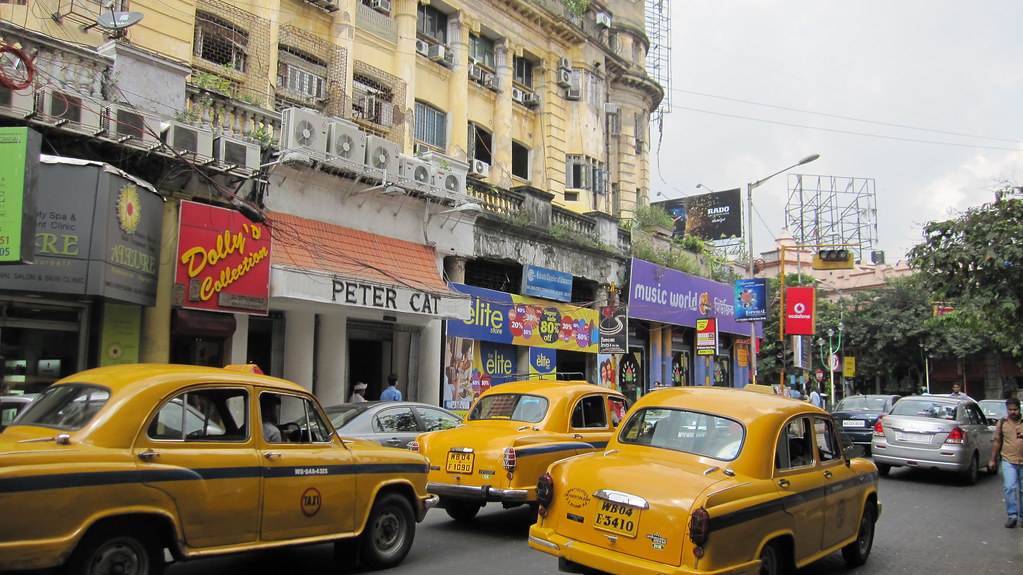
Kolkata has the only surviving tram network in India — slow, creaking, and extraordinary. The No. 26 route through the old North Kolkata neighbourhood passes colonial architecture, markets, and daily life at 12km/h.
A self-guided walk through the addresses associated with the greatest Indian filmmaker — his birth house in Garpar, the coffee house where he worked on scripts, the studio where he shot his films.
The contemporary art scene in Kolkata is serious and underknown outside India — Experimenter, CIMA, and the Academy of Fine Arts all have programming worth checking before your visit.
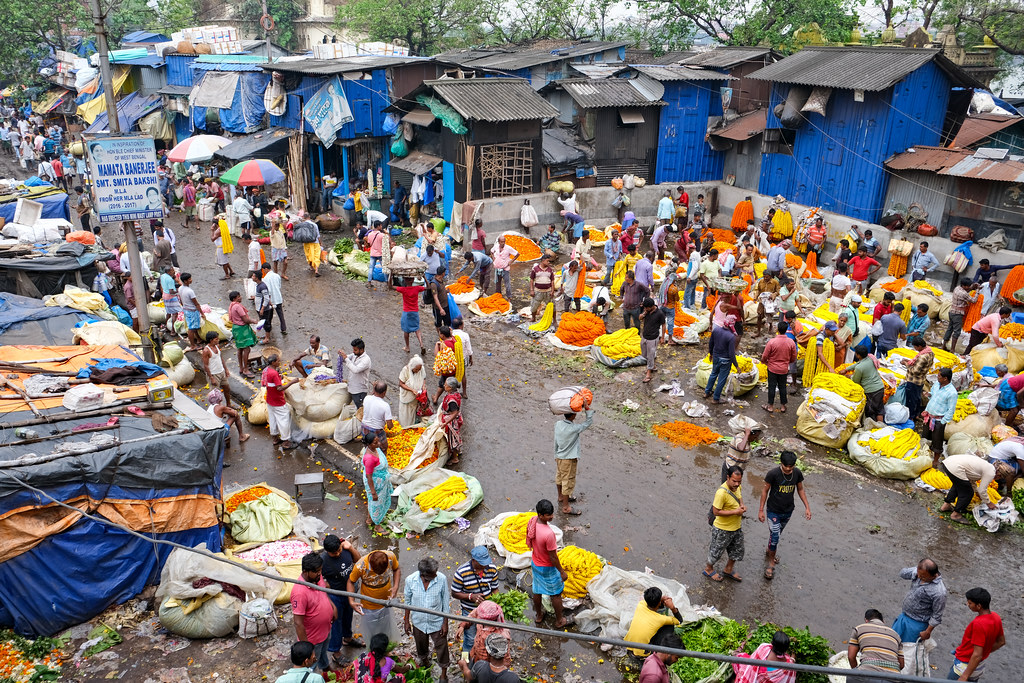
Asia's largest wholesale flower market operates below Howrah Bridge from 3am — a dense, fragrant world of marigold garlands, jasmine, roses, and tuberose being sold by the kilogram to temple suppliers, florists, and hotels. Arriving before 6am, when the buying is most intense, is the correct time; bring a guide who knows the wholesale lanes.
Food to Try
Invented in Kolkata at Nizam's restaurant in 1932 — a paratha wrapped around egg, chicken, or mutton with onion and chutney. The original is still the best; the city has a hundred variations.
Sweetened yoghurt set in clay pots — thicker and more caramel-flavoured than plain curd, served as dessert across Bengal. The pot absorbs moisture and adds a mineral quality impossible to replicate in other containers.
Soft cheese balls in sugar syrup — the great Bengali sweet, and the subject of an active territorial dispute with Odisha over who invented it. Kolkata's version is softer and notably less sweet than the Odisha style.
Puffed rice with mustard oil, green chilli, chopped onion, tomato, and whatever else the vendor has to hand — the Kolkata street snack, assembled in a paper cone and eaten immediately. The mustard oil is non-negotiable.
Slow-cooked mutton in a thick, dark gravy with whole spices — the definitive Bengali non-vegetarian dish, available at old Kolkata restaurants that have cooked it the same way for three generations.
Large prawns in a light, gently sweet coconut milk sauce — the Bengali seafood showpiece, made with the fat river prawns (golda chingri) that come from the Sundarbans delta. Served on a bed of rice at the better Bangali restaurants in South Kolkata; the sweetness of the coconut milk is deliberately restrained to let the prawn speak.
Places to Stay
A Victorian-era landmark on Jawaharlal Nehru Road since 1880 — the most iconic hotel in Kolkata, with colonnaded corridors, a pool set in gardens in the centre of the city, and service that remains the standard against which other Kolkata hotels measure themselves.
Contemporary luxury in the Alipore neighbourhood, away from the city's commercial centre — larger rooms, a full-service spa, and a restaurant programme that represents Kolkata's Bengali cuisine at its finest.
A mid-scale colonial-era hotel in the heart of the city — long-running, genuinely atmospheric, and considerably cheaper than the Oberoi Grand while sharing the same general neighbourhood and heritage character.
A restored 1840s hotel on Old Court House Street, near BBD Bagh — India's oldest operating grand hotel, with high ceilings, marble floors, and a location in the heart of Kolkata's historic commercial district. An experience as much as a hotel.
A reliable mid-range business hotel near Park Street — good location for restaurant access, fair pricing, and consistent service. The right pragmatic choice for Kolkata's mid-range bracket.
A floating hotel moored on the Hooghly River near Millennium Park — Kolkata's only riverboat hotel, with river-view rooms, a rooftop deck, and a location that gives you the city's waterfront from your window. Unusual, genuinely well-run, and an experience distinct from any other hotel in India.
Solo Female Travel
Kolkata has a strong tradition of women in public life — educationally and culturally, Bengal has historically been progressive on women's participation. Solo female travellers consistently find the city more comfortable than Mumbai or Delhi.
North Kolkata (the old city — Kumartuli, College Street, Shyambazar) is denser and more atmospheric but benefits from a guide. South Kolkata (Park Street, Lake Area, Alipore) is more navigable independently.
Kolkata's metro is India's oldest, clean, well-maintained, and has separate women's coaches. It connects most of the city's significant areas and is the recommended mode of transport.
Plan Your Trip
We know the coffee houses, the tram routes, the Kumartuli workshops, and the food stalls that don't have signs. Kolkata rewards the curious traveller — we make sure you are one.
Start PlanningFree consultation · No obligation · Reply within 24 hours
Free Resource
Download The Essential Women's Guide to India — our free, no-fluff resource covering what to pack, what to expect, and what no travel blog will tell you. Trusted by 2,000+ women.
Prefer to speak directly? hello@roamrani.com