South India · Travel Guide
Half a million people once lived here. The Vijayanagara Empire's capital is now a UNESCO World Heritage Site of ruined temples and elephant stables rising from a landscape of giant orange granite boulders — an archaeological site unlike anything else on earth.
Places to Visit
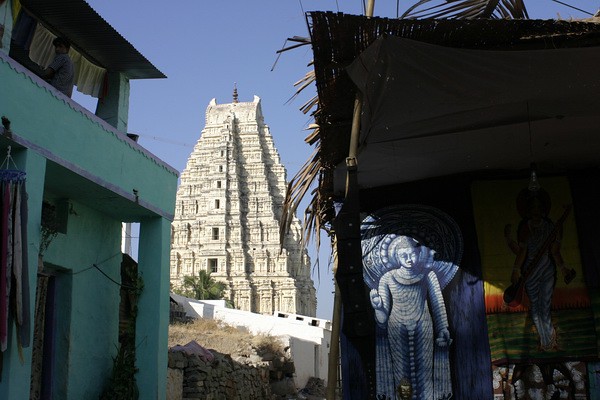
The only site in Hampi that never became a ruin — still an active place of Hindu worship, with daily rituals, an elephant in residence (Lakshmi), and a gopuram that has been the focal point of this city for nine centuries.
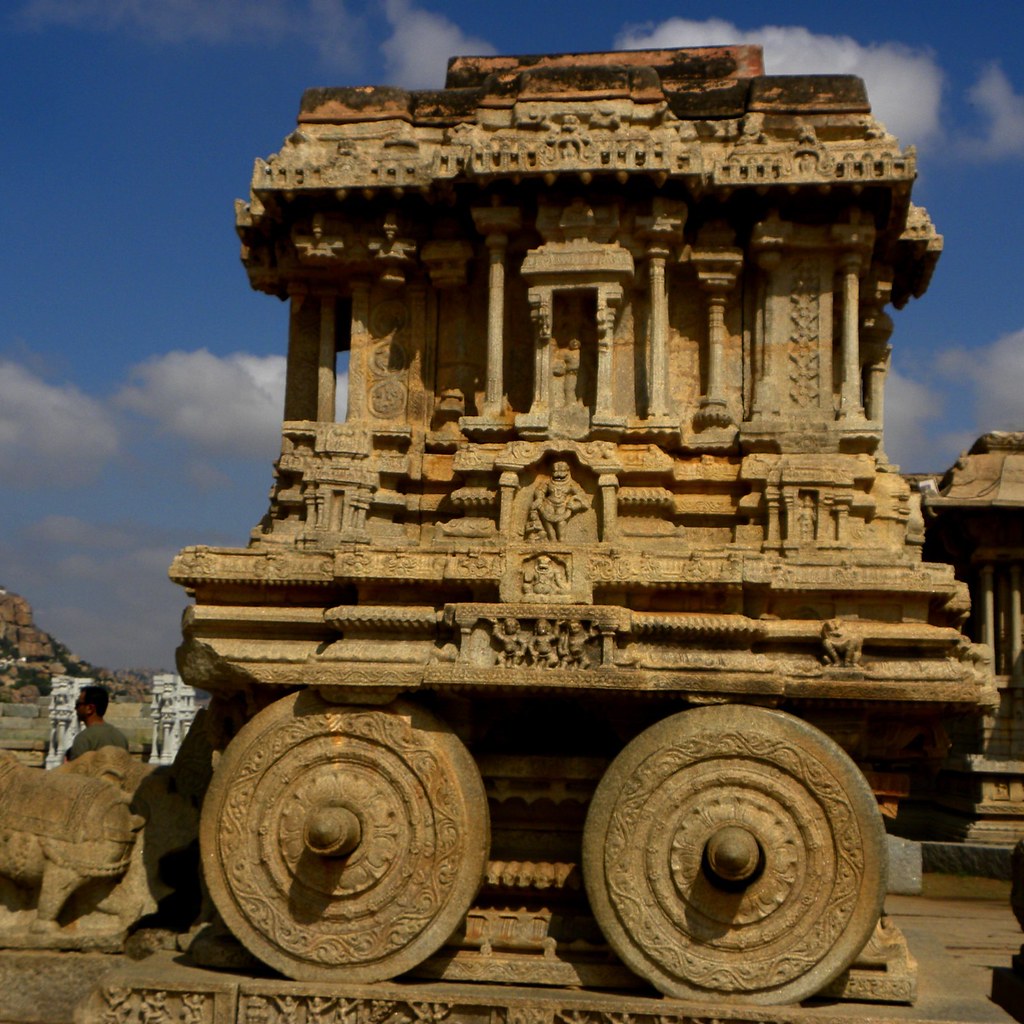
The finest temple in Hampi — its musical pillars produce different tones when tapped, and the stone chariot in the courtyard is one of India's most recognisable architectural images. The craftsmanship is extraordinary even in its ruined state.
The centre of the Vijayanagara Empire's administrative and ceremonial life — raised platforms for festivals, underground chambers, elephant stables, and the audience hall of the Mahanavami Dibba, where the king watched the great Dussehra festival.
A 15th-century pleasure pavilion in the women's quarter of the palace — its lotus-bud arches and projecting balconies combine Hindu and Islamic architectural styles in a way that reflects the cosmopolitan nature of the Vijayanagara court.
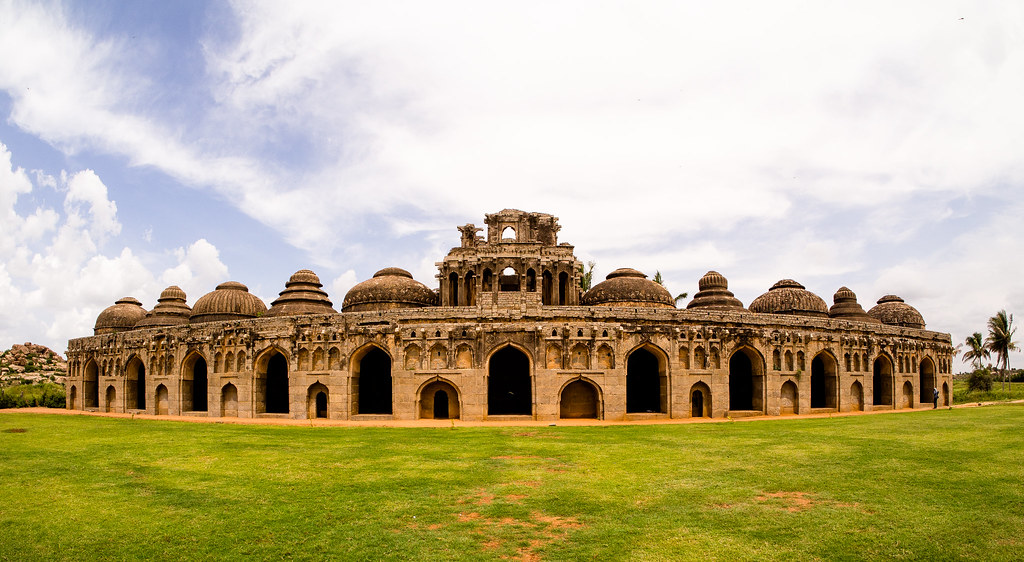
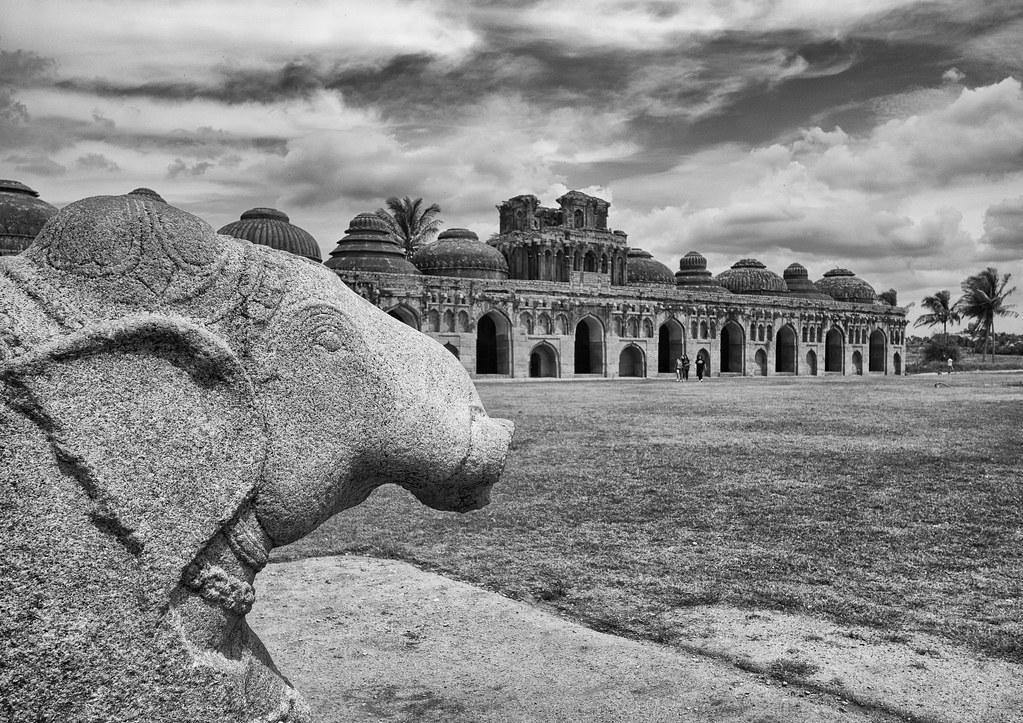
Eleven domed chambers where the royal elephants were housed — high ceilings, imposing scale, alternating Hindu and Islamic architectural elements. The most photogenic structure in the royal enclosure.
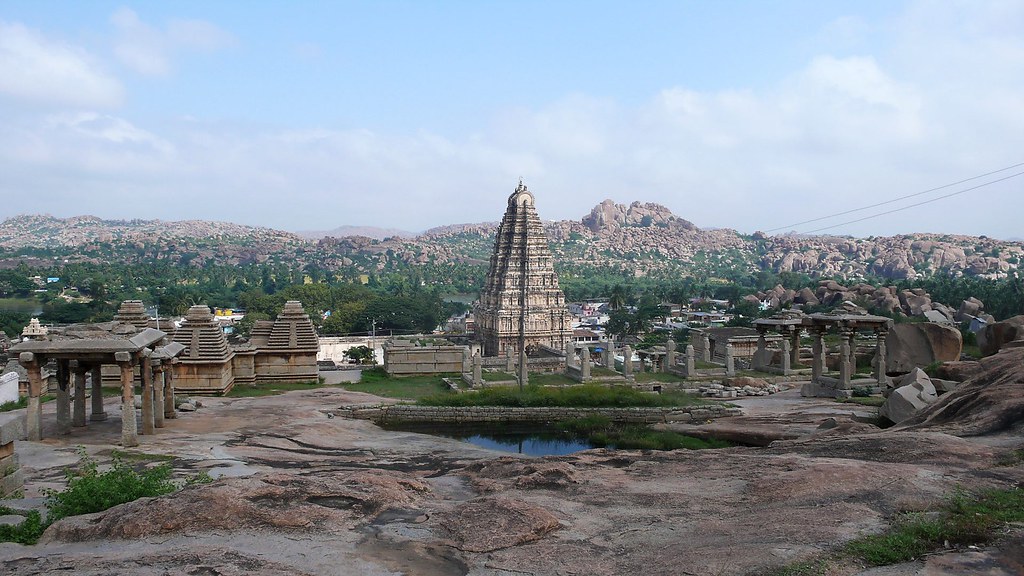
The hill above the Virupaksha Temple with older ruined shrines and panoramic views of the entire Hampi valley — best at sunset, when the boulders turn orange and the scale of the ruins becomes apparent.
The UNESCO World Heritage Site encompasses over 1,600 surviving structures spread across 26 square kilometres — temples, gateways, market streets, water pavilions, and military barracks from the 14th–16th century Vijayanagara Empire. No other site in India concentrates this scale of medieval Hindu architecture in a single landscape.
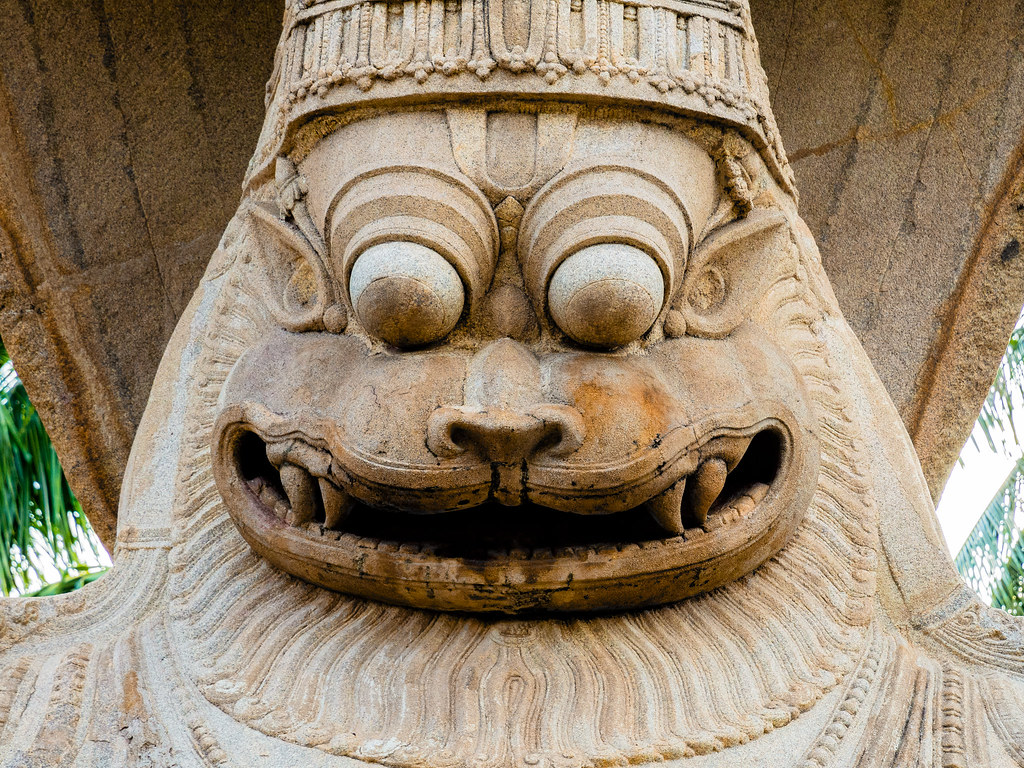
A 6.7-metre monolithic sculpture of Narasimha — Vishnu's fierce lion-headed avatar — carved from a single granite boulder in 1528. The figure sits in a yoga posture beneath a seven-headed serpent canopy; despite centuries of exposure, the detail of the carving remains extraordinary.
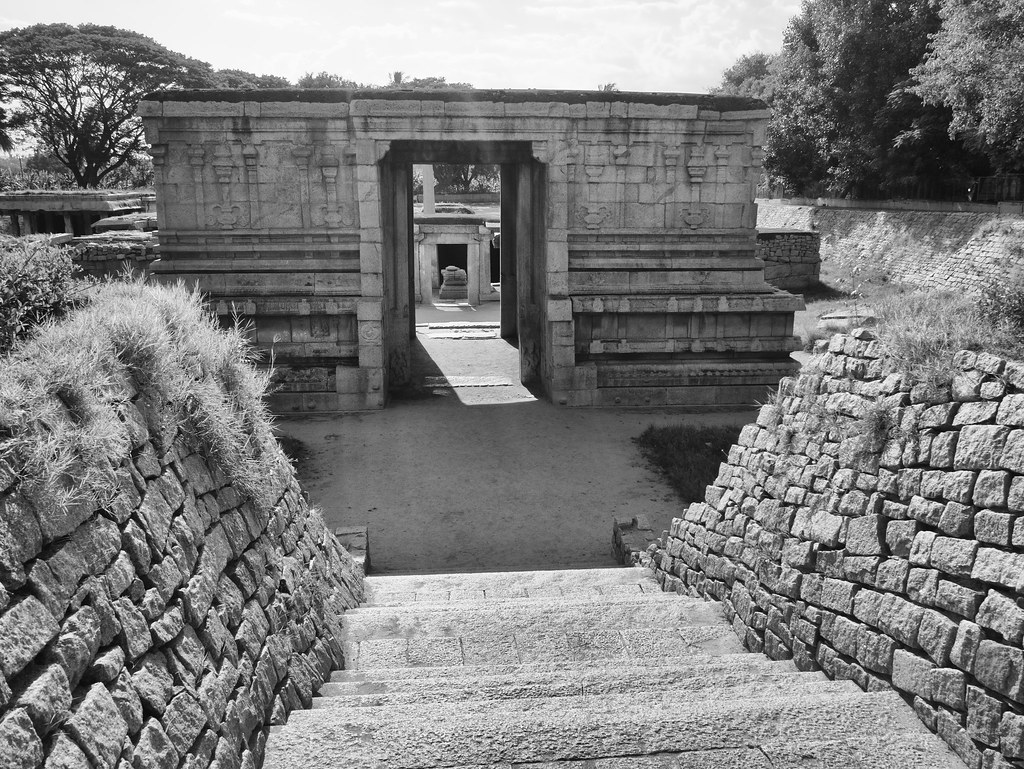
A precisely engineered royal tank inside the Zenana Enclosure with symmetrical stepped sides descending to the water — used for ritual bathing by the royal household. The geometry of the stonework, with its descending terraces and corner towers, is best appreciated from the top step looking down.
A 575-step climb above the Tungabhadra to a small hilltop temple said to mark the birthplace of Hanuman — rewarded with the widest unobstructed panorama of the entire Hampi basin and surrounding boulder fields. The resident langur monkeys treat the summit as their own.
The highest point in Hampi — a 20-minute boulder scramble from the Virupaksha Temple end of the bazaar — gives a 360-degree view of the entire UNESCO site: temples, the river, the royal enclosure, and the surreal orange boulder landscape stretching to every horizon. The correct time to be here is sunrise.
Things to Do
Climbing the boulders above Hampi at dawn — when the orange granite catches the first light and the valley below fills with mist — is the experience most visitors describe as the most unexpected and most memorable of their entire Hampi stay.
Hampi's ruins spread across 26 square kilometres — a bicycle is the correct scale for exploring them. The roads between temples pass through banana plantations, village markets, and archaeological sites without tour groups.
A circular wicker boat — the same design used in Hampi for 2,000 years — across the Tungabhadra River to the hippie village of Virupapur Gadde. The crossing takes five minutes; the villages on the other bank have a distinctly different character from the Hampi side.
The elevated position gives you the Virupaksha Temple below and the entire Hampi valley in the other direction. At sunset the boulders go from orange to red to black in about 20 minutes.
The Vijayanagara civilisation was one of the last great Hindu empires — understanding its politics, religion, and fall makes the ruins intelligible. A guide who knows the history converts ruin-hopping into a narrative.
The Vittala Temple complex opens at 6am — before the heat arrives and the tour groups begin. The musical pillars and the stone chariot in the first light, with the boulders glowing orange behind them, is Hampi at its most dramatic. Drone permits are not required for ground-level photography at this hour.
Food to Try
A full Karnataka thali at the simple guesthouses in Hampi Bazaar — rice, sambar, rasam, dry sabzis, curd, and papad. Inexpensive, freshly made, and the correct fuel for a full day among the ruins.
A Hampi traveller-culture staple — the guesthouses on the Virupapur Gadde side serve banana pancakes, lassi, and Israeli shakshuka from open-air kitchens above the river. The riverside setting is really the main event.
Fresh-pressed in front of you at stalls throughout Hampi Bazaar — ice-cold, sweet, and the only sensible response to the afternoon heat between the ruins. With a squeeze of lime and ginger.
Tender coconuts cracked on the spot from the plantations between the ruins — available from hawkers throughout the site, cheapest and coldest at the plantations themselves.
The region between Hampi and Mangalore produces a distinctive coastal Karnataka cuisine — ghee roast chicken, neer dosa (thin rice crepes with coconut milk), and Udupi vegetarian cooking. Available at proper restaurants in Hospete (15 km from Hampi).
The north Karnataka staple — thick sorghum flatbread (jolada rotti) served with a stuffed baby eggplant curry (ennegayi) made with peanuts, sesame, and jaggery. Available at the local dhabas in Hampi Bazaar; the dish that sustained the labourers who built the empire.
Places to Stay
A luxury resort inspired by Vijayanagara-era architecture, with stone pavilions, a large pool, and meticulous garden design set near the ancient capital's ruins. The most beautifully designed resort in the Hampi area — stays here feel like inhabiting a contemporary interpretation of the empire's aesthetic.
An eco-luxury property across the Tungabhadra River from the main Hampi ruins — cottages tucked between the boulders that define the landscape, with a pool, a garden kitchen, and the extraordinary silence of the river island. Access by coracle (round boat) only. One of the most distinctive stays in South India.
A legendary backpacker landmark on the Hampi riverbank, with a terrace restaurant overlooking the Tungabhadra — rice, dal, and lassi eaten with a view of the Virupaksha Temple on the opposite bank. Simple rooms, great location, genuine Hampi spirit. Where many travellers end up staying longer than planned.
A cluster of guesthouses on the river island opposite Hampi (accessible by coracle), in the village of Virupapur Gadde — relaxed, barefoot, and entirely different in atmosphere from the main Hampi side. A ten-minute coracle ride takes you back to the monuments; the island itself has almost no vehicles.
A contemporary mid-range hotel in the Hospet area, the nearest town to Hampi — reliable rooms, a pool, and consistent service for those who want air-conditioned comfort as a base for monument visits. Practical and honest value for those not drawn to the rustic island guesthouses.
A small heritage property in Anegundi village — the ancient capital that predates Hampi, connected to the ruins by coracle across the Tungabhadra. Traditional Karnataka architecture, a working farm, and direct access to village life and the boulder landscape that most Hampi visitors never find. Run by the Kishkinda Trust, which supports local artisans and traditional crafts.
Solo Female Travel
Hampi has hosted independent and solo travellers since the 1980s. The guesthouses on both sides of the river are small, personal, and accustomed to solo women. The atmosphere is relaxed and there is a natural community of travellers here.
The north bank village is quieter, more green, and predominantly guesthouses — accessible only by coracle. It gives you the boulders and the Tungabhadra without the bazaar bustle. Preferred by many solo women for this reason.
Bicycles are available cheaply throughout Hampi. The ruins are spread out enough that walking between them is impractical in the heat; a bicycle gives you the pace and the independence to stop wherever the light is interesting.
Plan Your Trip
We know the guides who understand Vijayanagara politics as well as the architecture, the north bank guesthouses worth staying at, and the correct route through the ruins to see them in the right light.
Start PlanningFree consultation · No obligation · Reply within 24 hours
Free Resource
Download The Essential Women's Guide to India — our free, no-fluff resource covering what to pack, what to expect, and what no travel blog will tell you. Trusted by 2,000+ women.
Prefer to speak directly? hello@roamrani.com