Himalayas · Travel Guide
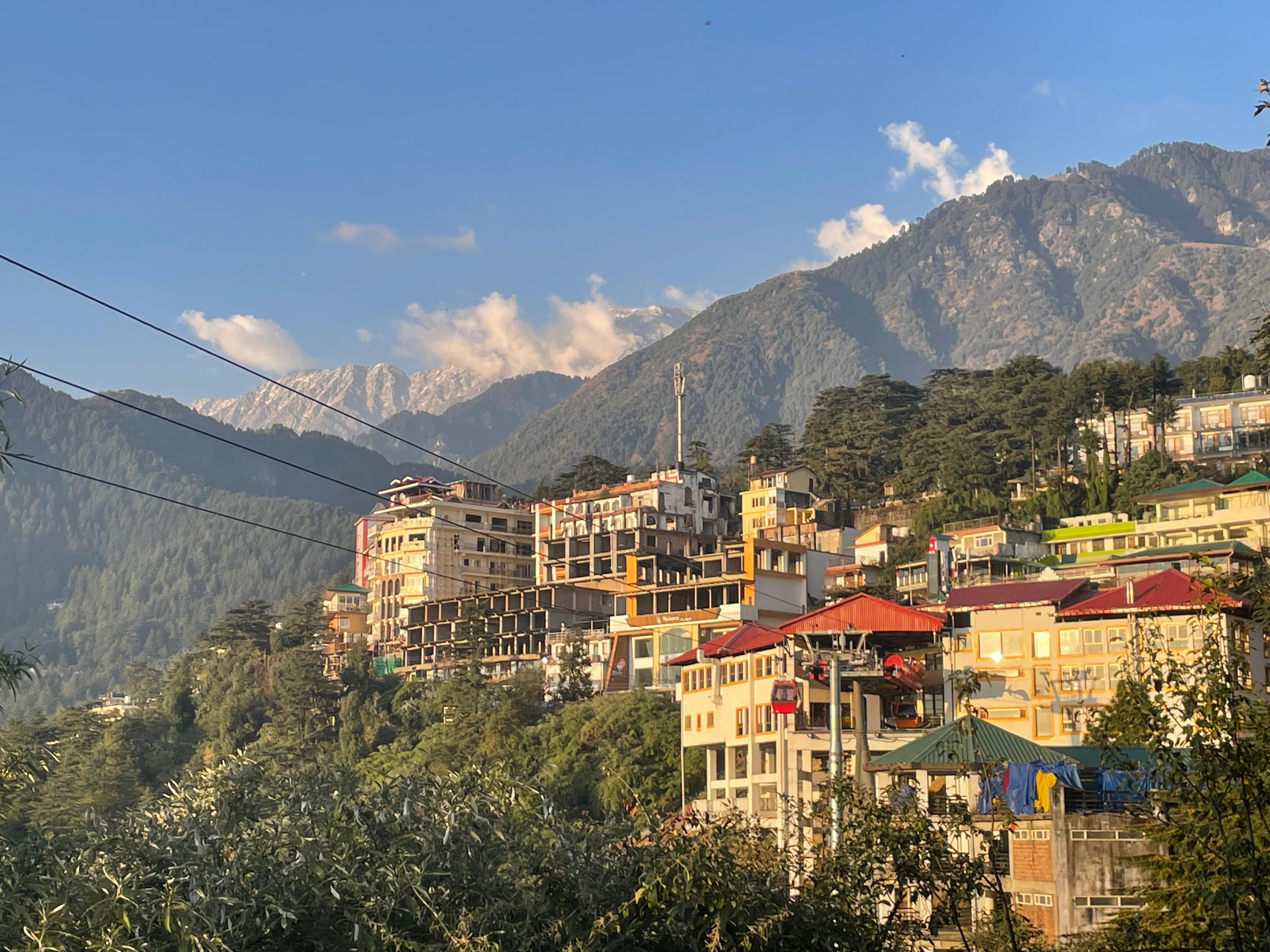
McLeod Ganj is the seat of the Tibetan government-in-exile — where the Dalai Lama lives, where Tibetan Buddhism is practised in earnest, and where the Tsuglagkhang Temple is one of the most spiritually charged places in Asia. A mountain town unlike any other in India.
Places to Visit
The spiritual heart of the Tibetan exile — a complex containing the main prayer hall with a 5-metre Shakyamuni Buddha, the Tibet Museum, and the Namgyal Monastery. Public teachings by the Dalai Lama are announced in advance; attendance is open to all visitors and always deeply affecting.
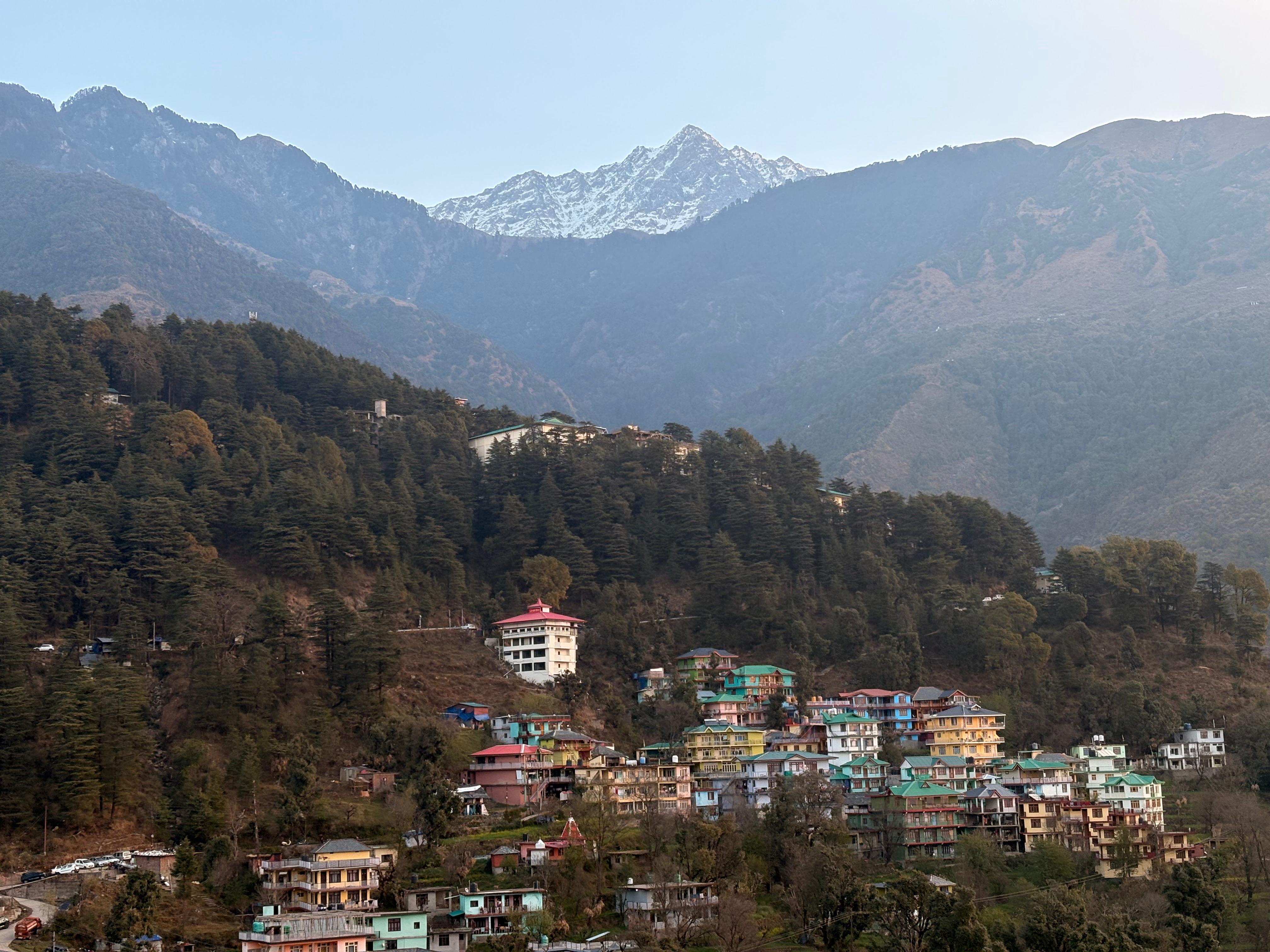
The upper township of Dharamshala — Tibetan restaurants, prayer flag-draped guesthouses, Buddhist bookshops, and monks in burgundy robes on every lane. Not a tourist recreation of Tibetan culture: a living Tibetan community that has been in exile since 1959.
The personal monastery of the Dalai Lama, located within the Tsuglagkhang complex — the largest Tibetan monastery outside Tibet. Open to visitors throughout the day; monks conduct morning and evening prayers that visitors are welcome to observe in respectful silence.
5 kilometres from McLeod Ganj — established to preserve traditional Tibetan arts. A campus of workshops producing thangka paintings, metalwork, woodcarving, and appliqué textiles, set within a garden of traditional Tibetan medicinal plants.
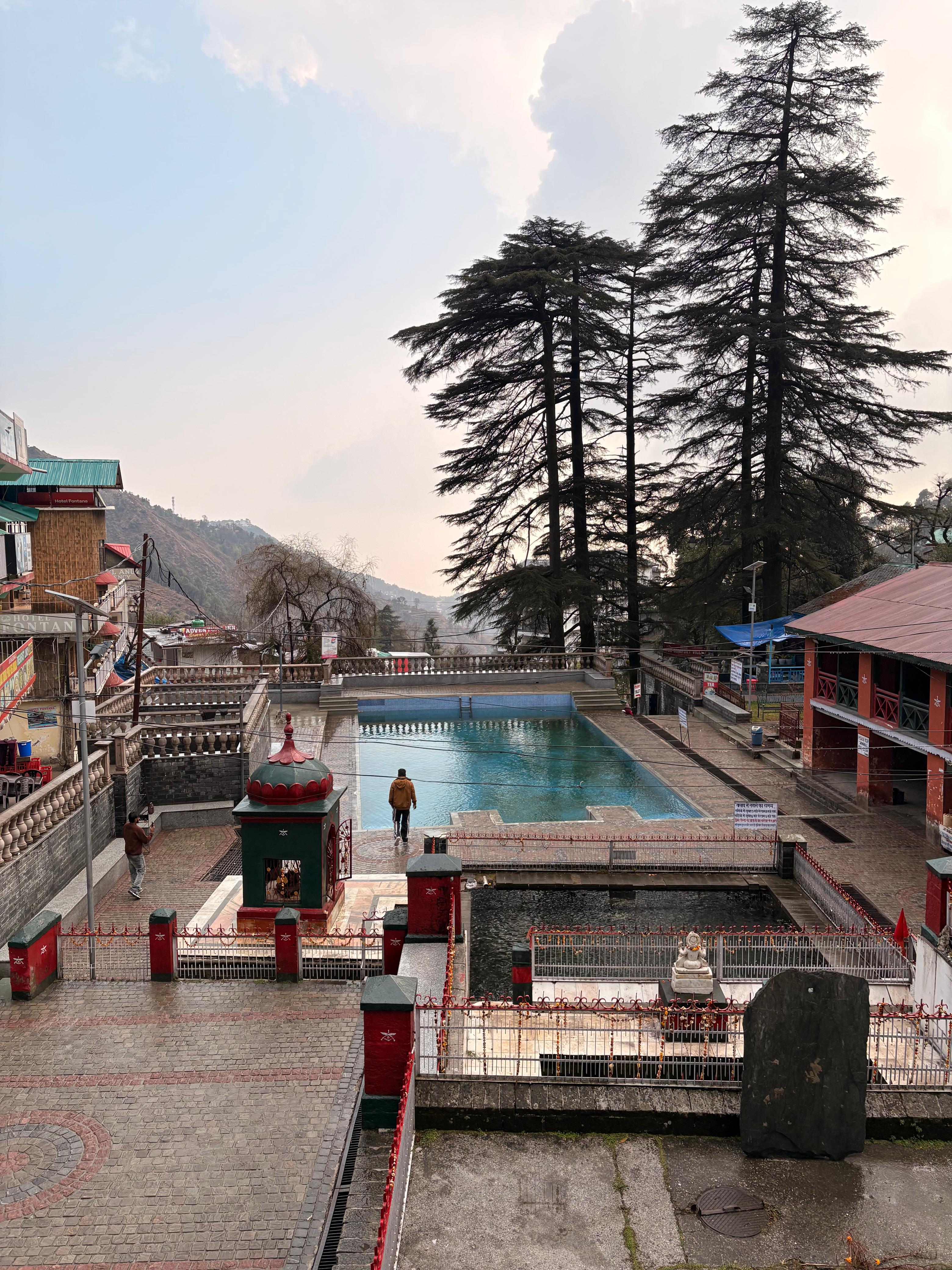
An ancient Shiva temple beside the Bhagsu Nag spring, 2 kilometres from McLeod Ganj — one of the oldest temples in Dharamshala district. The sacred pool (kund) fed by natural springs is used for ritual bathing; the surrounding lane fills with small tea stalls and local vendors.
A 20-minute walk from McLeod Ganj through Bhagsu Nag village, passing Bhagsunath Temple, to a waterfall above the valley. Popular with monks and travellers alike. Best in September when the monsoon aftermath brings the flow to its highest.
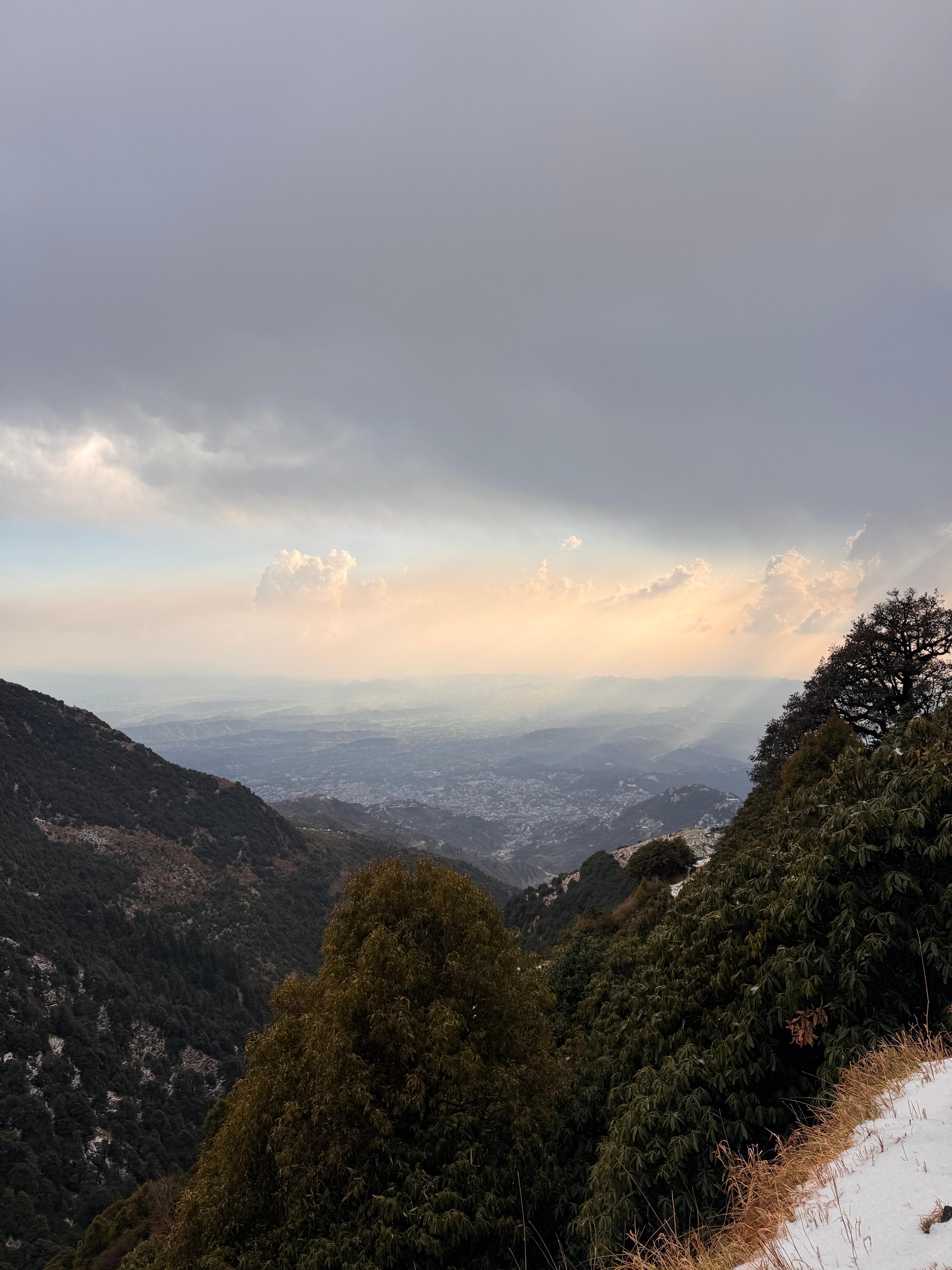
The ridge at 2,827 metres above McLeod Ganj — a 9-kilometre trail through rhododendron and deodar forest that opens to a full panorama of the Dhauladhar range. Campsite available at the top. Widely regarded as the finest accessible mountain viewpoint in the Kangra Valley.
A small glacial lake 11 kilometres from Dharamshala, surrounded by cedar and oak forest at 1,457 metres — a quieter alternative to the busy McLeod Ganj lanes. A Shiva temple sits at the water's edge; picturesque in the monsoon season when the hillside vegetation is lush.
A Gothic stone church built in 1852, set within a dense deodar cedar forest 8 kilometres from Dharamshala — one of the oldest surviving colonial churches in the region. The cemetery contains the grave of Lord Elgin, Viceroy of India; the stained glass windows are original Victorian-era work.
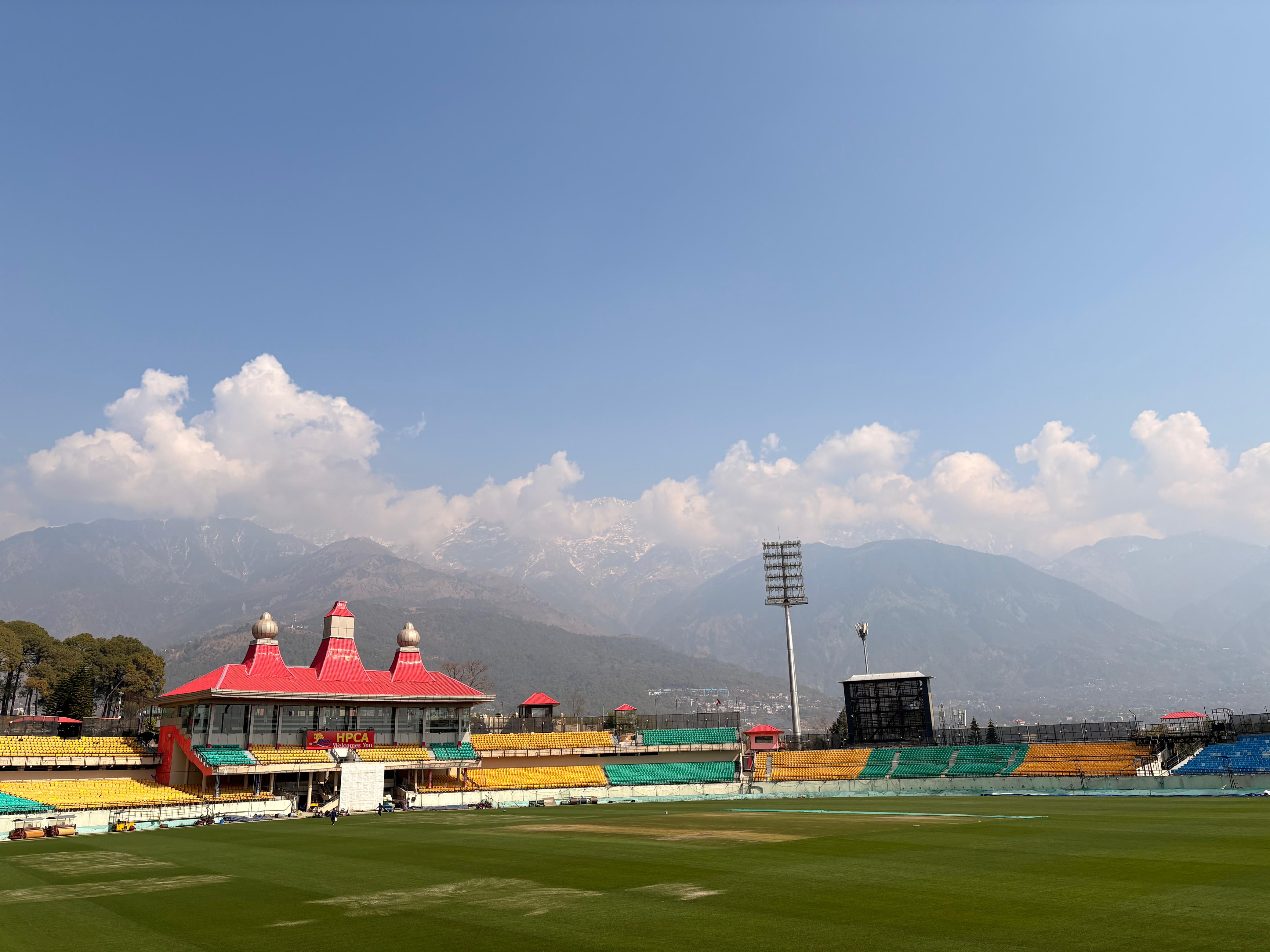
The HPCA stadium at 1,457 metres — one of the highest cricket grounds in the world, with a backdrop of the Dhauladhar range that no other cricket ground on earth can match. Visiting the stadium on a non-match day is free; it is worth the journey for the mountain backdrop alone.
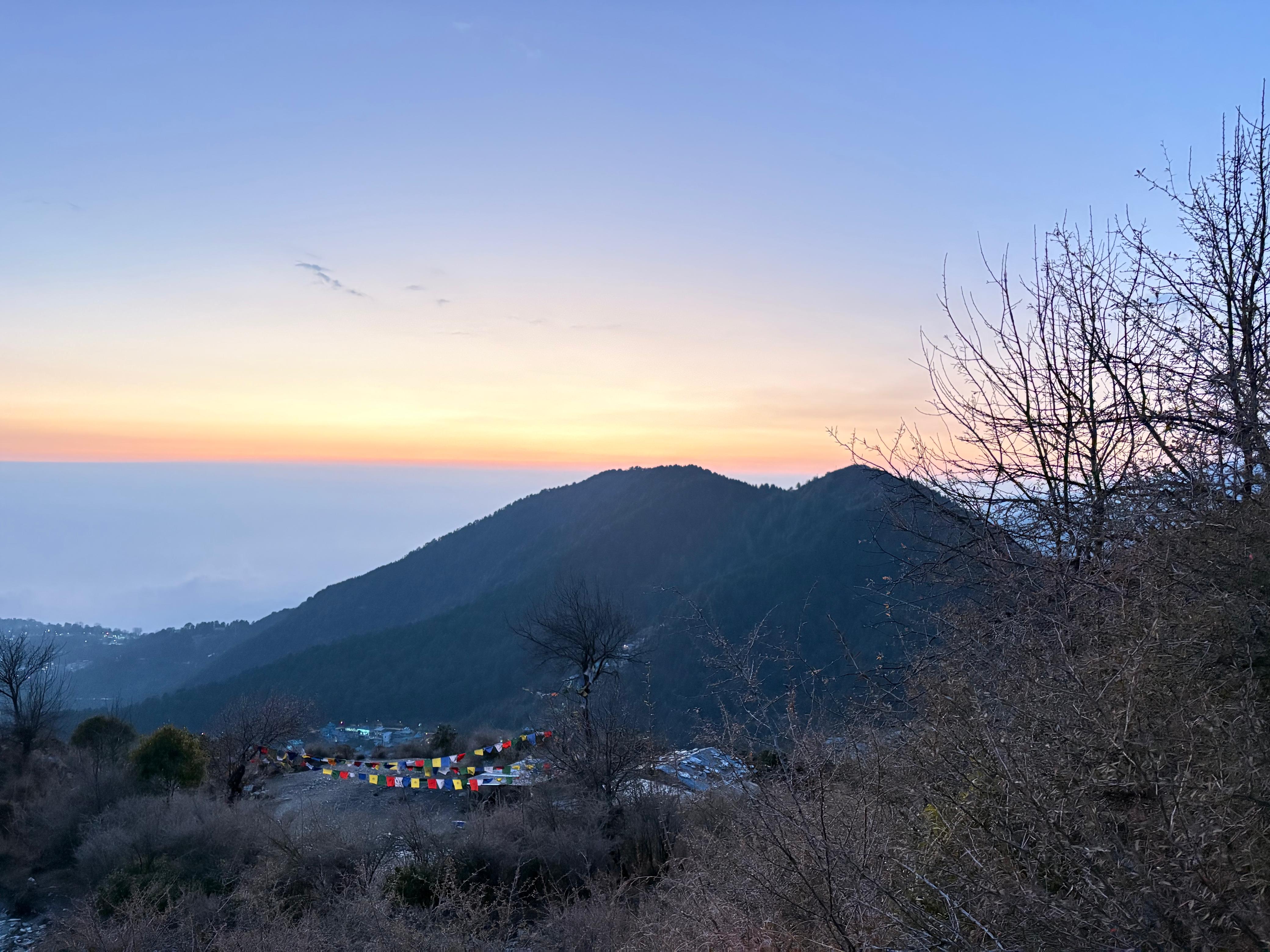
A vantage point 3 kilometres above McLeod Ganj at 1,450 metres, offering a clear view of the Kangra Valley below and the Dhauladhar peaks behind. Best at dawn before the valley haze builds; a favourite spot for watching the sunset over the plains.
20 kilometres from Dharamshala in the Kangra Valley — one of the oldest and largest forts in the Himalayas, with documented history spanning over 3,500 years. Overlooking the confluence of the Banganga and Manjhi rivers; the fort walls and towers are partially ruined but the scale remains imposing.
35 kilometres from Dharamshala — an 8th-century complex of rock-cut Shiva temples carved directly from a sandstone hillside, with decorative carvings comparable to the great rock-cut temples of South India. Sometimes called the 'Himachal Ellora'; rarely crowded and almost entirely overlooked by tour groups.
A 3-kilometre walk from Dharamkot through deodar forest to a natural waterfall in the foothills of the Dhauladhar — the start of the Indrahar Pass trail. Cooler and quieter than Bhagsu Waterfall; the forest path is a destination in itself for birdwatchers.
The official institute of Tibetan medicine and astrology, operating in McLeod Ganj since 1961 — with a museum explaining the Tibetan medical system, a clinic open to visitors, and a pharmacy selling traditional Tibetan herbal formulations. One of the most substantive ways to engage with Tibetan culture beyond the prayer halls and temples.
Things to Do
The Dalai Lama gives public teachings at Tsuglagkhang several times a year — announced on the official website (dalailama.com) in advance. Registration is required; teachings are typically in Tibetan with simultaneous translation available in English.
A 9-kilometre trek from McLeod Ganj to Triund ridge at 2,827 metres — through rhododendron and deodar forests, emerging to a panoramic view of the Dhauladhar range. A comfortable day hike that requires no special equipment or experienced guide.
The Dhamma Sikhara centre near Dharamshala offers 10-day Vipassana meditation courses in complete silence. Courses run throughout the year and are taught in the S. N. Goenka tradition. Accommodation and food included; courses run on a donations basis.
Learning momos, thukpa, and Tibetan bread from a Tibetan home cook — using the same ingredients and the same techniques as the restaurants in McLeod Ganj, but in a kitchen rather than a commercial setting. Available through community-run local cultural programmes.
The museum within the Tsuglagkhang complex documents the Tibetan government-in-exile, the history of Tibet since 1950, and the stories of refugees who crossed the Himalayas on foot. Honest, quietly devastating, and essential for understanding what McLeod Ganj truly is.
A structured introduction to thangka painting at the Norbulingka Institute — traditional Tibetan sacred art taught by practicing artists, with attention to the gridding system, mineral pigments, and symbolic iconography. Sessions run from half a day to several weeks; even a single morning gives a lasting reference for every thangka you will ever consider.
A 2-day trek from Ghera village, 20 kilometres from Dharamshala, to Kareri Lake at 2,934 metres — a glacial lake at the base of the Dhauladhar range. The trail climbs through pine and oak forest, then open meadows. Camping at the lakeshore is the standard arrangement; the lake is frozen from December to March.
Food to Try
Steamed or fried dumplings with a minced pork, chicken, or vegetable filling — served with a fiery tomato chilli sauce. The momos in McLeod Ganj are made by Tibetan cooks using the recipes of Lhasa restaurants, adapted to local ingredients over 60 years of the Tibetan exile.
A noodle soup with meat or vegetables in a clear or slightly spiced broth — the Tibetan staple, available at every restaurant in McLeod Ganj and entirely appropriate after the Triund trek. Better on cold mountain evenings.
Salted, butter-churned tea in the Tibetan tradition — a cultural experience more than a recreational drink. The salt and butter combination is an acquired taste; understanding that it was designed for extreme cold and altitude changes your relationship with the flavour.
Steamed flower-shaped bread with a lentil or chicken curry — a Tibetan-Indian fusion that has evolved in McLeod Ganj over decades. Available at the Tibetan Ashoka Restaurant and several family-run establishments.
The local Himachali bread — a steamed wheat bun stuffed with walnut paste or poppy seed paste — served with ghee and dal. The local counterpart to the Tibetan momos, available at the bazaars of lower Dharamshala.
A Himachali lamb dish slow-cooked in a yoghurt and gram flour gravy with whole spices — the traditional non-vegetarian preparation of the Kangra Valley, available at the heritage-style Himachali restaurants in lower Dharamshala. Richer than the Tibetan preparations of McLeod Ganj and specific to the Kangra Valley foothills.
Places to Stay
A Tibetan-style boutique hotel above McLeod Ganj, run under the auspices of the Norbulingka Institute — 12 rooms decorated in traditional Tibetan style, a garden, and a location that gives you the Dalai Lama's temple and McLeod Ganj market within walking distance. The most characterful hotel in the Dharamshala area.
A contemporary hotel in the Dharamshala main town, with mountain views, a pool, and reliable international-standard service — a level of comfort that McLeod Ganj's guesthouses cannot match. Good for families or those who need consistent infrastructure.
A guesthouse within the Norbulingka Institute campus below McLeod Ganj — set in extraordinary gardens, surrounded by traditional Tibetan arts workshops, and operating with the quiet atmosphere of a working cultural institution. Unique in India; unique in the world.
A resort property with Dhauladhar mountain views — comfortable rooms, a pool, and the full resort facilities that independent travellers rarely need but families appreciate. A reliable large-property option in an area dominated by small guesthouses.
A well-run budget option in McLeod Ganj — consistently the best mid-budget choice in the area, with mountain-view rooms, honest pricing, and staff who understand what trekkers and yoga retreat guests need. The right base for those spending a week in Dharamshala.
A small Tibetan-run homestay above McLeod Ganj with mountain views and genuine Tibetan home cooking — momos, thukpa, and butter tea made by a family that arrived from Tibet two generations ago. Simple rooms, extraordinary warmth, and the kind of cultural immersion that no hotel can replicate. The right choice for travellers who came to understand the Tibetan community, not just observe it.
Solo Female Travel
McLeod Ganj has hosted solo female travellers for decades — the combination of the Tibetan community's values, the meditation retreat culture, and the long-stay traveller community makes it one of the most welcoming places in India for women arriving alone.
Vipassana courses, yoga programmes, and Tibetan cooking classes all create structured environments where solo travellers meet others. Women who come alone to Dharamshala typically leave with a community.
The Triund trail is well-marked and safe for solo walkers. Go early — before 7am — both for the light and to avoid the afternoon clouds that can obscure the mountain view. Wear layers; the ridge at 2,800 metres is cold regardless of the season.
For Dalai Lama teachings, register through the official website and arrive early. The security screening is thorough and lines form before dawn. The experience of sitting in the teaching hall, regardless of your own beliefs, is profound.
Plan Your Trip
We know the Dalai Lama teaching schedule, the Vipassana registration process, the Tibetan cooking class hosts, and the best guesthouses in Dharamkot above the crowd. A Dharamshala trip that goes deeper than the momo restaurants.
Start PlanningFree consultation · No obligation · Reply within 24 hours
Free Resource
Download The Essential Women's Guide to India — our free, no-fluff resource covering what to pack, what to expect, and what no travel blog will tell you. Trusted by 2,000+ women.
Prefer to speak directly? hello@roamrani.com