Rajasthan · Travel Guide
An unconquered fort with 500 years of undisturbed history, the world's only rat temple, and old city bazaars that sell to locals rather than tourists. Bikaner rewards the traveller who goes further.
Places to Visit
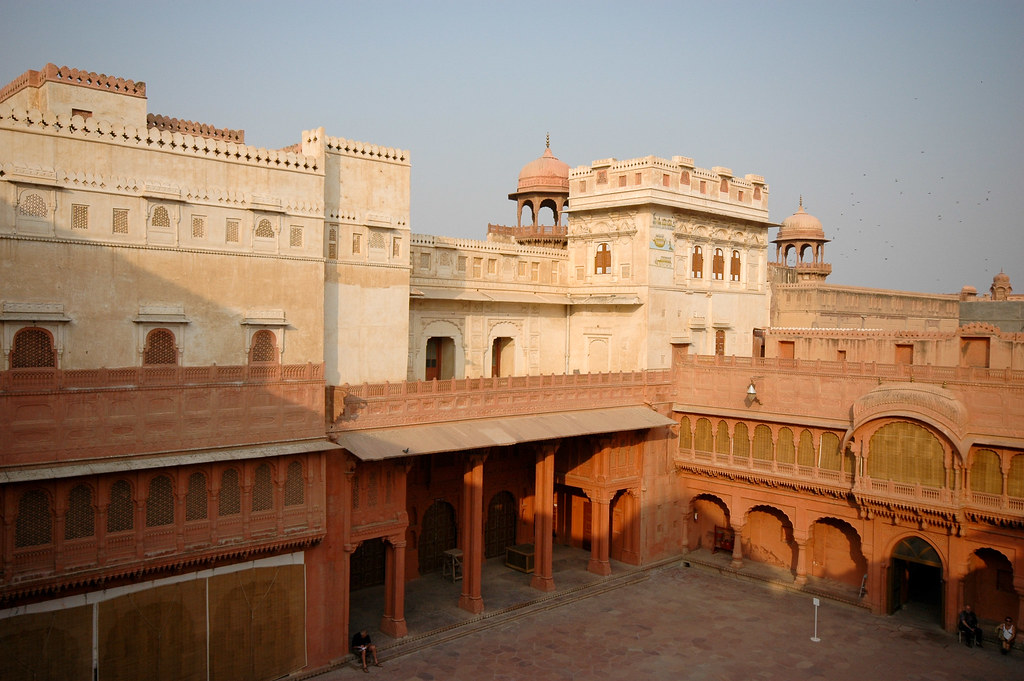
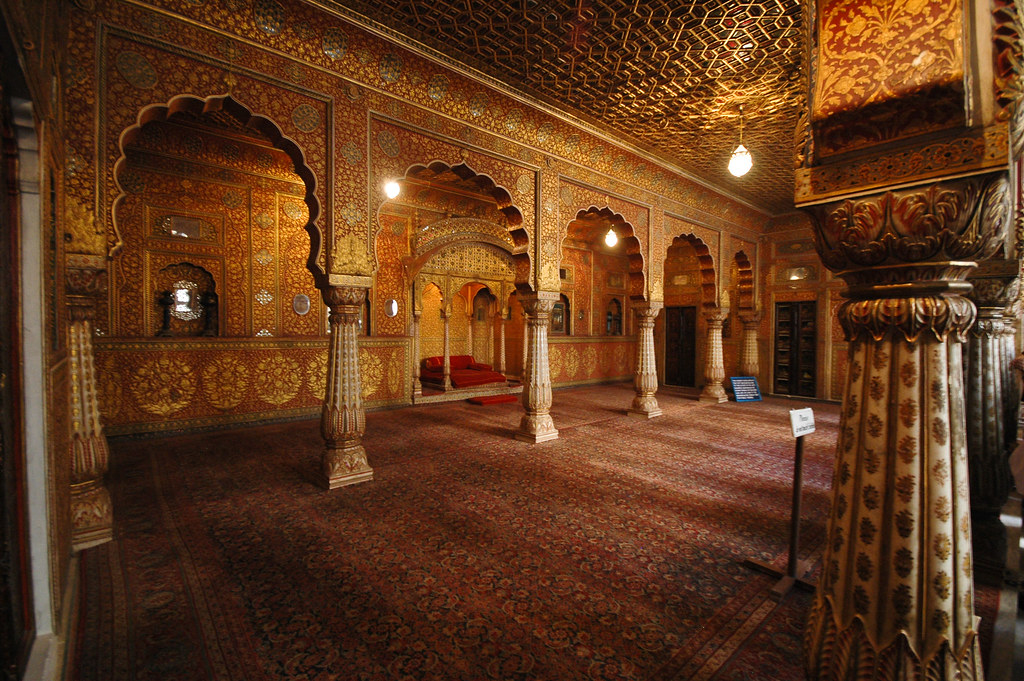
Built in 1593 and never conquered — which is why it is intact. Unlike forts that changed hands and were stripped, Junagarh accumulated 500 years of successive additions: throne rooms, zenana quarters, glass-tile chambers, and marble pavilions, each built by the Maharaja of its time.
30 kilometres south of Bikaner: the rat temple. More than 25,000 rats (called kabbas — considered holy incarnations of the goddess's family) live in the temple complex, fed by priests, revered by devotees, and touching pilgrims without harm. A genuinely unique religious site, six centuries old.
A 1902 red sandstone palace built by Maharaja Ganga Singh — a blend of Rajput and European styles, with a museum of royal memorabilia, vintage cars, and photographs that document the political history of Bikaner's integration into independent India at Partition.
The covered markets of Bikaner sell bikaneri bhujia (the spiced lentil snack exported globally), silver jewellery, camel leather goods, and woollen textiles — to local residents. The tourist infrastructure that has softened these experiences in Jaipur and Jodhpur does not exist here.
The only camel breeding and research station in India — a scientific facility outside the city that maintains a herd of several hundred camels, researches camel milk, and conducts veterinary work. More interesting than it sounds; the scale of the operation is extraordinary.
A 19th-century temple complex at the edge of Bikaner city, built in the distinctive red sandstone of the region — with a surrounding walled garden, a large tank, and a quiet atmosphere entirely absent from the fort. The temple is dedicated to Shiva and is most active in the early mornings and on Mondays; almost no tourists come here.
A 15th-century Jain temple in the heart of the old city — built by a wealthy merchant named Bhandasa Oswal and dedicated to the fifth Jain Tirthankara, Sumatinath. The interior is decorated with extraordinary mirror-work, gold-leaf painting, and miniature frescoes on every surface. Local legend holds that 40,000 kilograms of ghee were used in place of water in the mortar. One of the finest examples of merchant-funded Jain temple architecture in Rajasthan, and almost entirely unvisited by tourists.
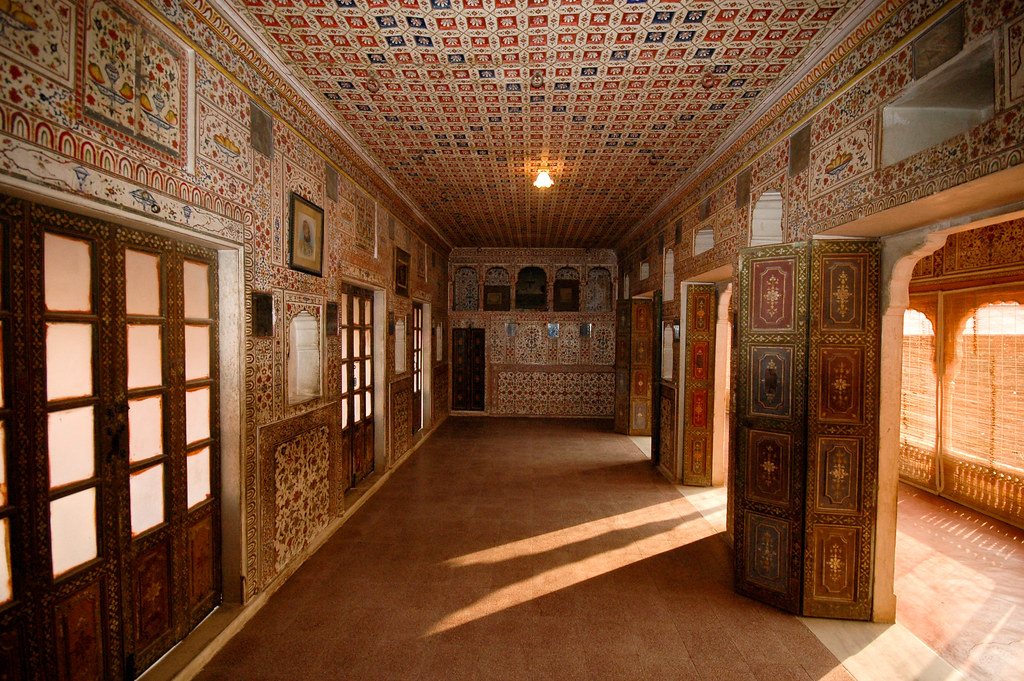
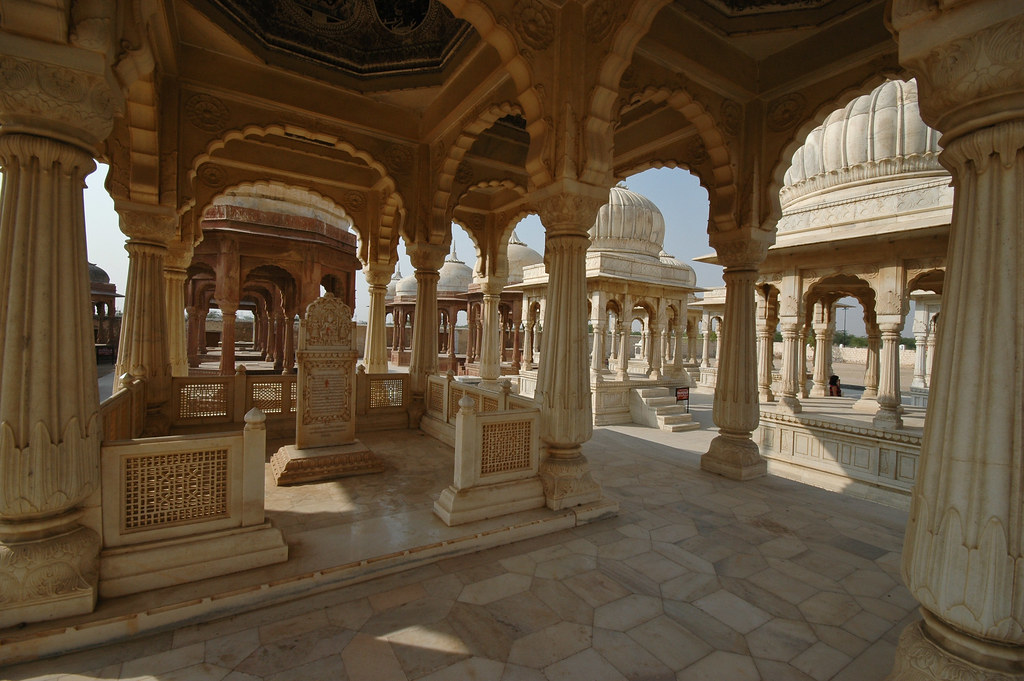
A cluster of early 20th-century merchant mansions in the old city, built by the Rampuriya trading family and considered among the finest havelis in all of Rajasthan — comparable to those of Shekhawati but far less visited. The facades are carved in golden sandstone with extraordinary intricacy: latticed jharokha windows, floral medallions, and figurative friezes that blend Rajput, Mughal, and colonial motifs. The interiors are painted with scenes from mythology and daily life, with corridors of tiled floors and carved wooden doors. Walking through the lanes surrounding them is one of Bikaner's most rewarding hours.
Things to Do
The fort is large enough to require a full morning. The Anup Mahal throne room with its red lacquer and gold inlay, the Ganga Niwas (1902 addition) with its art nouveau elements, and the collection of World War I military memorabilia are all worth time.
Arrive with an open mind. The 25,000 rats are not disturbing once you understand the religious context — they are venerated, well-fed, and move through the temple complex with the confidence of residents. Seeing a white rat (very rare, considered particularly auspicious) is considered exceptional luck.
The Camel Research Station produces camel milk — sold fresh at the facility gate. Slightly saltier than cow's milk, with a distinct flavour. Buy a small cup; the experience is as much about the place as the product.
The wholesale bhujia market in the old city — where the spiced noodle snack is made and sold by weight to distributors — is one of Bikaner's most atmospheric commercial spaces. The production process visible in the workshops is genuinely interesting.
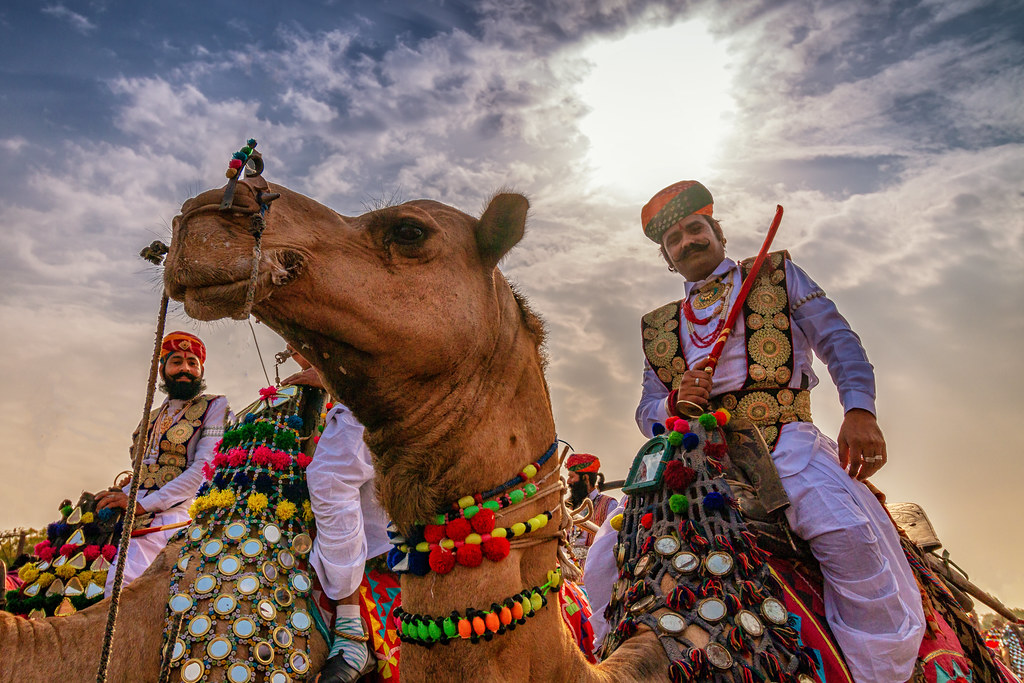
An annual festival featuring camel races, camel decoration competitions, folk performances, and rural sports — held at the Junagarh Fort grounds. One of Rajasthan's most local festival experiences.
The sand dunes begin 10 kilometres west of Bikaner at Kakoo and Jorbeed — a quieter and more local version of the Jaisalmer dune experience, without the tourist infrastructure. Watching the sun go down over a landscape that extends uninterrupted to the Pakistan border is the desert in its most elemental and unmediated form.
Food to Try
The spiced chickpea-noodle snack that has been made in Bikaner for 150 years — exported globally under many brands, but tasting entirely different when bought fresh and loose from the old city shops where it was invented.
Soft cheese patties in sweetened, saffron-flavoured milk — the Bikaner version is lighter and less sweet than the Bengali original. Available at Bikanervala and the older sweet shops near the fort.
A particularly flaky, layered kachori specific to Bikaner — different texture from the Jaipur version, lighter, with a drier lentil filling. Sold from dawn at the stalls near Kote Gate.
Available at the Camel Research Station and a few stalls in the city — a mild, slightly sweet ice cream with a distinct flavour. A Bikaner-specific experience that does not exist anywhere else in quite this particular form.
The Rajasthani festival sweet — a disc of fried batter soaked in syrup and topped with cream or mawa — made in Bikaner for the Teej and Gangaur festivals and available year-round at the city's sweet shops.
A Bikaner speciality — crisp lentil papads cooked in a tangy yoghurt and tomato gravy with whole spices. A dish born from the desert larder, where fresh vegetables were scarce and shelf-stable ingredients were everything. Found at the old Marwari restaurants near Kote Gate that have served it to locals for generations.
Places to Stay
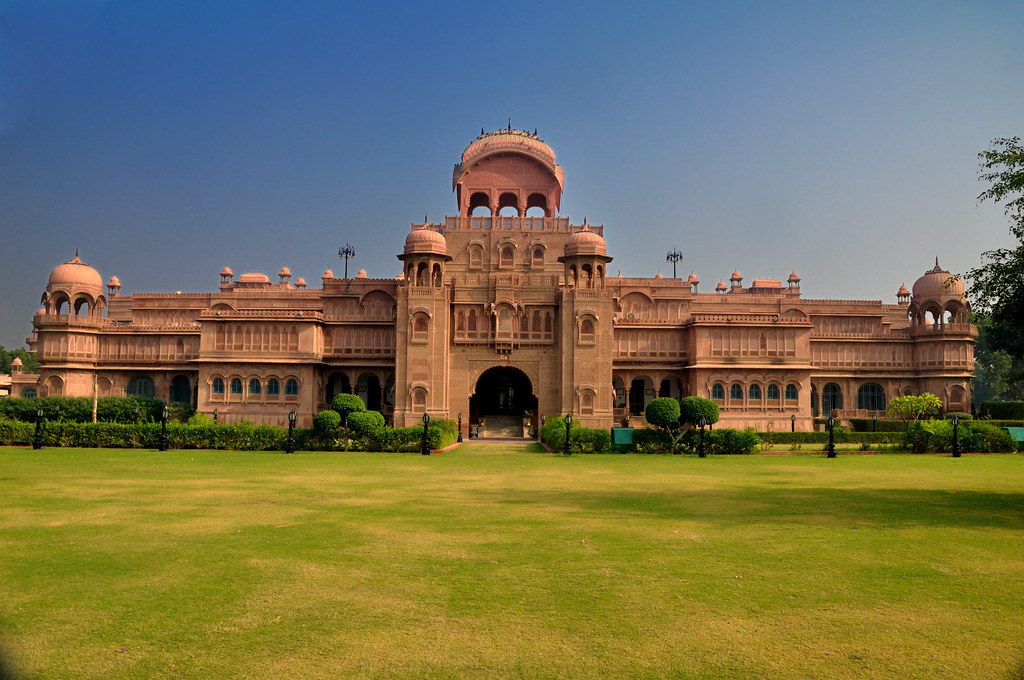
A 1902 Indo-Saracenic palace built for the Maharaja of Bikaner, designed by Swinton Jacob — the grandest hotel in Bikaner and one of the finest heritage hotels in Rajasthan. The same architect designed much of Bikaner's old city, and sleeping here puts you inside the building he considered his masterwork. Large rooms, a pool, and a restaurant in the original dining hall.
A restored merchant haveli in the old city — a 1927 building belonging to a prominent Bikaner trading family, with courtyard rooms, painted interiors, and the kind of intimate hospitality that palace hotels cannot offer at scale. One of the finest mid-range heritage stays in Rajasthan.
A former hunting lodge of the Maharajas of Bikaner, set beside Gajner Lake 32 kilometres from the city — surrounded by the Thar Desert, with a resident wildlife population of nilgai, wild boar, and migratory birds. An extraordinary detour for those who want Rajasthan's royal sporting-lodge tradition.
A converted royal residence near Lalgarh Palace — 26 rooms in the original building, a garden, and a quieter atmosphere than the main palace hotels. Good honest mid-range choice for independent travellers.
A family-run heritage guesthouse in central Bikaner — clean, well-maintained, personal service, and a rooftop with city views. The right budget-to-mid option for those working through Rajasthan without a large accommodation budget.
A restored 19th-century haveli in the old city run by a Bikaner family — smaller and more intimate than Bhanwar Niwas, with hand-painted interiors, a courtyard, and hosts who know Bikaner's camel breeders, potters, and carpet weavers personally. The right choice for travellers who want genuine cultural access alongside their bed.
Solo Female Travel
Bikaner's low tourist numbers mean the old city bazaars are selling to residents rather than visitors. The attention from vendors is almost entirely absent. It is one of the most relaxed cities in Rajasthan for solo women.
Without context, Junagarh Fort is a series of rooms. With a guide who understands the Bikaner royal family's history, it becomes one of Rajasthan's most interesting heritage sites. The investment is worth making here.
Bikaner sits between Jaisalmer (south-west) and Jaipur (south-east) on the desert road — logistically, it works best as part of a western Rajasthan circuit rather than a standalone destination.
Plan Your Trip
We know the bhujia shops, the cameleer families at the research station, and the Karni Mata priests who can explain what the rat temple actually means to its devotees. A genuinely unusual Rajasthan day.
Start PlanningFree consultation · No obligation · Reply within 24 hours
Free Resource
Download The Essential Women's Guide to India — our free, no-fluff resource covering what to pack, what to expect, and what no travel blog will tell you. Trusted by 2,000+ women.
Prefer to speak directly? hello@roamrani.com